

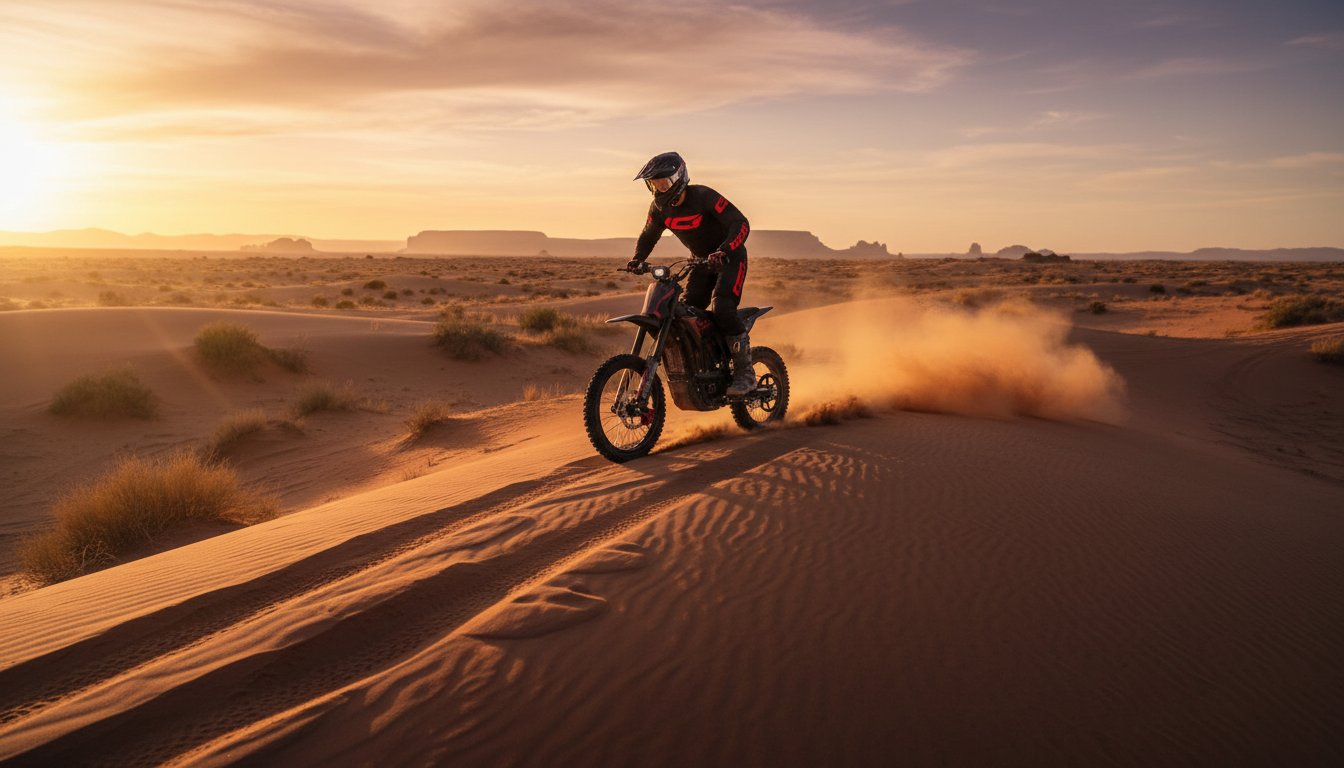
What Is the Fastest Electric Dirt Bike in 2026? Top Speed Ranked
Short answer first: the fastest electric dirt bike in 2026, based on published top-speed claims, is the Bonnell 902 at 90+ mph (87 HP, 65 kW peak). That’s the number people quote — and the one that wins arguments.
But “fastest on paper” rarely means fastest where you actually ride.
The Bonnell 902 is an extreme machine, and for most riders, a controllable 50–75 mph bike will be quicker, safer, and far more enjoyable once the trail gets rough. Top speed only matters if you can use it — and off-road, that’s rarely the case.
Electric dirt bikes have moved well past the “slow trail toy” phase. The fastest 2026 models now out-accelerate many gas bikes off the line and climb harder than expected. But top speed is a slippery metric. It changes with terrain, rider weight, battery level, tire setup, gearing, and even temperature. What looks fast on a spec sheet often feels very different on dirt.
Here’s the reality in one line: By raw top-speed claim, the Bonnell 902 leads. For motocross performance, the Stark VARG MX 1.2 is the stronger real-world machine. And for most riders, a well-balanced adult electric off-road motorcycle built for real terrain beats chasing the biggest number.
Let’s break it down.
What Is the Fastest Electric Dirt Bike in 2026?
By published spec, the answer is still the Bonnell 902. With 87 horsepower, 65 kW peak output, and a claimed 90+ mph top speed, it pushes electric dirt bikes into territory that overlaps with small road motorcycles.
That number also comes with a reality check.
Very few riders will ever reach that speed off-road. Before you get close, factors like terrain, skill level, battery charge, tire choice, and gearing all pull the real-world number down. It’s best understood as a ceiling — not something you’ll consistently ride at.
Fastest Overall Electric Dirt Bike
The Bonnell 902 takes the top spot by pure spec. It sits clearly above most high-performance electric dirt bikes currently available.
It’s also built for a specific type of rider. Advanced control systems — including ride modes, traction control, regenerative braking, boost, and e-clutch-style tuning — help manage the power, but they don’t make it beginner-friendly. This is a machine for experienced riders, ideally used on private land or controlled environments.
Fastest Production Electric Dirt Bike (Motocross)
If you’re looking beyond top-speed claims and focusing on real track performance, the Stark VARG MX 1.2 stands out as the strongest production option.
Its power delivery is fully adjustable, from around 10 HP up to 80 HP, allowing it to adapt to different skill levels and track conditions.
More importantly, it delivers instant torque with no shifting. That translates into faster exits out of corners — which, on a motocross track, often matters more than maximum speed. A bike that gets to speed faster will usually feel quicker than one that simply has a higher top-end number.
Fastest Practical Choice for Most Riders
For most riders, chasing 90 mph doesn’t make sense.
A stable bike in the 50–70 mph range is more than enough for trails, weekend riding, and even light track use — and far easier to control when conditions get unpredictable.
Models like the E Ride Pro SS 3.0, Sur-Ron Ultra Bee, Altis Sigma, and Dust Moto Hightail all fall into this range, offering strong real-world performance without crossing into overkill.
If you’re still comparing options, it’s worth exploring a broader electric dirt bike lineup
across adult and teen models before committing to a high-end race-focused machine.
Fastest Electric Dirt Bikes in 2026: Top Speed Table
This table compares the top high-speed electric dirt bikes by published or commonly listed specs. Use it as a quick guide, not the only buying factor — top speed shifts with rider weight, terrain, battery level, tire type, and gearing, and real trail speed is usually well below the product-page number.
How We Ranked the Bikes
The ranking starts with published top speed. When an exact figure is unclear, peak power, voltage, bike class, and intended use break the tie. This separates pure speed machines from practical trail bikes, since a full-size motocross bike can feel faster on a track than a lighter bike with a higher claimed number. Whether a bike is widely known, supported, and realistic for adult riders also counts, because speed alone never made a bike a smart buy.
Claimed MPH vs Real-World MPH
Claimed MPH comes from ideal conditions: full battery, smooth surface, light rider, fastest ride mode. Real-world MPH is lower, because dirt, mud, hills, sand, wind, tire grip, and braking zones all reduce speed. A bike rated at 75 mph may spend most of a ride between 15 and 45 mph, though the extra power still helps for climbing, passing, and quick bursts.
Top Speed, Peak Power, and Range Comparison
|
Rank
|
Model
|
Listed Top Speed
|
Peak Power
|
Best For
|
|
1
|
Bonnell 902
|
90+ mph
|
65 kW / 87 HP
|
Extreme top speed
|
|
2
|
Ventus One Plus
|
80–81 mph
|
28 kW
|
Lightweight speed riders
|
|
3
|
Dust Moto Hightail
|
75 mph
|
32 kW / 42 HP
|
Midsize enduro riders
|
|
4
|
Altis Sigma
|
70+ mph
|
22.5–25 kW class
|
High-voltage trail speed
|
|
5
|
Stark VARG MX 1.2
|
Setup dependent
|
Up to 80 HP
|
Pro motocross tracks
|
|
6
|
E Ride Pro SS 3.0
|
62 mph
|
15.8 kW
|
Fast value-focused riders
|
|
7
|
Sur ron Ultra Bee
|
56 mph
|
12.5 kW
|
Midsize trail riding
|
The Bonnell 902 wins the top-speed claim, while the Stark VARG MX 1.2 remains one of the strongest choices for serious motocross. For most riders, the E Ride Pro SS 3.0 and Sur ron Ultra Bee are easier to live with — fast, lighter than full-size race bikes, and more practical for regular trail use.
|
Spec Sheet Translator: Marketing Claim vs Reality
Common fast-bike marketing language and what it usually means once you check the details.
“100 MPH off-road” → Usually a custom controller, taller gearing, or street tires on pavement. Not a stock dirt bike on dirt.
“Setup dependent” top speed → Honest — gearing and mapping change the number. Ask for the stock figure.
“Up to 8,000W” → Peak only. Ask for the continuous watts rating, the number you ride on all day.
“Race-grade / pro-level” → Sometimes real, sometimes a label. Ask the controller amperage to verify.
“Rivals a 450” → Possibly in acceleration, rarely in sustained top speed or range. Confirm which one.
|
|
VALTINSU EM-5 Pro
A value-first adult electric off-road motorcycle. The 60V 4800W geared motor delivers 240 N·m of torque low in the rev range, tops out at 43 mph, and is tuned for real trails rather than race timing.
$1,699 View the EM-5 Pro →
|

What riders actually say about “fast”
Spend ten minutes in the r/Surron, r/ebikes, or enduro-forum threads and a pattern shows up fast: people stop talking about top speed almost immediately, and start arguing about range, brakes, and whether the controller can actually deliver the watts on the box.
A few themes that come up again and again from owners:
-
Stock top-speed figures get hit on smooth ground with a full battery, and basically nowhere else. “GPS said 52 on a flat road, never seen it on dirt” is a very common Ultra Bee comment.
-
The first upgrade most Surron and Talaria owners chase isn't speed — it's a bigger controller or better brakes, because the stock stoppers fade once you start riding hard.
-
On the high end, reviewers who've logged real seat time back up the hype but flag the polish. A six-month Stark Varg EX review found it superb on tight, technical trails, noted most riders won't need the full 80 HP, and called out limited range — under about 60 miles mixed-use — as the real catch.
Take that for what it is — forum sentiment, not lab data. But it lines up with the boring truth of this whole guide: the number on the listing is the start of the conversation, not the end of it.
Top Speed Ranked: Fastest Electric Dirt Bike Models
Rankings look tidy on paper. Riding feel is messier. A light bike can feel faster in tight singletrack while a big bike feels safer when the trail opens up — so each model below gets its number and its honest catch. One strength, one thing the marketing won't volunteer.

1. Bonnell 902 — Fastest Overall (90+ mph)
-
Peak Power: 65 kW (87 HP)
-
Top Speed: 90+ mph
The Bonnell 902 sits in a category of its own. With nearly 90 horsepower, it delivers performance closer to an electric superbike than a traditional dirt machine.
What makes it usable is the control suite: adjustable ride modes, traction control, regen braking, boost mode, and even wheelie control. These systems help tame the power—but they don’t make 90 mph off-road any less extreme.
Catch: This level of speed is largely unusable (and unsafe) for typical trail riding. It’s built for experts and controlled environments.
Best for: Advanced riders, private land, closed-course riding, or buyers chasing maximum headline performance.private land, closed-course

Altis Sigma — High Voltage, Strong Acceleration (Mid-Range Speed)
-
Battery System: 97.2V
-
Peak Power: 22.5–25 kW
The Altis Sigma stands out for delivering high-voltage performance at a relatively accessible price point. It feels quick, especially in acceleration, and lighter than many full-size bikes.
Catch: The front suspension can dive under hard braking, which affects control at speed.
Best for: Riders who want strong acceleration without paying premium race-bike prices.

Stark VARG MX 1.2 — Track-Focused Power (Up to 80 HP)
-
Peak Power: Up to 80 HP (tunable)
-
Top Speed: Not the focus (track optimized)
The Stark VARG isn’t built for top speed runs—it’s built to dominate motocross tracks. Instant torque, no gear shifts, and fully tunable power delivery make it faster where it counts: out of corners.
Catch: Top speed numbers are less relevant here, and it’s overbuilt (and overpriced) for casual trail riders.
Best for: Motocross riders, especially former 450cc riders transitioning to electric.

Ventus One Plus — Lightweight Speed Machine (~81 mph)
-
Peak Power: ~28 kW
-
Top Speed: 80–81 mph
The Ventus One Plus combines high top speed with a relatively lightweight chassis, creating a sharp and aggressive riding feel. It accelerates quickly and feels fast in open terrain.
Catch: Lightweight + high speed = demanding control. Braking, suspension tuning, and rider skill become critical at these speeds.
Best for: Experienced riders who want a fast, nimble bike for open trails.

Dust Moto Hightail — Best Balanced High-Speed Enduro (~75 mph)
-
Peak Power: 32 kW
-
Top Speed: ~75 mph
-
Torque: 660 Nm (wheel torque)
The Hightail is less about peak speed and more about usable power. Its motor-gearbox setup gives it strong climbing ability and better control in technical terrain.
Compared to lighter bikes, it feels more planted and confidence-inspiring.
Catch: It doesn’t deliver the explosive top-end thrill of lighter, higher-revving competitors.
Best for: Enduro riders who prioritize torque, control, and real off-road capability.

E Ride Pro SS 3.0 — Best Value Performance (~62 mph)
-
Peak Power: 15.8 kW
-
Top Speed: ~62 mph
-
Battery: 72V 50Ah (swappable)
-
0–30 mph: ~2 seconds
This is where performance meets affordability. It’s not the fastest bike here, but it delivers strong acceleration and practical usability at a much lower cost.
Catch: Limited top-end compared to premium models.
Best for: Riders who want “fast enough” performance without entering the high-end price bracket.

Sur-Ron Ultra Bee — Slowest on Paper, Most Versatile (~56 mph)
-
Peak Power: 12.5 kW
-
Top Speed: ~56 mph
The Ultra Bee ranks last in top speed—but remains one of the most popular electric dirt bikes. Its strength lies in agility, manageable size, and unmatched aftermarket support.
Catch: Stock performance is modest compared to newer competitors.
Best for: Trail riders and modders who want a flexible, upgradeable platform.
|
“Top speed is the spec most buyers shop on and the one they use least — maybe four seconds of a two-hour ride. Torque is the spec you feel every time you open the throttle.”
— Common refrain among off-road shop techs
|
Why Top Speed Claims Can Be Misleading

A top-speed claim can be 100% true and still tell you almost nothing useful. It says nothing about how the bike stops, turns, climbs, or behaves once the battery's half gone — and that's where you actually spend your ride. Judge a fast bike on the whole package: power delivery, brakes, cooling, suspension, ride modes. The MPH figure is one line on the sheet, not the verdict.
Claimed Speed vs Tested Speed
Claimed speed is the best-case number. Tested speed is what you get on a real day, with your weight, your tires, the weather, and the battery wherever it happens to be. A bike listed at 80 might never see it in mud or on a climb, and might need a full pack plus the most aggressive mode just to get close on pavement.
So read the fine print. Is that figure factory-listed, seller-listed, GPS-verified, or just something somebody posted once? Those are four very different levels of trust, and product pages love to blur them.
Off-Road Terrain Changes Real MPH
Dirt isn't a runway. Rocks, ruts, roots, sand, loose gravel — every one of them scrubs speed, and knobby tires (great for grip) drag more than street rubber. Out there, control beats top speed every time. A bike that stays planted at 45 is a better tool than one that goes nervous at 65. Ask anyone who's overcooked a corner why.
Rider Weight, Tires, and Gearing
Three quiet variables move the needle more than the spec sheet admits. A lighter rider sees a higher top speed than a heavier one on the same bike, and your body position alone changes the wind you're fighting. Tires matter too — a deep-dirt knobby rolls slower than a hardpack tread. And gearing reshapes the whole personality: taller gearing buys top speed but kills the low-end punch you actually want on a climb.
Battery Charge and Power Fade
Electric bikes are at their best with a full battery and a cool head — literally. As the charge drops, a lot of bikes pull power back to protect themselves. Heat does the same thing. Long climbs, repeated full-throttle pulls, a hot afternoon, and the motor and controller warm up until the system quietly eases off.
Which means top speed isn't a constant. It drifts across a ride. The bike worth buying is the one that stays consistent, not the one that feels electric for the first five minutes and tired after that.
|
How experts read a fast-bike spec sheet
Experienced tuners rarely look at top speed first. A more reliable order of priority:
|
What Makes an Electric Dirt Bike Fast?
Speed is a recipe, not one ingredient. Power, voltage, torque, weight, controller tuning, gearing, traction — they all stir into it. That's why two bikes quoting the same peak power can feel like completely different animals. One drives. The other just spins the tire and goes nowhere.

Peak Power vs Continuous Power
Peak power is the short flash a motor can hit. Continuous is what it holds without cooking itself or backing off — and that second number is the one that actually shapes your ride. A 25 kW-peak bike can feel feral in a burst, then fade four minutes into a real climb if it can't sustain output. For most riding, continuous matters more, because it tells you how the bike behaves after the launch high wears off.
Battery Voltage and Amp Output
Higher voltage moves more power with less current stress, which is why 72V, 80V, and 98V systems keep showing up at the fast end. But voltage alone won't make a bike quick. The pack still needs the amp output and decent cells behind it. Pair a strong motor with a weak battery and the motor wins the spec sheet and loses the trail.
Motor Torque and Acceleration
Torque is the electric party trick. It's instant, which is exactly why these bikes feel violent off the line and so willing on a climb or a corner exit. That same instant torque makes wheelies effortless — fun or terrifying depending on who's twisting the grip. It's also why throttle mapping matters so much: good mapping turns a brutal motor into one you can actually ride.
Controller Tuning and Ride Modes
The controller is the bike's personality dial. It decides whether the power feels smooth, sharp, soft, or downright mean. Ride modes matter because no single setting suits every trail — a mellow map saves you in tight woods, a race map rewards you on open ground. Big reason the Stark VARG gets so much love: you can wind output down instead of wrestling a bike that's too much all day.
Cooling Systems and Heat Control
Heat is the quiet killer of electric performance. Motors, batteries, and controllers all live inside temperature limits, and hard riding builds heat fast. Cross the threshold and the bike protects itself by cutting power. So real speed leans on heat management as much as horsepower — without it, that big peak number is a five-minute party, not a day on the trail.
Geared vs direct-drive, at a glance:
|
Architecture
|
Strength
|
Weakness
|
|
Geared brushless
|
Strong low-RPM torque. Climbs without complaint. Trail-friendly.
|
More mechanical complexity; internal gearing needs occasional service.
|
|
Direct-drive hub
|
Consistent power across the rev range. Higher top end. Fewer moving parts.
|
Weaker from a dead stop. Heavier. Race-tuned, not beginner-friendly.
|
Electric Dirt Bike Speed Classes Explained
Not every electric dirt bike belongs in the same class. A 50 mph trail bike and an 80 HP motocross bike can both be electric dirt bikes, yet they are built for different riders. Knowing the classes makes the buying decision easier and helps you avoid buying too many bikes too soon.
Lightweight Electric Dirt Bikes
Lightweight electric dirt bikes are easy to move, load, and control, which is why many riders start here — they feel less intimidating than full-size machines. They can still be fast, with some performance models reaching 50–80 mph. The downside is stability: at very high speed, a small light bike can feel less planted than a larger machine.
Midsize Electric Dirt Bikes
Midsize electric dirt bikes are the sweet spot for many adults, offering more power and stability than small bikes without full race-bike weight. Models like the Dust Moto Hightail and Sur ron Ultra Bee sit here and handle real trails, jumps, and rough ground when set up well. They often give the best mix of speed and control, making them a smart step for riders who have outgrown beginner bikes.
Full-Size Electric Motocross Bikes
Full-size electric motocross bikes are built for tracks, jumps, and high-speed riding, and the Stark VARG MX 1.2 is the main name in this class. They feel closer to gas motocross bikes in size and stance — more stable at speed but heavier in tight areas. A full-size e-moto is not the easiest first bike; it suits riders who already understand throttle control, braking, body position, and track safety.
Street-Legal Enduro Bikes
Street-legal enduro bikes add road equipment such as lights, mirrors, turn signals, VIN support, and license-plate mounts, and some are made for linking trails with public-road sections. Do not assume a fast electric dirt bike is street legal, because many pure off-road models are not built for public roads. Check your local DMV rules before buying, since a bike that is legal in one state may not be in another.
Off-Road-Only Dirt Bikes
Most high-speed electric dirt bikes are off-road-only machines, made for private land, tracks, trail systems, and closed-course riding. A headlight or display does not make them street legal — road use usually needs proper registration and safety equipment. Valtinsu positions many models for practical off-road use rather than race-only top speed; for example, the Valtinsu EM-5 Pro electric dirt bike is a more approachable, trail-focused choice for riders who do not need extreme race speed.
Is the Stark VARG Faster Than a 450?

In the moments that matter most — the launch, the corner exit — yeah, the VARG often feels faster than a 450. Power lands the instant you ask, no clutch slip, no shift to wait on. But a 450 isn't beaten. It still has the legs for sustained speed and long motos, so the real answer comes down to track layout, gearing, rider skill, and race format. It depends — here's on what.
Electric Torque vs Gas Powerband
A 450 builds power through revs and gears, and the rider juggles clutch, throttle, and shifts to stay in the sweet spot. The VARG skips all of that and just sends torque straight to the wheel, which is why it leaps off corners — no narrow powerband to chase, hard pull from almost anywhere. That's the core reason electric motocross bikes feel so different the first time you ride one.
Acceleration on Dirt
On loose ground, raw power is only half the fight. Traction is the other half. The VARG can launch ferociously, but the rear tire still has to hook up, and too much torque just lights up the wheel and wastes it. A skilled rider turns that instant torque into drive. A newer rider often needs a softer mode just to keep the thing pointed straight.
Track Performance
Around a motocross track, the VARG makes a genuinely strong case — huge torque, no shifting, adjustable power on tap. You pick lines instead of gears, which frees up attention for corners, jumps, and rhythm sections. Gas 450s still carry decades of setup knowledge, though, and plenty of riders flat-out prefer the feel, the sound, the clutch, and the 30-second refuel.
Where a 450 Gas Bike Still Wins
Long days, splash-and-go refueling, dead-simple fuel logistics — the 450's home turf. You top up in minutes; the electric needs charge time and ideally a strong power source nearby. Parts and service are everywhere for gas, too. Electric drops the engine maintenance, sure, but a dead battery or controller can hit the wallet harder than a top-end rebuild.
Can an Electric Dirt Bike Go 100 MPH?

An electric two-wheeler? Easily, well past 100. A true electric dirt bike is a different story, because dirt tires, suspension geometry, rider position, and the terrain itself turn 100 mph into a real safety wall. Most production electric dirt bikes deliberately stop short of it, and among current published dirt-bike claims the Bonnell 902 gets closest at 90+.
100 MPH Claims vs Production Reality
You'll find videos and modified builds hitting big numbers, but that doesn't make the bike a normal production dirt bike. A 100 mph claim usually hides a custom controller, taller gearing, street tires, or a smooth strip of pavement — a setup that has little to do with off-road riding. For buyers, a listed, supported factory figure beats a one-off clip every time.
Why Dirt Tires Limit Safe Speed
Knobby tires are made to bite loose ground, not to stay glued to pavement at speed. Push them hard on hardtop and they feel vague and wear out fast. Suspension compounds it — a bike dialed for rocks and ruts isn't necessarily calm at 100 mph on a flat road. The whole machine is tuned for a different job.
Closed-Course Speed Only
Save the big numbers for private land or a closed course. Public roads, parks, and shared trails are the wrong place to find out what your bike will really do. Even 70 mph needs room to stop and a clear area with no walkers, cyclists, animals, or traffic. Riding fast in the right place is safer for you and keeps everyone else out of harm's way.
What Speed Most Riders Actually Need
Be honest about the math. Most trail riders rarely top 50–60 mph, and plenty of technical trails get ridden way slower than that. The extra power still earns its place — on a climb, in loose sand, in the quick squirt between corners — even when you never touch the top of the speedo. The best bike is the one you can control for a whole ride, and a confidence-building 50 beats a nerve-wracking 75.
How to Choose the Right Fast Electric Dirt Bike
Choosing the right fast electric dirt bike starts with the rider, not the speed chart. Your skill level, size, trails, budget, and legal needs should lead the decision. A fast bike can be a great upgrade, but it can also be a bad match if it is too heavy, too tall, too sharp, or too costly to maintain.
Best for Maximum Top Speed
Choose the Bonnell 902 if your only goal is the highest published MPH claim, since it is the headline speed leader at 90+ mph. This makes sense for expert riders who understand the risk, not for beginners. If you want the highest speed, also budget for premium gear — helmet, boots, armor, gloves, and knee protection are part of the real cost.
Best for Motocross Tracks
Choose the Stark VARG MX 1.2 if your goal is track performance, with its full-size motocross intent, adjustable power, and premium race focus. It rewards riders who already know track technique, and it is expensive, so factor in charging, spare parts, tires, and suspension setup before buying.
Best for Trail Riding
Choose a midsize bike if you ride trails. The Dust Moto Hightail, Altis Sigma, and Surron Ultra Bee each serve trail riders differently — the Hightail brings strong torque and a planted feel, the Sigma adds high-voltage punch, and the Ultra Bee offers a known platform with a deep upgrade path. Trail riding needs balance: a bike should turn, climb, stop, and stay predictable when the ground gets rough.
Best for Beginners
Beginners should not start with a 75–90 mph electric dirt bike, since a calmer bike builds skill faster and reduces fear. Look for smooth throttle response, lower ride modes, hydraulic brakes, and a manageable seat height, and remember that weight matters because new riders drop bikes often. A practical 30–50 mph model can still be exciting, which is why the youth-rated EM-5 and the wider Valtinsu off-road lineup suit many first-time owners who want trail practice before moving to race machines.
Best Speed-to-Value Pick
The E Ride Pro SS 3.0 is one of the strongest speed-to-value picks, listing 62 mph, 15.8 kW peak power, and a price far below some premium race bikes. That makes it fast enough for many adult riders while avoiding the extreme cost and risk of the fastest machines. For budget-focused riders, value does not mean buying the fastest bike — it means buying enough performance with parts support, safe handling, and a clear upgrade path.
Suggested speed bands by rider type (general guidance, not an industry standard):
|
Rider Type
|
Top Speed
|
Peak Power
|
Architecture
|
|
Teen beginner (13–17)
|
25–37 mph
|
2,500–4,000W
|
Geared
|
|
Adult weekend trail rider
|
37–56 mph
|
4,000–6,000W
|
Geared
|
|
Adult fast trail / intermediate
|
56–75 mph
|
15–25 kW
|
Geared or hub
|
|
Adult enduro / race-leaning
|
75–90+ mph
|
25 kW+
|
Direct-drive hub
|
Where Valtinsu Fits If You Don't Need 90 MPH

Most fast electric dirt bikes are off-road-only machines built for private land, tracks, and trail systems. Valtinsu focuses on practical off-road capability over race-only top speed, which suits the majority of adult riders who want real trail performance without an extreme top number. The lineup below sits in the controllable 37–43 mph band that covers most weekend and trail riding.
|
Bike
|
Top Speed
|
Peak
|
Torque
|
Age
|
|
Valtinsu EM-5
|
37 mph
|
3,840W
|
190 N·m
|
13+
|
|
Valtinsu EM-5 Pro
|
43 mph
|
4,800W
|
240 N·m
|
18+
|
|
EM-5 Pro Volt Green
|
43 mph
|
4,800W
|
240 N·m
|
18+
|
|
Valtinsu EM-23
|
43 mph
|
4,000W
|
250 N·m
|
16+
|
The EM-5 Pro and EM-5 Pro Volt Green are mechanically identical, differing only in colorway. None of these is the fastest bike in this article — and that is the point. They are tuned to be ridden often and controlled easily, which is what most adult trail riders actually need.
|
Valtinsu EM-5 Pro — Adult Electric Off-Road Motorcycle (18+)
60V geared motor | 4,800W peak | 1,500W continuous | 240 N·m | 43 mph top mode | IPX6 | three ride modes.
Heavy-duty steel frame. 150mm hydraulic front fork. Adjustable air rear shock. Hydraulic discs front and rear. Removable 60V 27Ah battery. CE, UL, and GCC certified.
|
|
Age rule. No exceptions.
EM-5 = 13+ (adult supervision under 16). EM-23 = 16+. EM-5 Pro and EM-5 Pro Volt Green = 18+, adults only. The Pro models are not options for minors. For a younger rider, the EM-5 is the only youth-rated bike in the lineup. These are the manufacturer's ratings, not marketing positioning.
|
Year-one ownership cost (example)
The bike is the first line item, not the whole bill. Plan the rest into the budget on day one so the bike arrives ready to ride safely.
|
Item
|
Cost
|
Notes
|
|
EM-5 Pro (example)
|
$1,699
|
Free U.S. shipping
|
|
DOT-rated full-face off-road helmet
|
$120–$280
|
The component not to cut corners on
|
|
Gear set (gloves, boots, knee, elbow, chest)
|
$280–$520
|
Goggles included
|
|
Tools & maintenance starter kit
|
$80–$180
|
Torque wrench, chain lube, tire gauge
|
|
OHV permit / trail pass (first year)
|
$25–$80
|
State and federal land, varies
|
|
Total, year one
|
$2,204–$2,759
|
Plus fuel to the trailhead
|
Safety and Legal Notes for High-Speed Electric Dirt Bikes

High-speed electric dirt bikes need real motorcycle-level respect, since a 60+ mph crash on dirt can cause serious injury. Legal rules also vary, and a bike that is fine on private land may not be legal on public roads, sidewalks, bike lanes, or public trails.
Off-Road Use vs Street Use
Off-road use means riding on private land, tracks, or legal trail systems, while street use means public roads under motor-vehicle rules. Most fast electric dirt bikes are not street legal from the factory, and a headlight does not equal registration. Before buying, check whether the bike has a VIN, title paperwork, road equipment, and local registration support; if it does not, treat it as off-road-only.
Protective Gear for 60+ MPH Riding
At 60+ mph, bicycle gear is not enough — a fast electric dirt bike needs motorcycle-grade protection for the head, hands, feet, chest, knees, and elbows. A quality helmet and boots matter as much as the bike. A complete kit includes:
-
DOT or ECE-rated helmet
-
Goggles or face protection
-
Motocross boots
-
Gloves with palm protection
-
Chest and back protection
-
Knee and elbow guards
-
Long riding pants and jersey
Local Rules and Public Land Limits
Public land rules can be strict — some trails allow only non-motorized bikes, while others allow e-bikes only in certain classes. High-powered dirt bikes often fall outside normal e-bike rules and may be treated as motor vehicles, off-road motorcycles, or OHVs. Call your local land agency before riding, since a wrong guess can lead to fines, a seized bike, or lost trail access for everyone.
Why 3000W May Not Be Street Legal
In the U.S., the federal low-speed electric bicycle definition uses less than 750 watts and less than 20 mph on motor power alone, and many state class systems use 750 watts as the key limit. A 3000W bike is far above that level, so it is usually not a normal street-legal e-bike. That does not always mean it can never be road legal — it may need to meet moped, motorcycle, or off-road vehicle rules depending on your state.
Final Verdict: Which Fast Electric Dirt Bike Should You Choose?
The fastest electric dirt bike in 2026 is the Bonnell 902 by published top-speed claim, and its 90+ mph listing makes it the current headline answer. The smarter choice depends on how and where you ride, because control, range, safety, and legal use matter more after the first ride than a single top-speed figure.
Fastest Overall Pick
The Bonnell 902 is the fastest overall pick by current published specs — the bike to watch if your main question is pure MPH. Its 87 HP output and 90+ mph claim put it at the top of this list, though buyers should confirm final production specs before deciding. It is a serious machine for serious riders, not a casual backyard bike.
Best Real-World Speed Pick
The Stark VARG MX 1.2 is the best real-world speed pick for motocross riders. It may not always win a simple MPH chart, but it brings proven track focus and huge adjustable power, and it is fast where dirt riders feel speed most: corner exit, jumps, and short straights. For expert riders, it is one of the most complete race-focused choices available.
Best Pick for Most Riders
The E Ride Pro SS 3.0 is the best pick for most riders who want speed without going extreme, since its 62 mph listing and 15.8 kW peak power are more than enough for most trails. Beginners and budget riders should also consider practical off-road bikes before chasing extreme speed. Choose by fit, ride mode, brakes, and range first, and treat MPH as part of the decision rather than the whole of it.
Conclusion
The fastest electric dirt bike in 2026 is the Bonnell 902 by published top-speed claim, with a 90+ mph listing and 87 HP output, making it the current speed leader on paper. That does not make it the best bike for every rider.
For real motocross performance, the Stark VARG MX 1.2 remains one of the strongest choices thanks to its substantial adjustability and track-focused control. For most riders, a 50–70 mph electric dirt bike is more practical than chasing the highest possible speed, and bikes like the E Ride Pro SS 3.0, Surron Ultra Bee, Altis Sigma, and Dust Moto Hightail deliver strong speed while staying easier to manage on trails.
The smart choice depends on your riding skill, terrain, budget, and local rules. Choose the fastest bike only if you have the space, gear, and experience to ride it safely; otherwise, pick the bike whose top speed, power, torque, and supporting hardware all match how you actually ride.
FAQs
Which is the world's fastest electric dirt bike?
By published top-speed claim, the Bonnell 902 is the fastest, listing 90+ mph and 87 HP. That figure assumes near-ideal conditions, and it is an expert-only machine rather than a starter bike.
Is the Stark VARG faster than a 450?
In acceleration, often yes, because it delivers instant torque with no shifting. A well-set-up 450 can still hold its own on long, fast races and refuels in seconds, so the VARG is faster off the line but not always overall.
How fast is 72V 12000W in mph?
Roughly 45–65 mph, depending on gearing, rider weight, battery output, tires, and terrain. Watts alone cannot give an exact figure, so treat any single number as an estimate.
What electric dirt bike goes 100 mph?
Most stock electric dirt bikes do not reach 100 mph; the Bonnell 902 comes closest at a published 90+. A 100 mph claim usually involves a custom controller, modified gearing, or street tires on pavement.
Can a Surron go 70 mph?
A stock Sur ron Ultra Bee is listed around 56 mph. Some modified Surrons reach 70 mph, but that requires upgrades that can outpace the stock brakes and suspension and may affect warranty and legal use.
What dirt bike can go 120 mph?
A true off-road dirt bike reaching 120 mph is rare and not practical for trail riding, since tires, suspension, braking distance, and rider safety become major concerns. That speed belongs to street sport bikes or purpose-built machines on closed surfaces.
How fast is the 20000W electric bike?
A 20000W electric bike or e-moto may reach about 60–80 mph depending on voltage, controller, gearing, tires, and rider weight. At that power level it should be treated as motorcycle-grade equipment.
Is 3000W street legal?
A 3000W bike is usually not street legal as a normal e-bike, since federal rules cap that category at under 750W and 20 mph. It may still be road-legal as a moped or motorcycle depending on your state, so check local rules first.
Sources
-
Stark Future — Stark VARG adjustable power and motocross performance specs.
-
Sur-Ron Europe — Ultra Bee power and top-speed specifications.
-
U.S. Department of Energy — Electric Vehicles overview, motor and battery efficiency primers.
-
U.S. Bureau of Land Management — OHV and e-bike use on public lands.


Looking for something else?
Electric Dirt Bike Setup for Hardpack Trails
LEARN MORE
Electric Dirt Bike Mud Riding: Setup, Technique and Cleanup
LEARN MORE
Can You Ride an Electric Dirt Bike on Forest Service Roads?
LEARN MORE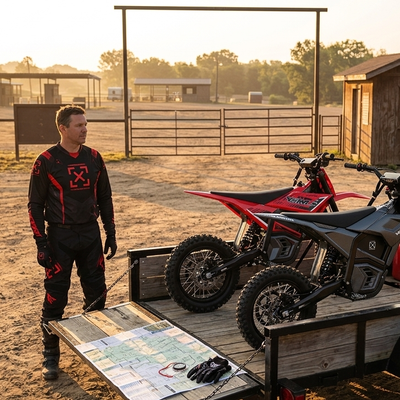
Electric Dirt Bikes at OHV Parks: Rules and Checklist
LEARN MORELooking for something else?
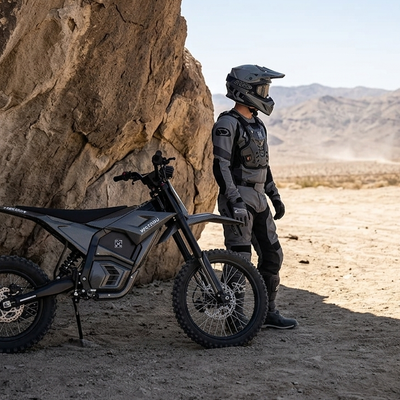
Hot-Weather Electric Dirt Bike Guide: Battery, Rider and Range
LEARN MORE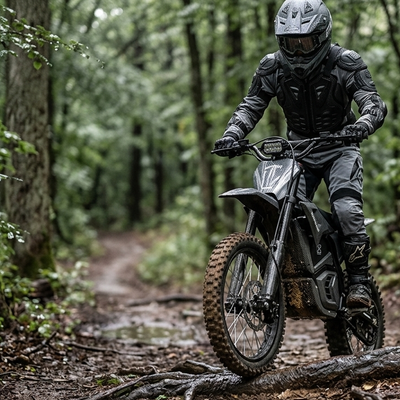
How to Ride an Electric Dirt Bike Over Wet Roots
LEARN MORE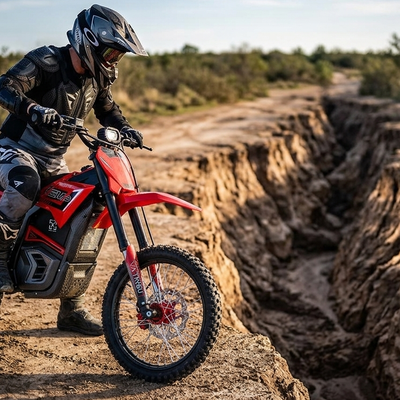
Electric Dirt Bike Ruts and Washouts: Line Choice and Recovery
LEARN MOREYou may also like
VALTINSU EM-5 Off-Road Electric Dirt Bike
€1.299,00
€1.599,00
VALTINSU EM-5 Pro Off-Road Black Electric Dirt Bike
€1.699,00
€1.899,00
VALTINSU EM-5 Pro Green Electric Dirt Bike
€1.699,00
€1.899,00
Further reading
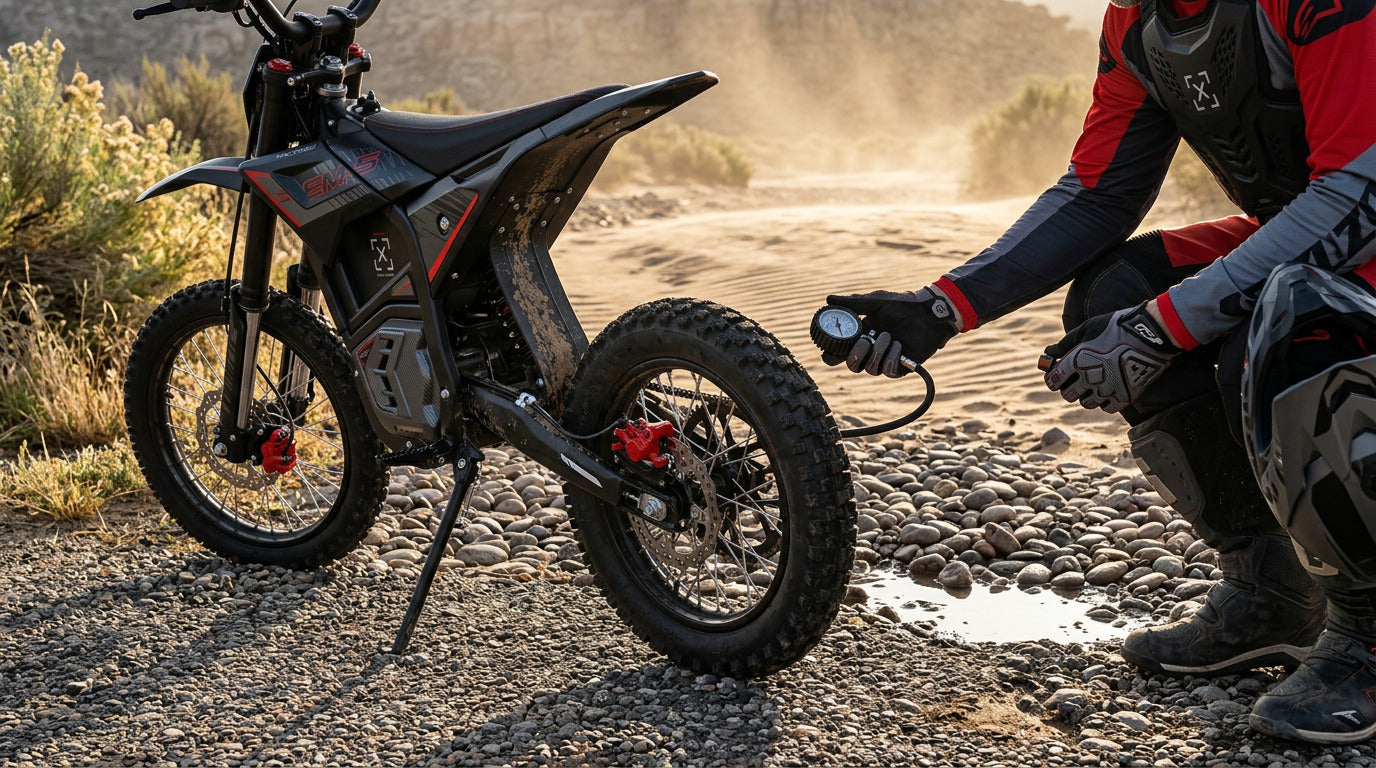
Electric Dirt Bike Tire Pressure by Terrain: PSI Starting Points
Electric dirt bike tire pressure should start with the exact tire and motorcycle limits, then change with terrain, rider load, tire construction and impact risk. Softer ground usually favors a lowe...
Electric Dirt Bike Suspension Sag Setup: A Rider-Weight Method
Electric dirt bike suspension sag setup starts by measuring the rear suspension fully extended, then measuring it again with the bike alone and with you in full riding gear. Use those readings to e...
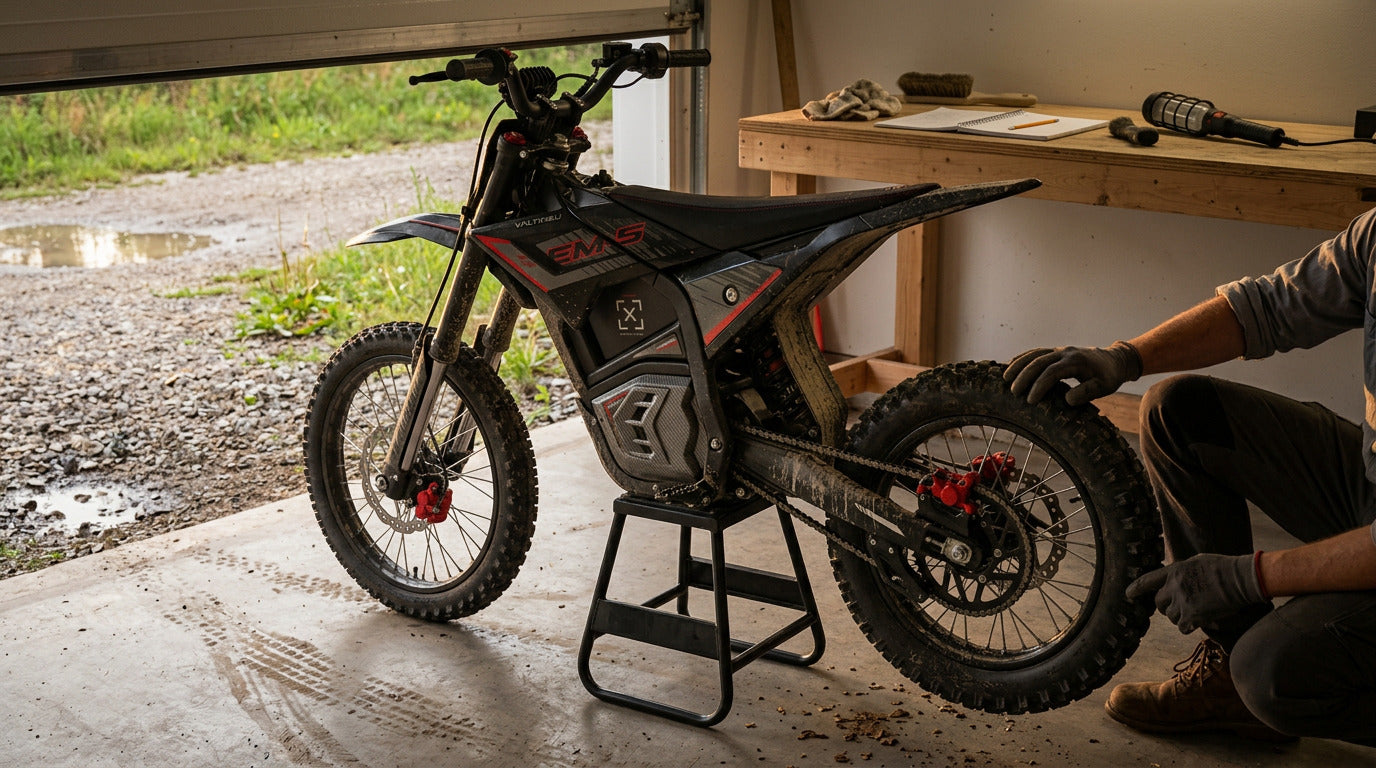
Your First 100 Miles on an Electric Dirt Bike: Break-In and Service Checklist
The first 100 miles on an electric dirt bike are an inspection period rather than a gas-engine-style mechanical break-in. Check the motorcycle at 0, 25, 50 and 100 miles for hardware settling, chai...
Electric Dirt Bike Ground Clearance vs Suspension Travel: What Each Number Means
Electric dirt bike ground clearance is the vertical space between the ground and the motorcycle’s lowest relevant chassis point, while suspension travel is how far the wheel and suspension can move...