Best Electric Dirt Bike for Trails in 2026: Picks by Terrain and Rider
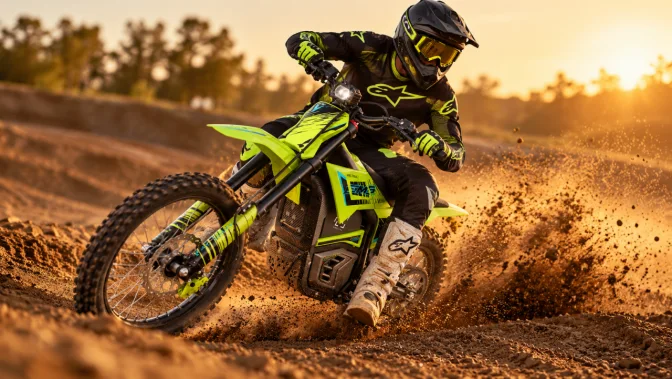
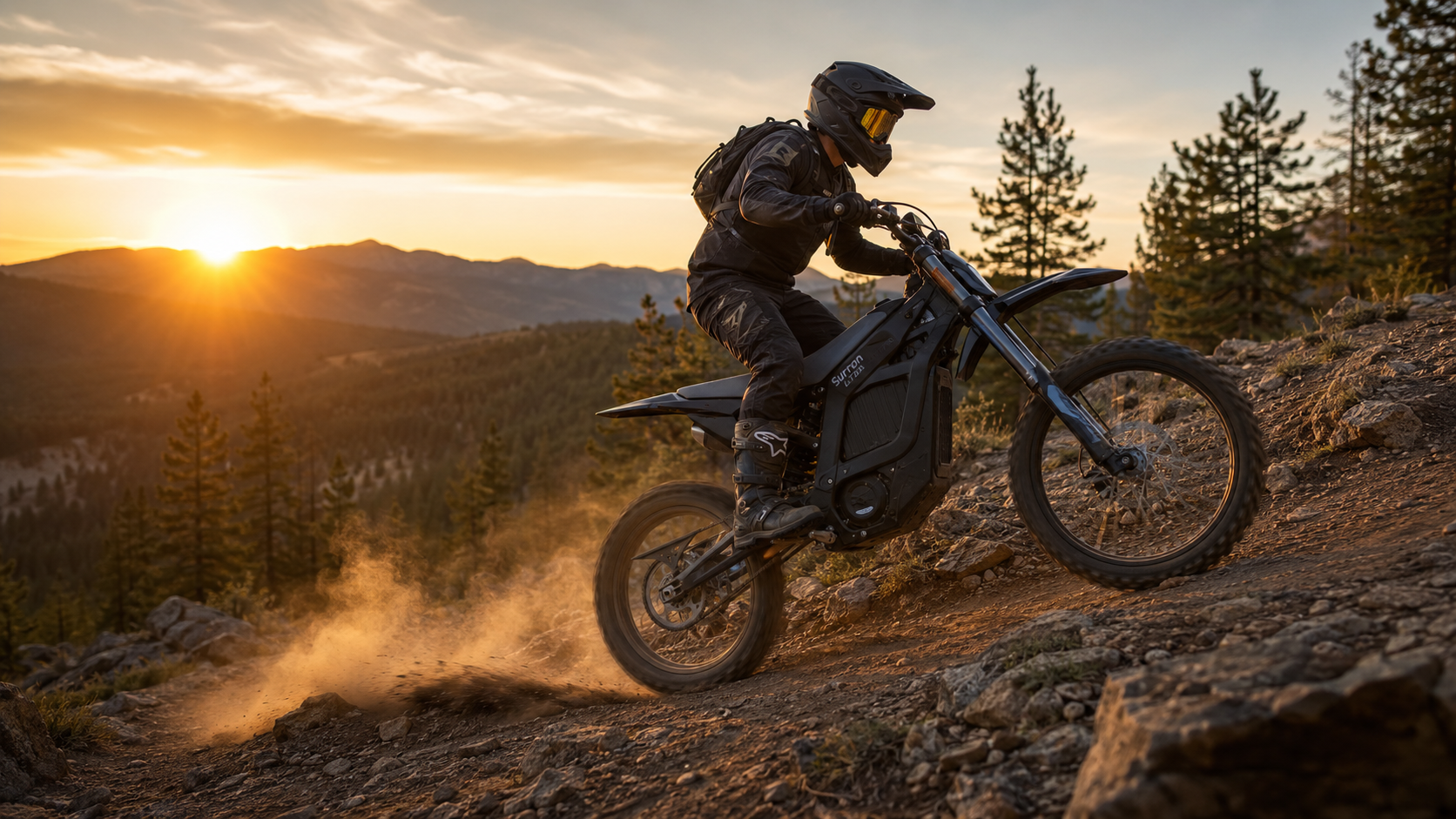
The best electric dirt bike for trails in 2026 balances suspension, weight, and torque to handle tight turns, roots, and rocks while keeping the rider upright and in control. It carries enough suspension to soak up roots and rock, and it puts torque down low, where a slow climb actually needs it. Not the bike with the biggest number on the spec sheet. Top speed sells bikes. Trail behavior keeps you upright. For most adults that means a mid-weight adult electric off-road motorcycle, roughly 130 to 145 lb. Not a 200 lb monster. Not a toy either.
What follows is terrain-first. We line up honest picks across price tiers, then dig into the handful of things that decide how a bike feels once the pavement runs out. Valtinsu builds in the value tier, so its EM-5 Pro sits here as one pick among real competitors, the Sur-Ron Light Bee X and the Talaria Sting included. Every number was checked against each maker's current figures. No guesses.
The Short List: Best Trail Picks by Category
No single bike wins every trail. Here is where each one earns its place.
-
Best value trail bike: Valtinsu EM-5 Pro, 52 mph, 59-mile range, $1,699.
-
Dedicated trail weapon: Sur-Ron Light Bee X, the platform that defined the class.
-
Quiet, refined drivetrain: Talaria Sting R, geared primary drive, strong aftermarket.
-
Lightweight all-arounder: E Ride Pro SS 3.0, around 139 lb, easy to throw around.
-
First real trail bike on a budget: Valtinsu EM-5, 40 mph, 50-mile range, $1,259.
-
Open-ground and bigger riders: Valtinsu EM23, 19-inch front wheel, highest torque in its lineup.
Quick Comparison: Trail Specs at a Glance electric dirt bikes
Spec sheets only tell half the story, but they narrow the field fast. Numbers below come from each maker's current figures; for the full Valtinsu range, the electric dirt bike collection has the live sheets.
|
Model
|
Top Speed
|
Range
|
Peak Power
|
Price
|
Best for
|
|
EM-5 Pro
|
52 mph
|
59 mi
|
5,600W
|
$1,699
|
Value sweet spot, mixed trails
|
|
EM-5
|
40 mph
|
50 mi
|
3,840W
|
$1,259
|
First trail bike, lighter riders
|
|
EM23
|
43.5 mph
|
Check page
|
4,000W
|
$1,999
|
Open ground, taller riders
|
|
Sur-Ron Light Bee X
|
~47 mph
|
~40 mi
|
~6,000W
|
~$3,900
|
Pure trail, deep mod scene
|
|
Talaria Sting R
|
~53 mph
|
~53 mi
|
~8,000W
|
~$3,000+
|
Quiet drivetrain, racier feel
|
|
E Ride Pro SS 3.0
|
~50 mph
|
~50 mi
|
high
|
~$4,999
|
Light, do-everything trail/street
|
Figures are manufacturer-stated and shift with model year and promotions. Verify before purchase.
What “Trail-Ready” Actually Means
Marketing leans on peak wattage because it is one big number that looks good in an ad. On a trail it is close to meaningless on its own. A trail-ready bike is a balance: torque that arrives smoothly at low speed, suspension that keeps the tire on the ground, weight you can muscle through a switchback, and grip that holds when the dirt gets loose. Get those four right and a 40 mph bike will out-ride a poorly set up 55 mph one on real singletrack.
Weight is the lever most buyers underrate. Once a bike crosses roughly 150 lb, every dismount, every hike-a-bike section, every tip-over costs you more. That is why the picks here cluster in the 126 to 145 lb band.
Valtinsu EM-5 Pro: The Value Trail Pick
Best balance of speed, range, and price
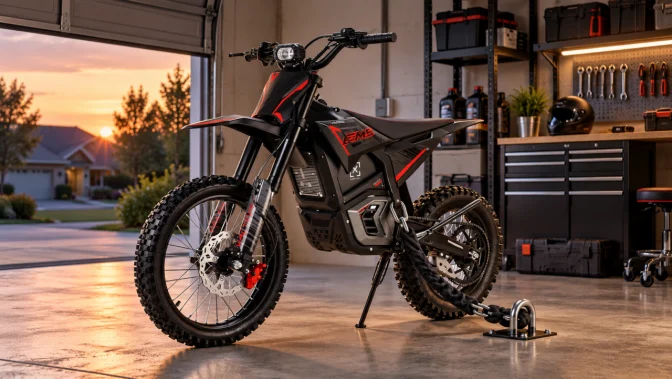
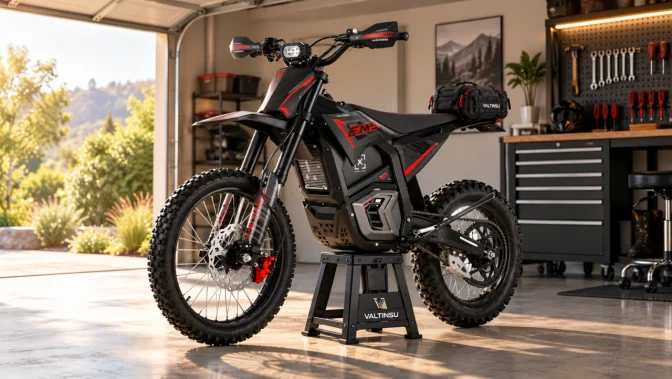
Most adult trail riders do not need a $4,000 race bike. They need composure, range, and torque they can trust on a climb. The EM-5 Pro covers that for $1,699. A 60V 5,600W geared motor pushes 177 lb-ft (240 N·m) of torque and a 52 mph top end across three modes, 26, 40, and 52 mph, so you can dial it down for tight forest and open it up on a fire road.

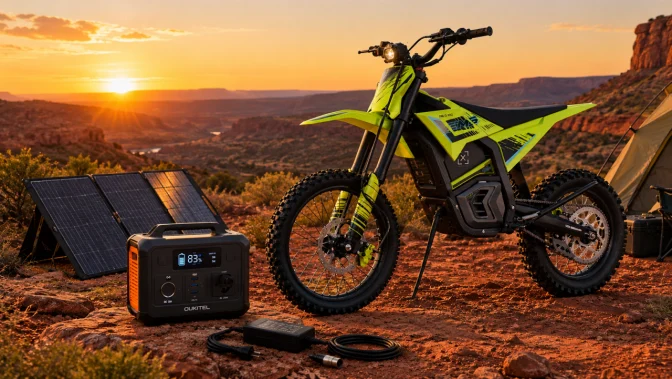
The geared motor is the part that matters off-road. Reduction gearing multiplies torque low in the rev range, which is exactly where a slow, rooty climb lives. Pair that with a 45-degree climb rating, a 59-mile range, a rear adjustable air shock you can tune for rider weight, and 17/14-inch wheels for ground clearance, and the spec gap to a Talaria narrows to almost nothing. The signature Volt Green finish is the one people remember at the trailhead. One note on the spec sheet: an older hero page still lists 4,800W; the current figure is 5,600W, so trust the live collection.
Rated 18+, adults only. This is not the bike to hand a 14-year-old.
Pros
-
52 mph and a 59-mile range at $1,699, well under any Sur-Ron.
-
Geared motor delivers torque low, where climbs need it.
-
Adjustable rear air shock tunes sag for your weight, not a fixed coil.
Cons
-
Thinner aftermarket than Sur-Ron or Talaria.
-
18+ only. No teen option here.
Sur-Ron Light Bee X: The Dedicated Trail Weapon
The platform that built the category
Sur-Ron more or less invented the lightweight eMoto, and the Light Bee X still rides like a bike designed from the ground up for dirt rather than a converted bicycle. It stays planted as speed climbs and terrain gets rough, and on rocky, rooty sections it holds a line instead of deflecting. The 2026 update moved to a 72V system with up to 10kW peak and around 295 N·m of torque.

The real moat is the ecosystem. Years of aftermarket parts, mod guides, and forum knowledge mean almost anything can be upgraded or fixed. You pay for it, though. Dealer pricing sits in the $3,900 to $4,500 range, and real-world range hovers near 40 miles, shorter than the value bikes here.
Pros
-
Planted, confidence-inspiring trail manners.
-
Deepest aftermarket and community support in the class.
-
Strong resale.
Cons
-
More than twice the price of the value picks.
-
Range trails the longer-legged budget bikes.
Talaria Sting R: The Quiet, Refined Option
Geared drive, racier feel
The Talaria Sting R answers Sur-Ron with a few rider-friendly tweaks: a taller seat, bigger battery, wider swingarm, and a geared transfer case that runs quiet and skips the belt-snapping failure mode. The Sting R version steps up to roughly 8kW peak, a 53 mph top end, and up to a 53-mile range on a 60V 45Ah pack.

It is the pick for a rider who wants something a notch racier than a Sur-Ron with parts support that is nearly as deep. Pricing climbs with trim, generally from around $3,000 and up. Maintenance shifts from belt swaps to a quick gearbox oil change every few thousand miles.
Pros
-
Quiet geared drivetrain, no belt to snap.
-
Strong top speed and range for the class.
-
Healthy aftermarket.
Cons
-
Costs roughly double the value tier.
-
Taller seat suits taller riders better.
Valtinsu EM-5: The First Real Trail Bike
Where a new rider, or a budget, starts
Not everyone needs 52 mph on day one. The EM-5 with light is built so a first time on dirt does not end at the emergency room. A 48V 3,840W geared mid-drive motor makes 148 lb-ft (200 N·m), tops out at 40 mph across 22, 32, and 40 mph modes, and carries a real 50-mile range, for $1,259.

What is unusual at this price is the hardware. Most budget bikes ship a basic direct hub motor and a fixed coil shock. The EM-5 runs a geared mid-drive for better low-speed torque and weight balance, plus a rear adjustable air shock so you can set sag for a 110 lb teen or a 200 lb adult without swapping parts. At 126 lb it is genuinely manageable. Rated 13+, so it is also the one model in the lineup a parent can buy for a younger teen.
Pros
-
$1,259, with a 50-mile range that beats a Sur-Ron on paper.
-
Light at 126 lb and easy to control.
-
Geared mid-drive and air shock, rare at this price.
Cons
-
40 mph ceiling will feel modest to fast riders.
-
Smaller 14/12-inch wheels clear less than a 17-inch front.
Trail Performance Factors That Actually Matter
Once you are past the short list, the buying decision comes down to four things you feel on every ride.
Torque delivery vs peak power
Torque delivery decides how the bike responds at low speed, on a climb, out of a slow corner. Peak power is a headline; smooth, early torque is what keeps the rear tire hooked up on loose dirt. A geared motor multiplies torque low in the rev range, which is why a value bike with reduction gearing can out-pull a higher-peak-power direct-drive hub on a steep, slow climb. Predictable beats punchy, every time, on a trail.
Suspension travel and real comfort
Travel controls how well the bike absorbs square-edged hits. More travel is not automatically better if the damping is poor. The lever most riders never use is the rear air shock: tune sag for your weight and the bike settles instead of bucking. Around 5.9 inches of front travel handles washboard that a short, cheap fork would send straight into the bars.
Weight, handling, and grip
A low center of gravity steadies the bike through turns, climbs, and braking. Poor balance shows up as front-end push or rear slip when traction is thin. Tires close the loop: wider, knobbier tread grips loose dirt and mud but costs a little acceleration; a softer compound bites harder and wears faster. Match the tire to the dirt you actually ride.
Range, Speed, and Real Riding Time
Quoted range assumes a steady cruise on flat ground. Trails are the opposite. Constant acceleration and braking, loose surfaces, and elevation all pull more energy per mile, so plan on real-world numbers below the sticker, sometimes well below on technical terrain.
Rider weight and power mode swing it too. A heavier rider burns more on every climb; an eco or low mode stretches range at the cost of punch. For long loops or back-to-back sessions, a spare pack ends range anxiety, at the cost of carrying weight. Chargers and spare batteries live in the accessories section.
|
Quick rule of thumb
Knock 20 to 35 percent off the quoted range for technical trail riding, more in heat, deep sand, or steep climbs. A 50-mile rating often means 35 to 40 real trail miles.
|
Legal Use, Trail Access, and Restrictions
Legality hinges on classification, not on how quiet or fast a bike is. These adult electric off-road motorcycles are not street legal in stock form. They are built for private property, closed courses, and designated off-road areas, not public roads or sidewalks.

On public land, access is the bigger question. The Bureau of Land Management designates areas as open, limited, or closed to off-highway vehicles, and on most BLM land cross-country travel is prohibited, so you ride established, designated routes only. Federal law treats these machines as OHVs, distinct from e-bikes, which changes where they are allowed.
Rules vary by state and by parcel. Many states require an OHV registration sticker or trail pass to ride designated routes, and most mandate a DOT or Snell helmet for younger riders. Check the managing agency before you unload, federal guidance is clear that designations differ from one office to the next.
|
Before you ride
Confirm the area is open to OHVs, not just to e-bikes. Carry an OHV registration or trail pass if your state requires one. Wear a certified helmet. Ride designated routes only, cross-country riding is a violation on most public land.
|
How We Picked These Trail Bikes
Our team weighs the same things a rider feels on the trail, not the spec a marketer wants to lead with.
Trail behavior over top speed
We rank low-speed torque delivery, suspension quality, and handling balance above peak wattage and top-speed claims. A bike that stays composed on rough ground beats one that only looks fast on paper.
Honest, current specs
Every figure here was checked against each maker's current numbers, including catching a stale Valtinsu hero page that still listed an old wattage. Where a maker does not publish a number, such as the EM23's trail range, we say so rather than guess.
Value and ownership
Price, range, parts access, and warranty all count. A well-supported value bike often serves a rider longer than a high-spec model with thin support, which is why both tiers appear here.
Which One Should You Ride?
There is no single best electric dirt bike for trails anymore, and that is good news. Pick by how you actually ride. For most adults, the EM-5 Pro hits the value sweet spot, real trail speed and range without the race-bike price. New riders or tighter budgets start on the EM-5. Open ground and taller riders lean toward the EM23. If you want the deepest mod scene and have the budget, the Sur-Ron and Talaria are honest, capable choices.

Match the bike to your terrain, your weight, and your skill, then ride within the rules where you live. The right bike feels composed early and leaves you room to push later.
Frequently Asked Questions
What kind of electric dirt bike is best for trail riding?
A mid-weight one. Smooth low-end torque matters more than a big peak number here. Trails reward balance: light handling, real suspension travel, torque that shows up early on a climb. A 130 to 145 lb bike with a geared motor usually out-rides a heavier, higher-peak-power machine on dirt. Weight is the part people underrate.
-
Tight forest: go lighter, prioritize handling.
-
Open or fast trails: more speed and range help.
-
Either way: predictable throttle beats a punchy one.
Are electric bikes good for trail riding?
Yes, when they are built for off-road use. Instant torque, no clutch, nothing to gear-hunt. That makes them easy to control on technical ground, and the quiet helps on group rides. Range is the catch on long, rough sessions, where energy use runs high. Short to medium trail rides, though? They shine. And upkeep runs lighter than a gas bike.
What is the best e-bike for all terrain?
A balanced mid-power bike. All-terrain is about handling traction changes, elevation, and surface transitions without drama. Not topping a speed chart. Look for a geared motor, tunable suspension, tires that grip across surfaces. In the value tier, a 52 mph bike with a 59-mile range and an adjustable air shock covers mixed riding fine. The shock is the quiet edge.
Can electric bikes go on dirt trails?
Yes, but access depends on classification and local rules. High-power electric dirt bikes count as off-highway vehicles in most places. That puts them on designated OHV routes, not hiking-only trails. On most BLM land, cross-country riding is prohibited, so you stick to established routes. Check the managing agency first. Always.
Why are some electric bikes banned on trails?
Classification, mostly. Many trail systems split non-motorized, e-bike, and motorized use, and powerful electric dirt bikes land in the motorized bucket. Then there is safety near pedestrians, trail wear, habitat protection. All of it factors in. Rules differ across federal, state, and local land too, so a bike legal on one parcel can be off-limits on the next one over.
How fast is a 3000W electric dirt bike in mph?
Roughly 28 to 45 mph. Rider weight, gearing, terrain, and battery all move it. Flat ground gives the higher end; climbs and loose dirt pull it down. Wattage alone does not set speed either, controller tuning and wheel size matter too. And for trail riding, torque and control beat the top number anyway.
What electric dirt bikes should you avoid?
Ones with vague specs, no parts support, or fuzzy battery details. A high advertised wattage means little if the cells are weak or the controller is cheap. Watch the warranty too. No local service turns a small repair into a long wait. And skip any bike mismatched to your terrain, too heavy or too aggressive helps no one.
-
Red flag: no published battery spec or warranty.
-
Red flag: parts only ship from overseas.
-
Green flag: clear specs, US support, real reviews.
What is the most reliable electric dirt bike brand?
No single name wins it. The reliable ones share traits instead: proven frame design, consistent battery systems, real parts availability. Sur-Ron and Talaria have the deepest aftermarkets. Value brands like Valtinsu compete on spec-per-dollar with US support. Reliability tracks build consistency and service access, not brand prestige. Weigh support as heavily as the spec sheet.
Sources
-
Bureau of Land Management, Off-Highway Vehicles on Public Lands (2026).
-
Congressional Research Service, Motorized Recreation on Federal Lands (2024).
-
Montana Fish, Wildlife & Parks, Off-Highway Vehicles: Rules and Gear (2026).
-
Sur-Ron USA, Light Bee X Specifications (2026).
-
Talaria, Sting R MX4 Specifications (2026).


Looking for something else?
Electric Dirt Bike Replacement Parts Availability: What Buyers Should Verify Before Ordering
LEARN MORE
How to Check an Electric Dirt Bike for Safety Recalls by Model and Serial Number
LEARN MORE
How to Choose an Electric Dirt Bike Repair Shop: Questions to Ask Before Service
LEARN MORE
How to Lift a Fallen Electric Dirt Bike Without Hurting Yourself or the Bike
LEARN MORELooking for something else?
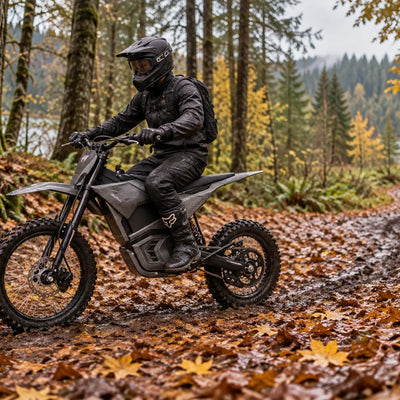
Electric Dirt Bike Fall Riding on Wet Leaves: Grip, Hidden Obstacles and Braking
LEARN MORE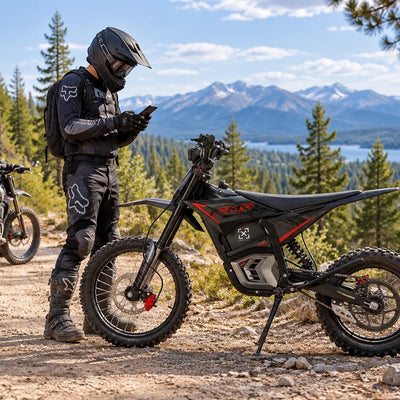
Electric Dirt Bike Trailside Power Loss: Recovery Plan When the Battery Is Dead
LEARN MORE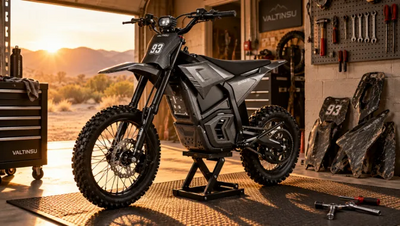
Electric Dirt Bike Plastics Replacement Guide: Fitment, Color Kits and Install Order
LEARN MOREYou may also like
VALTINSU EM-5 Off-Road Electric Dirt Bike
€1.299,00
€1.599,00
VALTINSU EM-5 Pro Off-Road Black Electric Dirt Bike
€1.999,00
€2.199,00
VALTINSU EM-5 Pro Green Electric Dirt Bike
€1.999,00
€2.199,00
VALTINSU EM-5 & EM-5 Pro Combo
€3.148,00
€3.298,00