

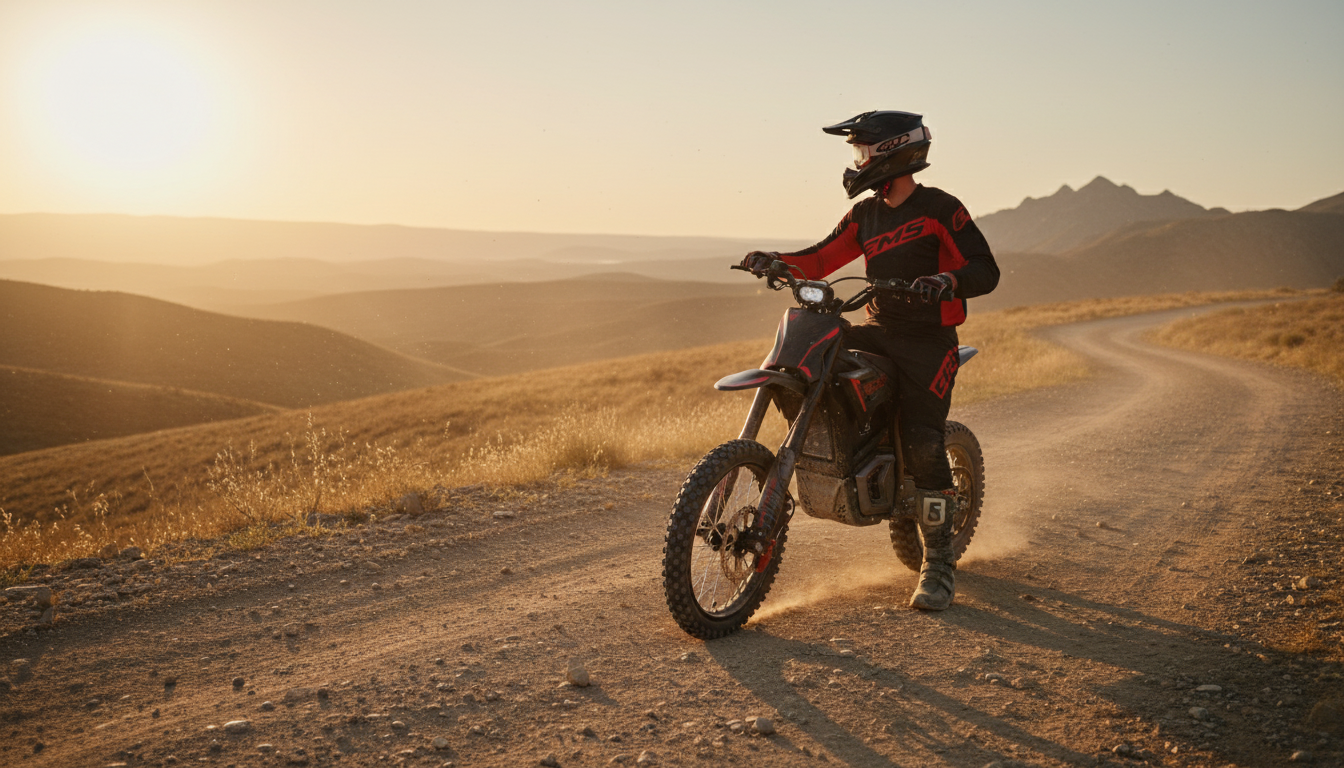
How Fast Is 48 Volts in MPH? A Real-World Speed Guide for Riders
Tyler found a used 48V machine on a marketplace listing, saw “48 volts” printed on the battery, and did the math in his head: more volts than the 36V bike his neighbor rode, so it had to be quick. He pictured 35, maybe 40 on a good day. First charge, flat road, throttle pinned — 22 mph and holding. He spent a week convinced the motor was dying before someone on the forum told him the truth he didn’t want to hear: the battery sticker was never the number that mattered.
It’s the most common mix-up in electric riding, and it’s an easy one to fall into. Volts feel like the headline spec, so people read them like a speedometer. They aren’t one. A 48V system moves most light electric vehicles somewhere in the 20-to-30 mph band in normal use, and a high-watt build can run well past it — but the voltage alone tells you almost nothing about where your bike lands in that range.
Think of it the way you’d think about a car. The size of the fuel tank doesn’t set your top speed; the engine does, and so does the weight you’re hauling and the hill you’re climbing. Voltage is the tank. The motor, the controller, your body weight, and the ground under the tires are the engine and the road. If you’re shopping past basic commuter e-bikes and into Valtinsu adult electric off-road motorcycles, that gap matters even more, because those machines are tuned around torque and terrain — not a flat-ground sprint number you can brag about at the trailhead.
This guide breaks the speed question down the way an experienced rider would explain it over a tailgate: what 48V actually controls, the real-world mph you can expect at each motor size, the five things that quietly steal speed, and where a 48V bike stops being a bicycle in the eyes of the law. No spec-sheet worship. Just what the number means once the tires are on dirt.
|
Quick answer: In the real world, a 48V battery runs a light electric bike at roughly 20–30 mph. Match that 48V to a 500–750W motor and you’ll see about 18–28 mph — right in the legal e-bike zone. Step up to a 1000–3000W motor and 30–45 mph comes into reach, but only when the controller, gearing, rider weight, and terrain all line up. Voltage is the pressure pushing power to the motor. Watts, weight, and the ground you’re on decide what actually shows up on the display.
|
Why 48V Doesn’t Equal One Fixed MPH

Voltage is pressure. Watts are work. Here’s the cleaner way to hold it in your head: volts measure how hard the system pushes electricity toward the motor, and watts measure how much that motor can actually do once the power arrives. One is potential. The other is output. That single distinction is why two bikes wearing the identical 48V battery can ride like they came from different planets.
Put a 48V 500W commuter next to a 48V machine running serious wattage. Same voltage on both labels. After that, almost nothing matches. The high-watt motor draws more current, snaps off the line harder, and refuses to give up speed when a headwind or a grade shows up — the exact moment a 500W motor starts sounding strained and bleeding mph. The sticker says they’re twins. The throttle says otherwise.
And then the real world casts the deciding vote. A 150-pound rider on smooth pavement will hit a top speed that a 230-pound rider on loose, rocky dirt never sees — on the exact same bike, same battery, same day. Soft tires shave a couple of mph without you noticing. A half-drained pack pulls weaker than a full one. A controller capped for safety holds you below what the motor could otherwise reach. None of those variables print on the battery, which is exactly why the battery can’t answer the speed question by itself.
|
Rider tip: When you see a spec like “48V,” look for the watt rating right next to it. Watts move you closer to a real speed estimate. Voltage alone is half a sentence.
|
48V Speed by Motor Power: 500W to 3000W
This is the table most riders are actually hunting for when they type the question into a search bar. A quick warning before you read it: these are real-world ranges, not lab promises. The same motor that touches the top of its range on flat asphalt will sit at the bottom of it climbing a gravel grade with a tired battery and a rider carrying gear. Treat the numbers as a window, not a guarantee.
|
48V Setup
|
Typical Real-World Speed
|
Common Use
|
|
48V 500W
|
18–25 mph
|
Commuting, light hills
|
|
48V 750W
|
20–28 mph
|
Class 2 / Class 3-style street riding
|
|
48V 1000W
|
25–32 mph
|
Faster commuting, private trails
|
|
48V 1500W
|
28–35 mph
|
Stronger acceleration, off-road use
|
|
48V 3000W
|
30–45 mph
|
High-power private land or off-road
|
Start at the bottom of the ladder. A 48V 500W bike settles around 18–25 mph — plenty for a flat morning commute, not built to chase anyone down a trail. The 750W tier (20–28 mph) is where most street e-bikes live, and that 28 mph ceiling isn’t a coincidence: it’s the legal Class 3 limit in most states, so manufacturers tune right up to it and stop.
Climb to 1000W and the bike stops feeling polite. You’re into 25–32 mph, with a real shove off the line and enough grunt for private trails. At 1500W (28–35 mph) the conversation changes again — this is where brakes and tires stop being an afterthought, because the bike now carries enough speed that stopping distance becomes your problem to manage.
Then there’s the 3000W tier, which can flirt with 30–45 mph when everything cooperates. Be honest with yourself about what that means. At those speeds you’re not riding a bicycle with a motor bolted on — you’re riding something a lot closer to a small electric motorcycle, and it earns motorcycle-level caution, gear, and a careful look at where it’s legal to ride. More on that further down.
|
Valtinsu EM-5 — Adult Electric Off-Road Motorcycle
48V geared motor | 3,840W peak | 190 N·m torque | ~37 mph (60 km/h) | IPX6 | three ride modes | age 13+. Built for trail riding on private land, OHV parks, and designated off-road areas — not public roads. The geared motor puts torque low in the rev range, which is exactly where a new rider needs it on a tight climb.
From $1,259 USD | Free U.S. shipping | 3–7 day delivery
|

What Actually Changes Your Top Speed

Hand the same 48V bike to six riders and you’ll get six different top speeds out of it. That’s not a defect — it’s physics doing its job. Five things do most of the work, and once you can see them, you stop blaming the motor for problems the motor didn’t cause.
Rider weight
More mass needs more power to get moving and more power to stay moving. On flat pavement the difference between a light rider and a heavy one is small — a mile or two per hour. Point the same bike uphill and the gap widens fast, because now the motor is fighting gravity on top of everything else. A bike that hits 32 mph under a 150-pound rider can top out at 28 with a heavier rider and a loaded backpack. Same machine, same full charge, different result.
Terrain and surface
Flat asphalt gives the highest number because there’s almost nothing to fight. Dirt, grass, gravel, sand, and mud all drag that number down as the tire works harder to find grip and the bike sinks slightly into anything soft. This is the part that trips up new off-road riders: top mph is nearly the wrong question on a trail. What you feel out there is climbing torque and braking control, not a flat-ground sprint stat that you’ll never actually use on singletrack.
Controller and motor quality
The controller is the traffic cop between battery and motor — it decides how much current gets through. A conservative controller caps your speed for safety and to stay inside a legal class; an aggressive one feels quicker but runs hotter and drains the pack faster. Motor quality matters just as much. Two motors rated at the same wattage can perform differently because a well-built one dissipates less energy as heat and maintains speed more smoothly than a cheap one straining to keep up.
Battery charge and tire pressure
A full pack pushes hard. As the charge drops and voltage sags toward empty, acceleration softens and your top speed quietly slips with it — the same bike feels slower at 20% than it did at 100%. Soft tires add rolling resistance and cost you speed without ever announcing themselves. Two of the cheapest, most overlooked speed fixes on any electric bike are a full charge and tires aired to the correct pressure. Neither costs a dollar.
|
Rider tip: Before you blame the motor, check the basics — a dragging brake, a soft tire, or a half-charged battery makes a strong bike feel slow.
|
Is a 48V Bike Street Legal at These Speeds?
Voltage doesn’t make a bike illegal — speed and motor power do. That’s the whole game when it comes to the law. Most U.S. states run a three-class system, and the dividing lines are about how fast the bike assists and how big the motor is, not what’s printed on the battery. Class 1 and Class 2 cap assisted speed at 20 mph, and Class 3 pedal-assist bikes cap at 28 mph (PeopleForBikes). Every one of those classes is built around motors at or below 750W.
|
E-Bike Class
|
Top Assisted Speed
|
Where It Usually Rides
|
|
Class 1 (pedal-assist)
|
20 mph
|
Bike lanes, many trails
|
|
Class 2 (throttle)
|
20 mph
|
Bike lanes, roads
|
|
Class 3 (pedal-assist)
|
28 mph
|
Roads, on-road bike lanes; often 16+ and helmet required
|
|
Above 750W / 28 mph
|
Not an e-bike
|
Motor-vehicle or off-road classification
|
That bottom row is exactly where high-power 48V machines land. A 3000W bike sits far above the common 750W e-bike limit (NHTSA), so plenty of states stop treating it as a bicycle the moment it can out-run those numbers. Depending on where you live, it might be classified as a moped, a motor-driven cycle, or an off-road-only vehicle — each of which can carry its own rules on registration, insurance, helmets, and where you’re allowed to ride.
The trap here is assuming “electric” automatically means “bicycle access.” It doesn’t. A trail that welcomes a 20 mph pedal-assist commuter may ban a fast, high-watt machine outright, and a quiet motor won’t talk you out of a ticket if an officer clocks you well over the local limit. The rules also shift by city, by trail system, and by land type, which is why the only safe move is to check your state and local regulations before you ride somewhere new — not after.
|
Before you ride: If your 48V bike can clearly out-run 28 mph under power, don’t assume “electric” means “bicycle access.” Many areas treat fast machines as motor vehicles, and a quiet motor doesn’t make you invisible to enforcement. Check your state and local rules — they change by city, trail, and land type.
|
Can You Make a 48V Bike Go Faster?

Some, safely. A lot, not safely. The honest answer splits into two piles — the boring stuff that simply lets the bike reach the speed it was always capable of, and the risky stuff that buys you a few mph at a cost you might not see coming. Start with the boring pile, because it’s free and it works.
-
Air the tires to the correct pressure — low pressure adds drag and quietly drains range.
-
Strip extra weight off the bike when you don’t need to carry it.
-
Keep the drivetrain clean; dirt and grit are just resistance you’re paying for.
-
Run the ride mode that matches the ground — don’t fight soft dirt in a high-speed mode.
-
Keep the battery charged and healthy, since a tired pack holds the whole bike back.
Now the tempting one: unlocking the speed limiter. It’s where most of the trouble starts. Pulling the cap can void your warranty, shove the bike out of its legal class without you realizing it, and load up brakes, tires, spokes, and battery cells that were perfectly fine at 20 mph but sketchy at 35. The hardware was specced for the original number. Push past it and you’re gambling with the parts that stop you.
There’s a reason quality batteries and systems carry safety certification like UL 2849 — it verifies the pack, charger, and electronics were tested together as a system. Forcing a commuter past its design quietly undoes that engineering. You end up with more speed and less margin, which is the wrong trade on anything you ride near other people.
If real off-road speed is the goal, the cleaner path isn’t hot-rodding a commuter — it’s starting with a bike built for it. A factory-tuned electric dirt bike ships with brakes, suspension, and a frame already matched to its power, instead of commuter hardware you’re hoping survives a job it wasn’t designed for.
Where a 48V Off-Road Bike Actually Fits
Here’s where the speed question finally turns into a buying decision. If your plan is street commuting at legal speeds, a 48V 500–750W e-bike is more than enough — you’ll live comfortably in that 20–28 mph band and never think about it again. But if your plan involves dirt, the whole calculation flips. Off-road, a flat-ground top-speed number is close to useless. What you feel on a trail is how the motor delivers torque when you ask for it on a climb.
That’s the spec that separates a geared electric off-road motorcycle from a hub-motor commuter wearing the same voltage. Across the full electric dirt bike lineup, the number that earns its keep on a switchback isn’t volts — it’s torque delivery low in the rev range. The 48V EM-5 makes 190 N·m and the 60V EM-5 Pro makes 240 N·m, both routed through reduction gearing. That gearing is the reason these bikes hold a steep, slow climb that bogs down a higher-peak-power direct-drive machine. The peak-power spec wins the spec-sheet argument; the torque-delivery spec wins the actual hill.
So the right bike isn’t the one with the biggest voltage or the headline top speed — it’s the one matched to where you actually ride. Commuter? Lower-watt 48V, done. Trails and grades? Look past the speed stat and ask what the bike does at 8 mph on a loose climb, because that’s the moment that decides whether you keep riding or get off and push.
|
Which one fits your riding
EM-5 — ages 13+ — trail starter. 48V | 3,840W peak | 190 N·m | ~37 mph | IPX6. Three modes (25/40/60 km/h). The only Valtinsu model rated under 18. From $1,259.
EM-5 Pro — adults 18+ only — performance trail. 60V | 4,800W peak | 240 N·m | up to 51 mph | IPX6. Black or Volt Green. Geared motor for fire roads, singletrack, and 30° grades. From $1,699.
Age rule — no exceptions: EM-5 = 13+, EM-5 Pro = 18+ adults only. Shopping for a rider under 18? Choose the EM-5
|

|
Key takeaways
A 48V battery sets the electrical pressure, not the speed — the motor wattage is what puts you in a real-world range, roughly 18–45 mph depending on the build.
Most legal street e-bikes use 48V with a 500–750W motor and top out near 20–28 mph; anything clearly faster than 28 mph under power usually stops counting as a bicycle.
Rider weight, terrain, controller limits, charge level, and tire pressure all move your true top speed, and none of them appear on the battery label.
On dirt, torque delivery matters more than a flat-ground sprint number — which is exactly why a geared off-road bike out-climbs a higher-peak-power commuter on the same voltage.
|
So, How Fast Is 48 Volts?
Twenty to thirty mph for most setups, faster when the watts and conditions line up — but you already know the battery sticker was never going to answer this cleanly. Motor power sets the ceiling. Controller, rider weight, tires, charge level, and the ground under you write the real number you see on the display.
For daily street riding, a 48V 500–750W bike is the easy, legal call and you can stop reading here. For dirt, do the harder thing: stop staring at the top-speed stat and start asking what the bike does on a climb, because that’s the question that actually separates a fast commuter from a real trail machine.
It’s the question Tyler wishes someone had asked him before he read the sticker and did the math in his head. Volts are the pressure. Watts, weight, and terrain are the ride. Know which one you’re actually buying, and you won’t spend your first week convinced a perfectly good bike is broken.
Conclusion
A 48V electric bike usually reaches about 20 to 30 mph in normal riding, but the final speed depends on more than battery voltage. Motor power, controller settings, rider weight, tire type, battery charge, and terrain all change the real-world result.
For daily riding, a 48V 500W or 750W setup is usually enough for steady speed and smooth control. A 48V 1000W, 1500W, or 3000W setup can feel much faster, especially on flat roads or private off-road areas.
A 48V 3000W electric bike may reach 30 to 45 mph in the right conditions, but that speed also brings more responsibility. At higher speeds, brakes, tires, suspension, protective gear, and local rules matter as much as the motor.
For most riders, the best choice is not only the fastest bike. The better choice is a 48V setup that matches where you ride, how much control you need, and whether the bike is built for streets, trails, or private land.
FAQs
How fast would a 48V go?
A 48V electric bike usually runs 20–30 mph in real-world riding. The motor wattage sets the ceiling: a 48V 500–750W bike lands around 18–28 mph, while a 48V 1500W or 3000W setup can reach 30–45 mph when the controller, battery, gearing, and terrain all cooperate. Rider weight and surface still pull the final number up or down.
How fast does a 48 volt go in mph?
It depends on the motor, not the voltage. A 48V 750W bike often tops out near 28 mph — the legal Class 3 ceiling in most states. A 48V 3000W machine can hit 30–45 mph in the right conditions. Flat pavement, a full battery, and a lighter rider push you toward the high end; hills and loose dirt drag you toward the low end.
Is it possible for a 48 volt battery to go 35 mph?
Yes, with enough motor power behind it. A 48V system reaches 35 mph when paired with roughly 1500W or more, a strong controller, proper gearing, and good conditions. A typical 48V 500–750W commuter won’t get there — it’s capped lower by both the motor and, often, the controller. Watts make 35 mph realistic; voltage alone doesn’t.
How fast is 48V 1000W to mph?
A 48V 1000W electric bike usually reaches about 25–32 mph. It pulls noticeably harder than a 750W motor off the line and on climbs, which makes it popular for faster commuting and private-trail riding. Your real top speed still shifts with rider weight, tire drag, controller limits, and how full the battery is.
How much is 48 volts in miles?
Volts don’t convert to miles — they’re a measure of electrical pressure, not distance. Range comes from battery capacity (amp-hours), motor size, rider weight, terrain, and ride mode. A 48V battery with more amp-hours travels farther than a smaller 48V pack, even though both read “48 volts.”
Is 48V a lot for an electric bike?
For an e-bike, 48V is a strong, common platform. It gives more power support than older 36V systems and handles commuting, hills, and light off-road well. It’s the modern standard because it balances speed, torque, and range. For aggressive trail riding, higher-power off-road bikes step beyond what a basic 48V commuter is built to do.
How do I make my 48V bike go faster safely?
Start with the basics: full charge, correct tire pressure, clean drivetrain, no dead weight, and the right ride mode. Those let the bike reach the speed it was designed for. Unlocking the speed limiter can add mph but often voids the warranty, breaks legal classification, and stresses brakes and tires beyond their rating. For real speed, a purpose-built bike beats a forced commuter.
Is a 3000W electric bike street legal?
Usually not as a standard e-bike. Most states cap pedal-assist e-bikes around 750W and 28 mph. A 3000W machine sits well above that, so it’s commonly classified as a moped, motor-driven cycle, or off-road-only vehicle, which can mean registration, insurance, or a license for public roads. Check your state and local rules before riding one anywhere public.
Sources
-
PeopleForBikes — Electric Bike Laws by State
-
UL Solutions — E-Bikes Certification and UL 2849
-
Valtinsu — Electric Dirt Bike Collection
-
Valtinsu — EM-5 Electric Off-Road Adult Dirt Bike
-
Valtinsu — EM-5 Pro Electric Dirt Bike (Green)


Looking for something else?
Electric Dirt Bike Setup for Hardpack Trails
LEARN MORE
Electric Dirt Bike Mud Riding: Setup, Technique and Cleanup
LEARN MORE
Can You Ride an Electric Dirt Bike on Forest Service Roads?
LEARN MORE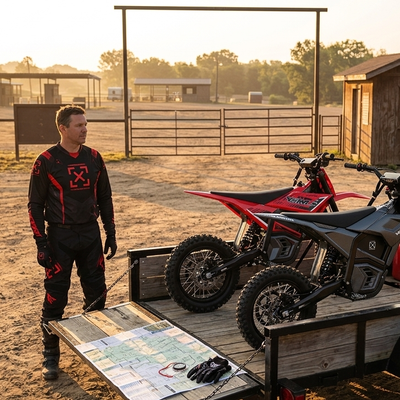
Electric Dirt Bikes at OHV Parks: Rules and Checklist
LEARN MORELooking for something else?
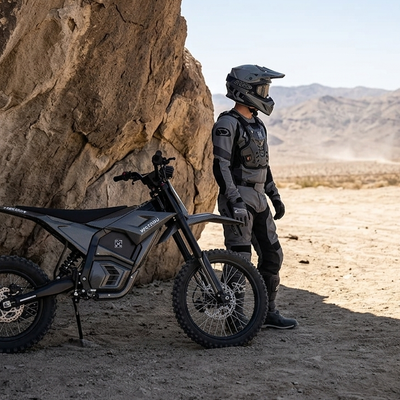
Hot-Weather Electric Dirt Bike Guide: Battery, Rider and Range
LEARN MORE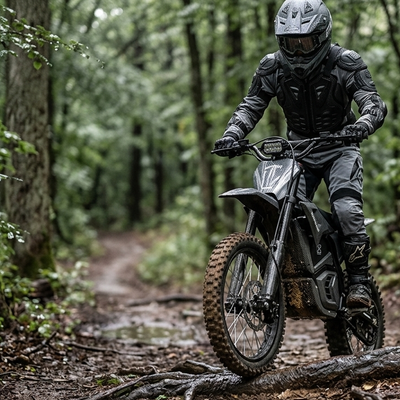
How to Ride an Electric Dirt Bike Over Wet Roots
LEARN MORE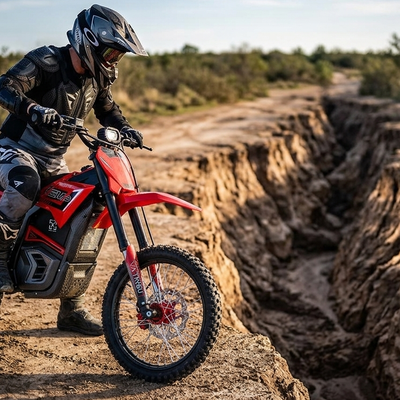
Electric Dirt Bike Ruts and Washouts: Line Choice and Recovery
LEARN MOREYou may also like
Moto eléctrica todoterreno para adultos EM-5 con luz
€1.299,00
€1.599,00
VALTINSU EM-5 Pro Off-Road Black Electric Dirt Bike
€1.699,00
€1.899,00
VALTINSU EM-5 Pro Green Electric Dirt Bike
€1.699,00
€1.899,00
Further reading
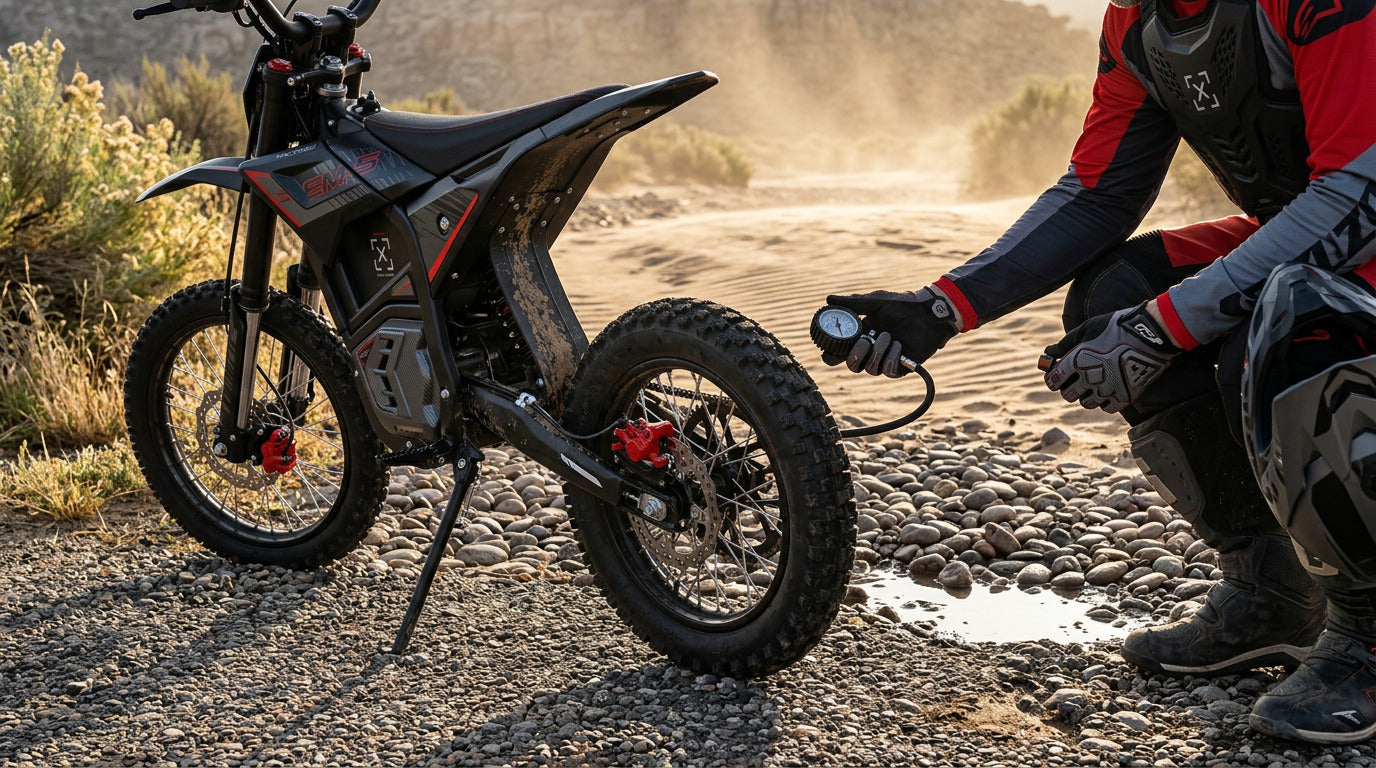
Electric Dirt Bike Tire Pressure by Terrain: PSI Starting Points
Electric dirt bike tire pressure should start with the exact tire and motorcycle limits, then change with terrain, rider load, tire construction and impact risk. Softer ground usually favors a lowe...
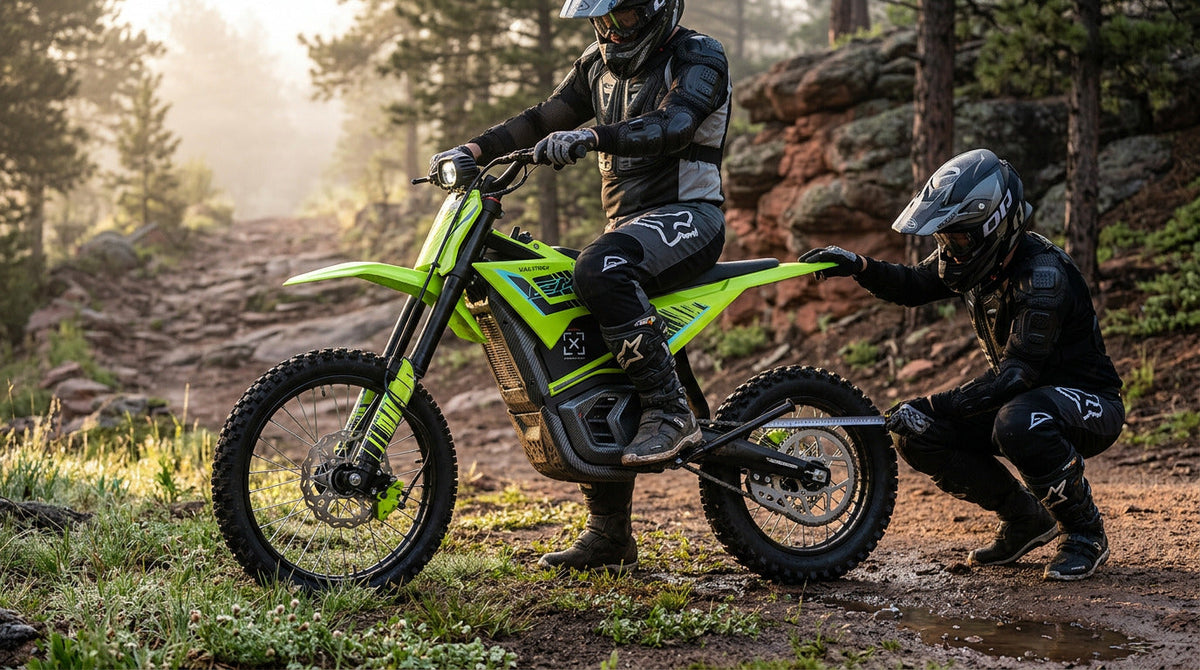
Electric Dirt Bike Suspension Sag Setup: A Rider-Weight Method
Electric dirt bike suspension sag setup starts by measuring the rear suspension fully extended, then measuring it again with the bike alone and with you in full riding gear. Use those readings to e...
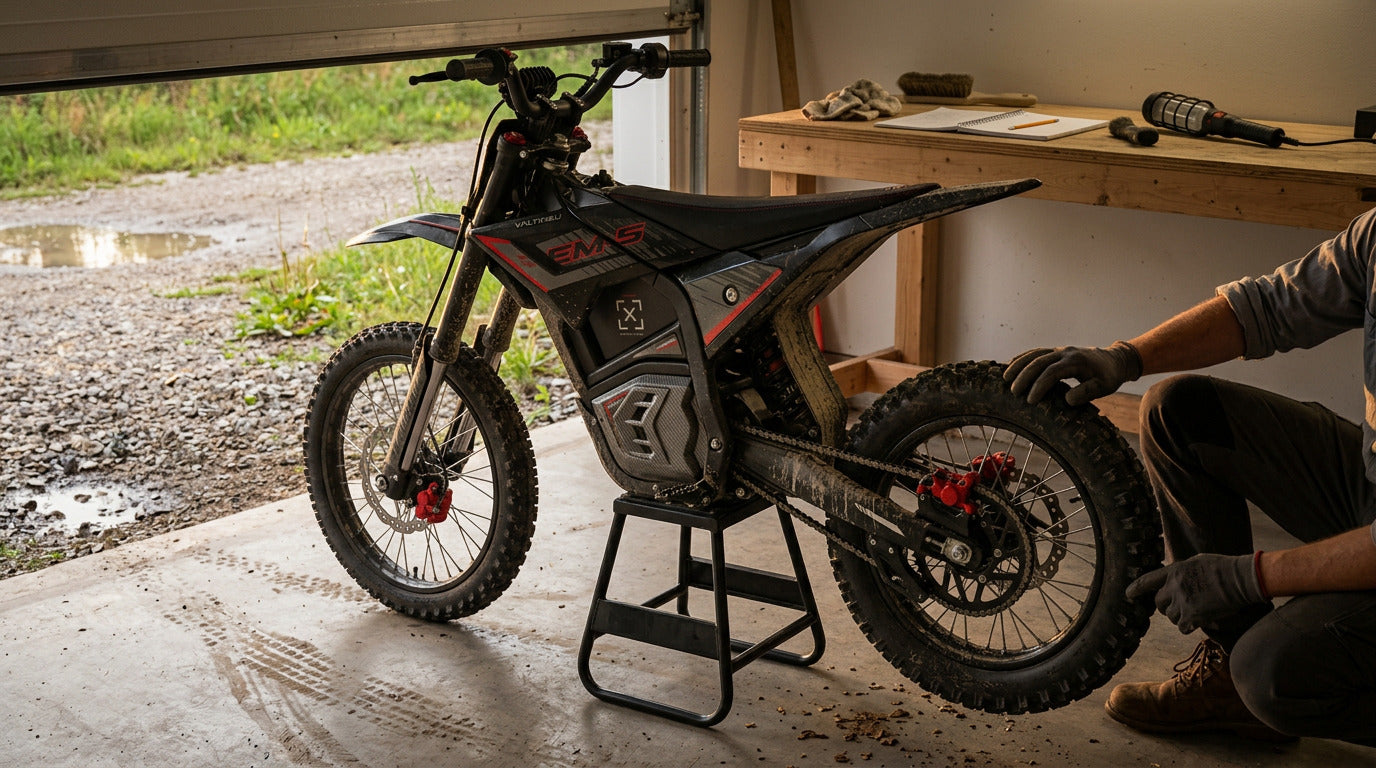
Your First 100 Miles on an Electric Dirt Bike: Break-In and Service Checklist
The first 100 miles on an electric dirt bike are an inspection period rather than a gas-engine-style mechanical break-in. Check the motorcycle at 0, 25, 50 and 100 miles for hardware settling, chai...
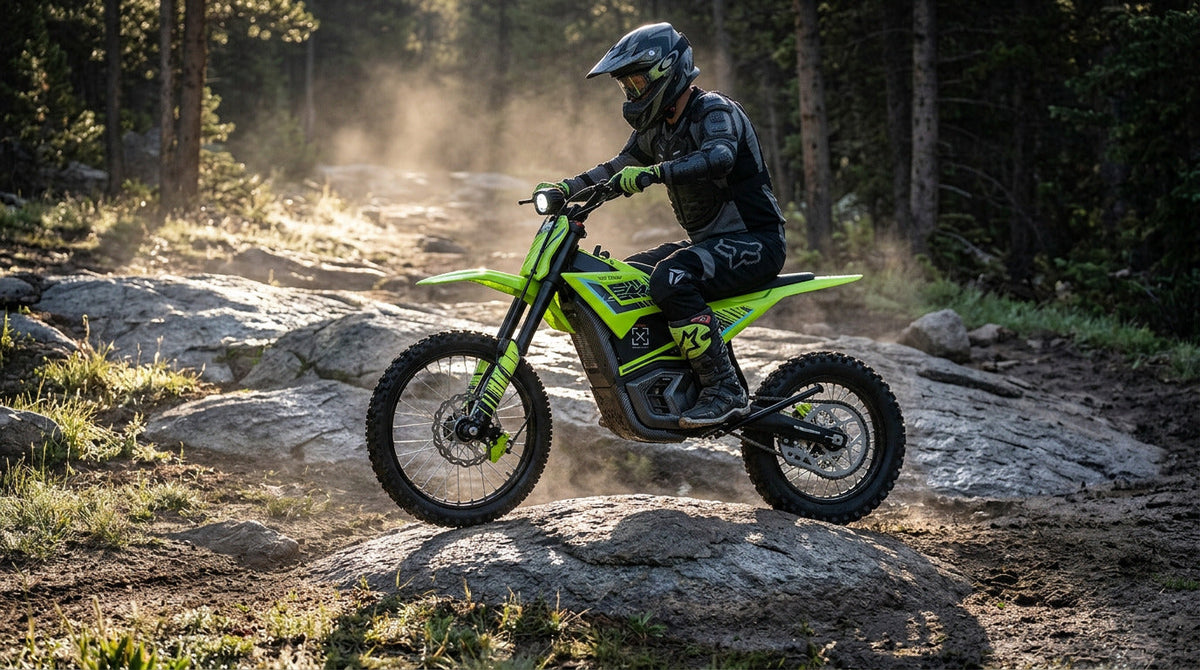
Electric Dirt Bike Ground Clearance vs Suspension Travel: What Each Number Means
Electric dirt bike ground clearance is the vertical space between the ground and the motorcycle’s lowest relevant chassis point, while suspension travel is how far the wheel and suspension can move...