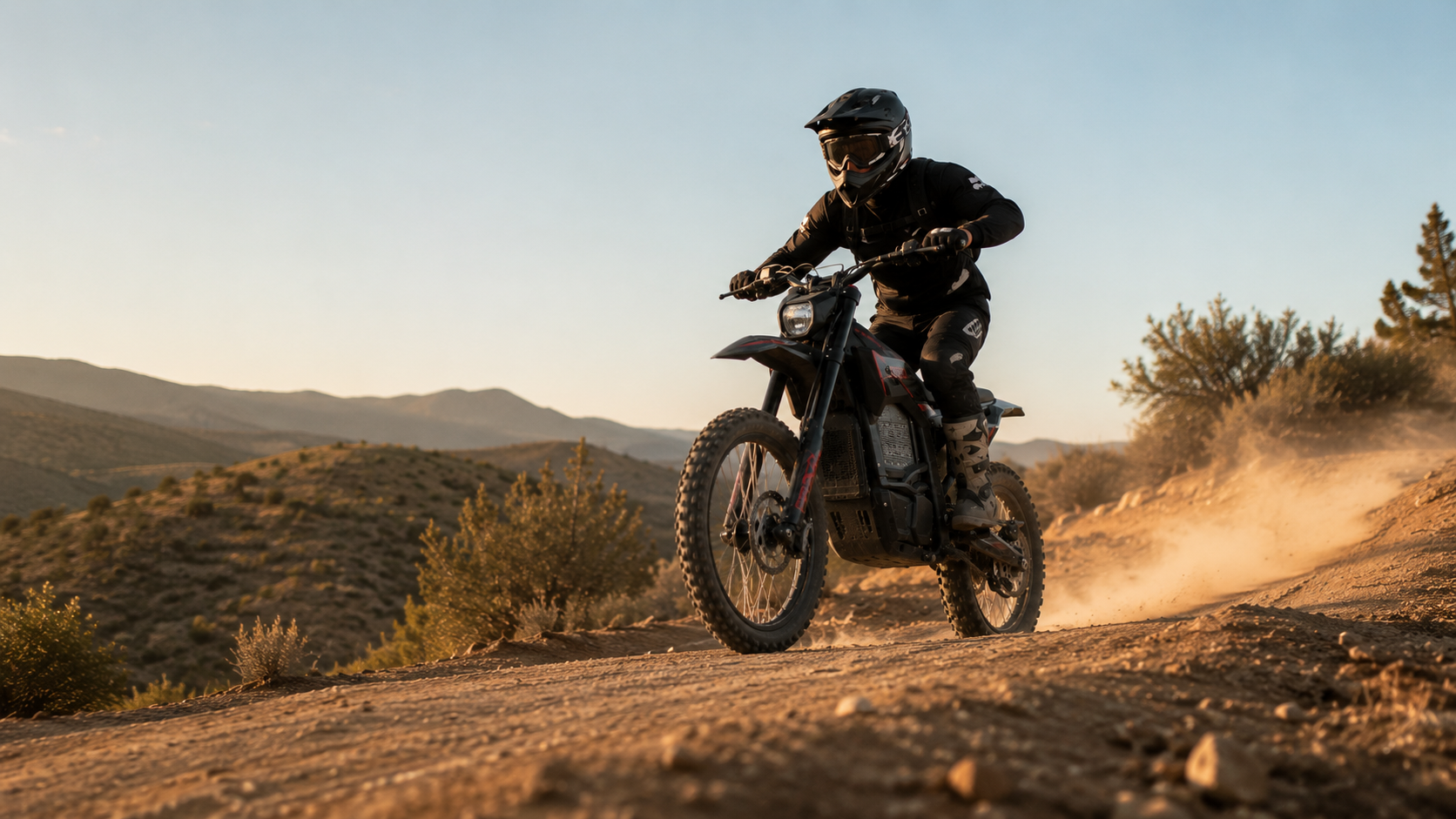
How Fast Is a 2000W Electric Bike in MPH? Real Trail Speed Explained
A 2000W electric bike runs about 35 to 45 mph on flat pavement. On dirt, figure 15 to 35. That gap is the whole story, and the motor rating barely explains it. Voltage, terrain, your weight, and traction decide what you actually get to use.
Most bikes in this class are not commuter machines. A 2000W build is really an adult electric off-road motorcycle in everything but name. That is why it lands on private land and trails, not the bike path. We have ridden enough high-wattage off-road bikes to know the spec-sheet number and the trail number almost never match. The Valtinsu lineup we test against sits in this same band, so nothing here is theoretical.
Below: flat-road top speed, trail reality, voltage, weight, the law, and safety.
2000W Electric Bike Speed Overview (MPH Range Explained)
-
Remove or comment out entirely so it does not show in the article
-
Keep only section heading: 2000W Electric Bike Speed Overview (MPH Range Explained)
The short version, by setting:
-
Flat pavement: 35 to 45 mph on a fully charged, higher-voltage build.
-
Trails and dirt: 15 to 35 mph, traction-limited well before the motor maxes out.
-
Sustained cruising: lower than peak. Heat and battery sag pull it back to the mid-20s to mid-30s.
How fast is a 2000W electric bike in mph on flat pavement?
On flat pavement, a 2000W electric bike usually reaches 28 to 45 mph. Voltage and gearing set where it lands. Lower-voltage 48V systems tend to settle near 28 to 35. A 52V or 72V build has more headroom and less resistance, so 40 to 45 is realistic in clean conditions. The motor is one input. Voltage does most of the talking at the top end.
Peak speed vs sustained cruising speed
Peak speed is a short burst at full output. Sustained speed is different. It is what the bike holds once the motor and controller heat up and the pack sags under load. Those two numbers are not the same. Most people cruise in the mid-20s to mid-30s even on a bike that flashes 45 for a second downhill. The limiter is heat, not nerve.
Why advertised speed often differs from real results
Factory numbers come from ideal tests. Light rider, flat ground, fresh battery, no wind. Your ride puts back every bit of friction the lab took out. Drag climbs hard past 30 mph, terrain shifts under you, and weight eats into acceleration. So the advertised figure is a best case. Treat it as the ceiling and subtract from there.
Real Trail Speed of a 2000W Electric Bike
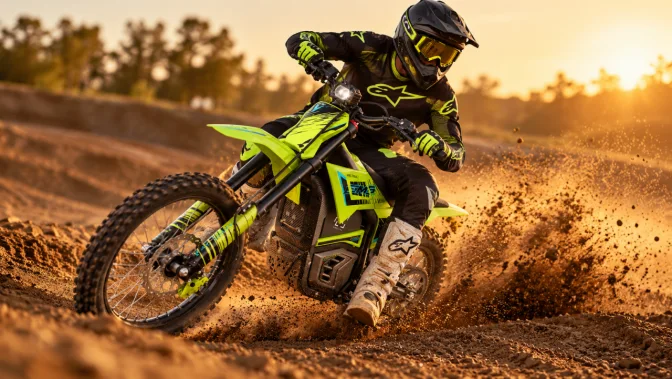
Off the pavement, traction beats horsepower every time. A 2000W motor has grunt to spare for dirt. The ground decides how much of it turns into forward motion. Usable trail range lands between 15 and 35 mph for most riders, and the top of that only shows on smooth, open ground.

Average trail speeds on dirt, gravel, and mixed terrain
Smooth fire roads let a 2000W bike run 30 to 35 mph. Loose gravel and tight, technical singletrack pull that down to 15 to 25, partly for grip and partly for control. Mixed terrain sits in between and shifts minute to minute. On trails like Bootleg Canyon, in our testing, the rough sections set the number you ride. Not the open stretches between them.
How traction limits maximum MPH on off-road surfaces
Traction runs out before power does. Knobby tires bite into dirt for control, and they add rolling resistance doing it, so you trade a little top speed for grip you want anyway. On uneven ground the tire lets go before the motor hits its ceiling. That is the wall you feel most days.
Effect of elevation, sand, and mud on speed reduction
Climbing fights the motor against gravity, so speed drops on grades. Sand drags and burns through acceleration. Mud kills grip and forces slow, deliberate riding. None of that is a flaw. It is physics. This is where a geared motor earns its keep, multiplying torque low in the rev range, right where a loose climb needs it.
Road vs Trail Speed Comparison (Real-World Difference)
for a 2000W electric bike, the same machine behaves differently. Same bike, two different machines, depending on what is under the tires. Pavement rewards full power. Loose ground throws it away through slip and resistance. The table shows the split. The sections under it explain it.

|
Surface
|
Typical MPH
|
What sets the limit
|
|
Flat pavement
|
35-45 mph
|
Voltage and wind resistance
|
|
Smooth fire road
|
30-35 mph
|
Surface grip, minor bumps
|
|
Loose gravel / sand
|
15-25 mph
|
Traction and control
|
|
Technical singletrack
|
15-25 mph
|
Obstacles, steering, braking
|
|
Uphill grade
|
22-30 mph
|
Gravity vs torque
|
Flat road top speed expectations in MPH
On paved roads a 2000W electric bike reaches 30 to 45 mph, depending on the build, with higher-voltage systems sitting at the top of that band. Past about 30 mph the thing slowing you down is the air, not the motor. Double your speed and aerodynamic drag roughly quadruples. That is why the last few mph cost so much more power than the first.
Trail riding speed range under real conditions
Trail speeds usually fall between 15 and 35 mph. Rough terrain and elevation keep it inconsistent, and open off-road paths are the only place the higher numbers turn up. Most of the time you are feathering the throttle. Not pinning it.
Why the same 2000W bike behaves differently by surface
Surfaces change how power turns into motion. Pavement holds the tire, so the motor uses everything it has. Loose ground swallows energy through wheelspin and rolling resistance, and less of that 2000W reaches the dirt as speed. The motor never changed. The contact patch did.
Key Factors That Control 2000W E-Bike Speed
Wattage is one number on a sheet full of them. Five things shape what a 2000W bike actually does. Voltage leads.
Battery voltage impact (48V vs 52V vs 72V)
Higher voltage raises motor RPM, and RPM sets your top end. A 48V system balances speed and efficiency, and it usually tops out lower. Move to 52V and the mid-range firms up. A 72V build gives you the highest MPH and the hardest acceleration, and it drains faster for the privilege. Our 60V test bikes sit between those points. The 60V 5,600W EM-5 Pro holds 52 mph, which tells you how much voltage and gearing matter once you are at this power level.
If you want to see how voltage maps to real top speed across a full lineup, compare the range side by side rather than trusting a single spec.

Rider weight and cargo influence on acceleration and MPH
Heavier loads cut acceleration and shave the top end. The motor has to split its output between moving you and dragging the extra mass along, so a 220-lb rider with a loaded pack will never see what a 150-lb rider sees on flat ground. Acceleration takes the real hit. Top speed slips a little, launch slips a lot.
Tire type, pressure, and rolling resistance effects
Tires are a speed lever people forget. Fat, knobby ones add grip and stability, and they raise rolling resistance, which trims top speed. Higher pressure cuts drag and helps on hard surfaces. Lower pressure adds grip off-road and slows you down. Off-road tires are tuned for traction over MPH, and for dirt that is the right call.
Motor controller limits and electronic speed restrictors
The controller meters current to the motor, and plenty of bikes cap speed in firmware for safety or legal reasons. That cap is often the real ceiling, not the motor. Lift or remove it and output climbs, along with heat and risk, and it can void a warranty. We do not recommend it. Most well-built bikes leave enough headroom in their ride modes that you never need to anyway.
Wind resistance and riding posture impact
Sit upright and you turn into a sail. A lower, tucked posture meaningfully lifts top speed, and a headwind can wipe out several mph on its own. At 40 mph the air is the biggest force working against you. Body position is free speed. Most riders leave it on the table.
52V vs 72V 2000W Performance Differences
As a rule of thumb, choose the 52V 2000W setup if you prioritize steadier, more efficient power for everyday terrain, and the 72V 2000W setup if you want aggressive acceleration and higher top speed for more demanding rides. Which fits comes down to whether you want range and composure or raw acceleration.
|
Setup
|
Real-world top speed
|
Character
|
|
52V 2000W
|
30-38 mph
|
Stable, efficient, even across terrain
|
|
72V 2000W
|
40-45 mph
|
Aggressive launch, higher ceiling, faster drain
|
52V 2000W speed behavior in real use
A 52V system holds 30 to 38 mph in real conditions and stays composed across mixed terrain. Efficiency is the payoff. You give up a little at the top and get a bike that keeps its number and its range, which is what most trail riders are after.
72V 2000W higher-speed potential and acceleration
A 72V build hits harder and reaches higher, pushing 40 to 45 mph on flat ground. Under load the delivery feels aggressive, especially off the line. The trade is appetite. It pulls harder and empties the pack faster doing it.
Trade-off between speed, range, and heat management
More voltage means more energy spent at the top end. Hold a high speed for long and the pack empties fast while heat builds in the motor and controller, which forces a calmer pace on a long run. Speed, range, and heat sit on a triangle. Push one corner and the other two give. No free top speed.
Legal Speed Limits for 2000W Electric Bikes
A 2000W bike sits outside the legal definition of an e-bike almost everywhere. The US version is specific: working pedals, a motor under 750W, and a motor-only top speed under 20 mph (CPSC, 15 U.S.C. 2085). A 2000W build clears all three lines at once. So in most places it is treated as a motorbike or moped, not a bicycle.
US e-bike class limits and watt restrictions
Most US e-bike classes cap motor power at 750W and assist speed at 20 to 28 mph, under the 3-class system tracked by PeopleForBikes. Go past that and the bike can be reclassified as a moped or motor vehicle. Guidance from NHTSA treats anything that beats roughly 20 mph on motor power as falling outside the bicycle category. A 2000W bike usually lands there.
EU and UK speed and wattage compliance rules
Europe draws a tighter line. A legal pedelec there caps out at 250W of continuous power with assistance that quits at 25 km/h, about 15.5 mph (electric bicycle laws, EU). The UK runs the same rules. A 2000W bike is miles past that, so it counts as a motor vehicle needing registration and insurance, the same as any moped.
Why many 2000W bikes are classified as off-road or moped
High wattage just blows past the bicycle definition, so a lot of regions push these into moped territory or pin them to private land and trails. That is why most are sold off-road only. Be honest about it: a 2000W machine is an off-road bike first. If you want something teen-legal or beginner-friendly that stays on the right side of the line, a lower-powered model like the EM-5 is the smarter place to start.
Safety Considerations at High MPH (30 to 45+)
Speed raises the stakes on everything else. At 40 mph, brakes, gear, and stability matter more than the throttle does. Sort these before you go chasing a top-speed number.
Braking system requirements for high-speed riding
On a fast bike, hydraulic disc brakes are the floor, not the upgrade. They shrug off heat fade on long descents in a way mechanical discs cannot, and weak brakes stretch your stopping distance into dangerous territory at speed. Serious off-road bikes run front and rear hydraulics for exactly this reason.

Helmet and protective gear recommendations
A full-face helmet earns its place above 30 mph. Add gloves, knee and elbow pads, eye protection, and proper boots. At 2000W speeds this is not optional kit. It is the line between a bad day and a hospital visit. A standard bicycle helmet does not cut it at moped-class speeds.
Stability risks on rough terrain at high speed
Loose ground shrinks your margin for error, and small obstacles turn into real hazards at high MPH. How planted the bike feels when the surface goes ugly comes straight down to suspension. Wheel size and travel pay off here. It is why a big-wheel bike like the
EM23 stays settled on open ground where a small-wheel mini gets nervous at the same speed.
How to Maximize Safe Speed Performance
You can get closer to a bike's real top speed without ever touching the controller. Three legal levers do most of the work.
Proper tire pressure and setup for speed efficiency
Right pressure cuts rolling resistance and helps both speed and control. Underinflate and the bike drags and slows. A balanced setup keeps it efficient and predictable. Check pressure cold, before you ride. Cheapest speed you will ever find.
Battery charge level impact on performance
A full pack delivers full voltage, and full voltage is your top speed. As it drains, acceleration and top end fade right along with it. Want the bike's best number? Ride it on a fresh charge. The drop is gradual as the pack empties, not a cliff.
Efficient riding posture and throttle control
A tucked posture cuts drag at speed, and smooth throttle holds a steadier MPH than stabbing at it. Jerky on-off inputs waste energy and upset the bike. Ride smooth and you ride faster, with more range left when you roll back in.
2000W vs Lower Wattage E-Bikes (Speed Comparison)
Wattage and speed do not climb in a straight line together. More power helps most where you would guess, and least at the very top. Here is how the tiers stack up.
|
Motor
|
Typical top speed
|
Where it shines
|
Street-legal?
|
|
750W
|
20-28 mph
|
City commuting
|
Usually yes
|
|
1000W
|
25-35 mph
|
Trail + mixed use
|
Conditional
|
|
2000W
|
28-45 mph
|
Off-road, private land
|
Rarely
|
750W vs 1000W vs 2000W MPH differences
A 750W bike does about 20 to 28 mph and stays legal most places. A 1000W model runs 25 to 35 and lives in a legal gray zone. A 2000W bike hits 28 to 45 and is off-road territory nearly everywhere. Every jump buys speed. Every jump also drags the bike further from bicycle rules.
Where 2000W becomes noticeably faster in real use
The 2000W advantage shows up in acceleration and climbing, not in flat-road top speed. Under load, on a grade, off the line, the extra power is obvious. Off-road it is the difference between clearing a climb and bogging down halfway. That is where the money goes to work.
When higher wattage stops adding meaningful speed
Past 2000W, the air becomes the wall. More watts keep sharpening acceleration and barely move top speed, because drag scales faster than power. A 3000W bike launches harder and does not run proportionally faster on the flat. Beyond a point you are buying torque, not MPH.

FAQs (People Also Ask)
How fast is a 2000W electric bike in MPH?
About 35 to 45 mph on flat pavement, 15 to 35 on trails. Voltage, rider weight, tires, and terrain decide where you land. The motor rating is the ceiling. Not the everyday number.
-
Flat road: 35-45 mph (higher voltage runs higher).
-
Trail: 15-35 mph, traction-limited.
Can a 2000W e-bike really reach 40 to 45 mph?
Yes, in the right conditions. That means a 52V or 72V system, a full charge, flat ground, a lighter rider, and little wind. Lose any one of those and the number drops. Day to day, most riders see the upper 30s, not a steady 45.
What affects the top speed of a 2000W e-bike most?
Voltage, first. After that: rider weight, tire choice and pressure, wind resistance, and any controller speed cap. Wattage gets the attention. Voltage and the speed limiter usually set the real ceiling.
-
Biggest levers: voltage, then weight and wind.
-
Hidden lever: the firmware speed cap.
Is a 2000W electric bike fast on trails?
Fast enough, and then some. On dirt the limit is traction and control, not power, so usable trail speed sits around 15 to 35 mph. The 2000W edge shows up in climbing and acceleration more than top speed off-road.
What is the real trail speed of a 2000W e-bike?
Roughly 15 to 35 mph. Smooth fire roads give you 30 to 35; loose, technical, or steep ground pulls it down to 15 to 25 for grip and safety. Your average comes from the rough sections. Not the open stretches.
Is 52V or 72V faster for a 2000W bike?
72V is faster. It reaches a higher top speed (around 40 to 45 mph) and pulls harder than a 52V build (around 30 to 38 mph). The trade is range and heat. The 72V burns more energy and warms up quicker at speed.
Are 2000W e-bikes legal on public roads?
Rarely, not without registering them. A 2000W motor blows past the US 750W federal limit and the EU 250W limit, so it usually gets treated as a moped or motor vehicle. Most are sold off-road only. Check your local rules before you ride anywhere public.
Does rider weight significantly reduce speed?
It hits acceleration hard and top speed a little. A heavier rider or a loaded pack makes the motor work harder, so launch and hill-climbing take the worst of it while the flat-road top number slips a few mph. Lighter riders get closer to the rated figure.
Conclusion
A 2000W electric bike puts down real performance, but the setup decides the speed far more than the motor rating does.‘for most riders, that means roughly 35–45 mph on road and 15–35 mph on trail On flat pavement, most reach about 35 to 45 mph when conditions cooperate. Trails pull that to roughly 15 to 35, because traction, terrain, and plain safety cap how much of that power you can actually spend.
Voltage does most of the work at the top end. 52V builds hold the mid-range; 72V builds reach higher. Rider weight, tire choice, wind, and the controller cap all shape the final number more than buyers expect. In real use, 2000W shows up in acceleration, climbing, and holding speed under load. Not in pure top-end MPH.
For most riders the real value is consistency across terrain, not one big number, and at this power level you are shopping an off-road machine anyway, not a commuter. Weighing a 2000W-class build? It is worth seeing how a purpose-built electric dirt bike lineup handles the same speed and the same dirt. The 52 mph EM-5 Pro is a useful yardstick for what real off-road power feels like, dialed in and honest about where it belongs.
Sources
-
U.S. Consumer Product Safety Commission, Requirements for Low-Speed Electric Bicycles (2003).
-
Cornell Legal Information Institute, 15 U.S. Code 2085: Low-Speed Electric Bicycles (2024).
-
National Highway Traffic Safety Administration, Interpretation 08-002289as (2009).
-
PeopleForBikes, Electric Bikes and the 3-Class System (2026).
-
Wikipedia, Electric Bicycle Laws (EU and UK 250W / 25 km/h provisions) (2026).


Looking for something else?
Electric Dirt Bike Replacement Parts Availability: What Buyers Should Verify Before Ordering
LEARN MORE
How to Check an Electric Dirt Bike for Safety Recalls by Model and Serial Number
LEARN MORE
How to Choose an Electric Dirt Bike Repair Shop: Questions to Ask Before Service
LEARN MORE
How to Lift a Fallen Electric Dirt Bike Without Hurting Yourself or the Bike
LEARN MORELooking for something else?
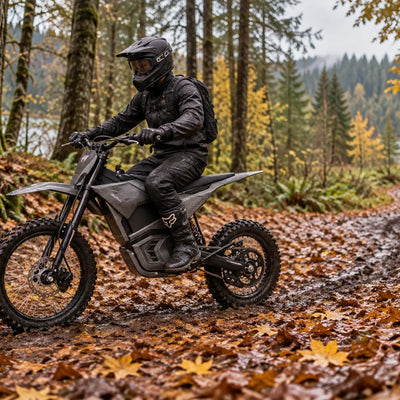
Electric Dirt Bike Fall Riding on Wet Leaves: Grip, Hidden Obstacles and Braking
LEARN MORE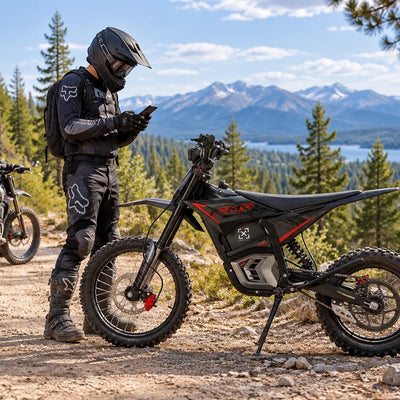
Electric Dirt Bike Trailside Power Loss: Recovery Plan When the Battery Is Dead
LEARN MORE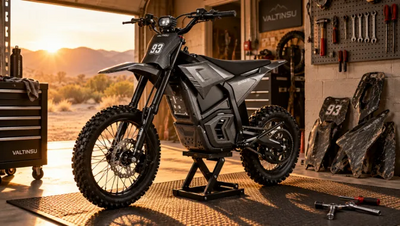
Electric Dirt Bike Plastics Replacement Guide: Fitment, Color Kits and Install Order
LEARN MOREYou may also like
Moto eléctrica todoterreno para adultos EM-5 con luz
€1.299,00
€1.599,00
VALTINSU EM-5 Pro Off-Road Black Electric Dirt Bike
€1.999,00
€2.199,00
VALTINSU EM-5 Pro Green Electric Dirt Bike
€1.999,00
€2.199,00
VALTINSU EM-5 & EM-5 Pro Combo
€3.148,00
€3.298,00