

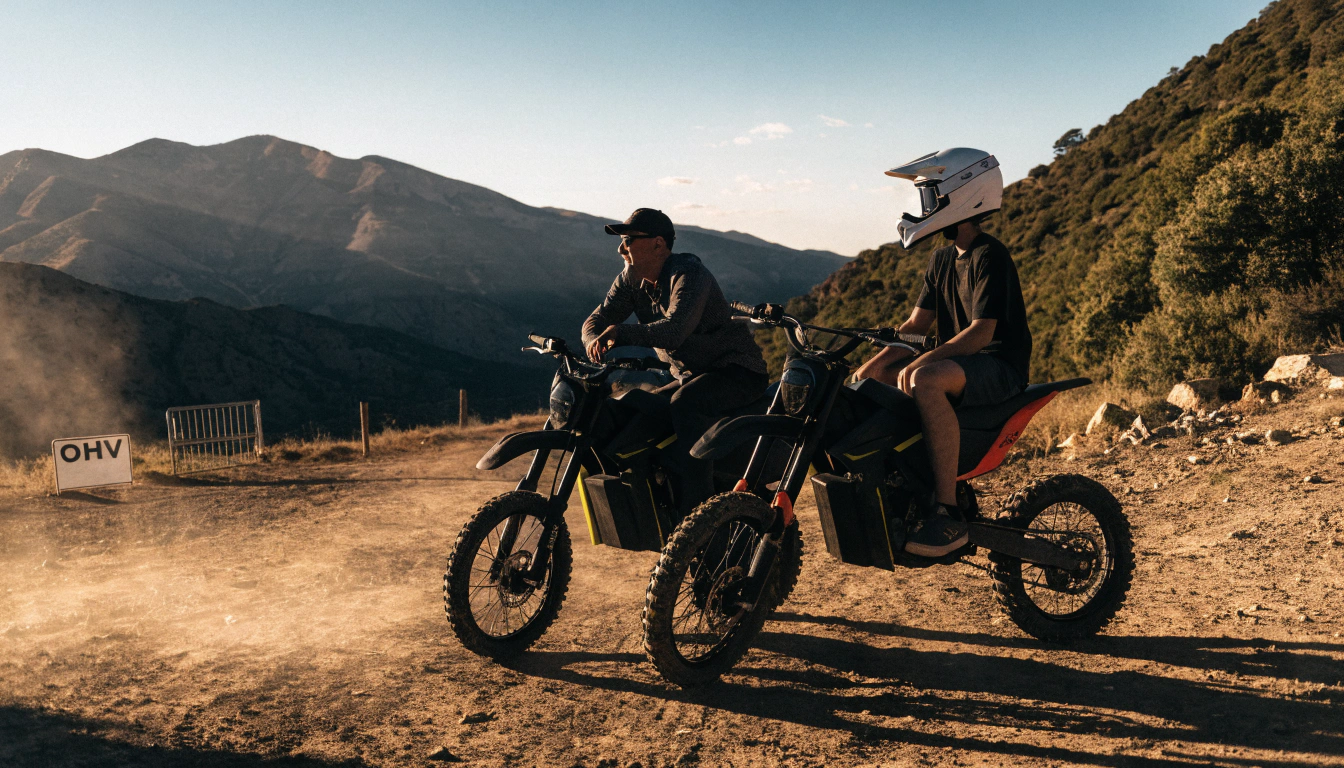
Best Electric Dirt Bikes 2026: Easy, Safe & Lightweight Picks
Quieter. Lighter. A lot easier to live with. That's where electric dirt bikes landed in 2026, and it's why so many adults, teens, and weekend trail riders are finally making the jump. No gas to mix. No oil to change. No clutch to feather while you stall out in front of your buddies.
Here's the thing most spec sheets won't tell you: the fastest bike is rarely the best one. The bike you'll actually enjoy is the one that fits you, stays planted when the dirt gets loose, and gives you power you can use instead of power that scares you.
If you're new, lighter built, or shopping for a teen, you want smooth throttle, simple ride modes, brakes you trust, and a frame that doesn't swallow the rider. Chasing trails instead? Then range, suspension, tire size, and how the torque comes on matter every bit as much as the number on the speedo.
So that's how we sorted this guide — by who you are and how you ride, not by hype. Beginner, lightweight, trail, teen, value, gas-switcher. Find your row, start there.
Best Electric Dirt Bikes 2026: Quick Comparison
Most of the 2026 field sorts into a few buckets. Some bikes are featherweight and forgiving — great for learning. Some are built to take a beating on rocky trails. A few just chase speed, torque, or a low price tag.
Before you fall for a 70 mph headline, look at the boring stuff: weight, ride modes, seat height, battery size, and what the bike was actually built to do. That 70 mph machine? On a tight wooded trail it's a liability, not a thrill.
Want a sane starting point? Line up adult and teen options from trusted electric dirt bike brands first, then match the bike to the rider before you go number-hunting. Valtinsu’s electric dirt bike collection is an easy place to put beginner, teen, and adult models side by side and compare them by riding style instead of marketing.
|
Use Case
|
Strong Picks
|
Why It Wins Here
|
|
Best overall
|
E Ride Pro SS 3.0, Surron Ultra Bee, EM-5 Pro
|
Balanced handling, useful modes, power you can trust
|
|
Best lightweight
|
Zero XB, Aptum VM1
|
Easy to load, flick through turns, pick up
|
|
Best beginner
|
Valtinsu EM-5
|
Smooth pull, three modes, nothing twitchy
|
|
Best trail
|
Surron Ultra Bee, EM-5 Pro
|
Climbing torque, grip, brakes that hold
|
|
Best value
|
EM-5, EM-5 Pro, Rawrr Mantis X
|
Real parts, fair price, no toy feel
|
|
Best high-power
|
Stark Varg, E Ride Pro SR
|
Serious speed — for riders who've earned it
|

Best Overall Pick
An all-arounder has to do a little of everything well. Light enough that you're not wrestling it. Strong enough for real dirt. Simple enough that you're not fiddling with settings every time the trail changes.
For a lot of adult riders, the E Ride Pro SS 3.0, Sur ron Ultra Bee, and Valtinsu EM-5 Pro all land in that zone. Sure, they're quick enough for weekend fun — but the payoff is balance: predictable handling, modes that actually get used, and power that rolls on instead of snapping at you.
Two tests a good overall bike has to pass. It shouldn't feel like a kid's toy two months in. And it shouldn't have you white-knuckling the grips every time your thumb touches the throttle.
Best Lightweight Pick
Drop a heavy bike on a hill and you'll learn fast why weight matters. A lighter electric dirt bike loads easier, turns easier, stops easier, and — when you inevitably lay it over — picks up easier. That's a big deal for beginners, smaller adults, and teens stepping up from a bicycle.
The Zero XB, Aptum VM1, and the smaller pit-bike-style e-motos are the ones to look at if light and playful is the goal. None of them will win a drag race. They'll all be a lot more fun in a tight backyard or a narrow singletrack.

And it adds up over a long day. Less bike to muscle around means less fatigue on sandy turns, washed-out ruts, and that fifth practice lap when your arms are already cooked.
Best Beginner-Friendly Pick
A first bike has one job: build confidence, not adrenaline. You want a soft throttle, clear modes, and brakes that bite without throwing you over the bars. What you don't want is a bike that leaps the second you crack the throttle at walking speed.
For learning, anything in the 40-to-50 mph claimed range is plenty — honestly, more than enough. Valtinsu’s EM-5 electric dirt bike is a good case study: three ride modes, a removable battery, and power that stays manageable while you're still figuring out where your body goes in a turn.
Start in the lowest mode. Get your stops, starts, and slow turns dialed. Then — and only then — bump it up a notch. There's no prize for skipping that step.
|
VALTINSU EM-5 — Best Beginner Pick
48V 2600W · 53-mile range · 40 MPH · three ride modes · removable battery · IPX6 · age 13+. The kind of smooth, forgiving power a first ride should have.
From $1,259 USD · Free U.S. shipping · 3–7 day delivery
View product → Electric Off-Road Adult Dirt Bike EM-5
|

Best Trail Riding Pick
Trails ask for more than a fast bike. You need torque to crawl up a hill, tires that hook up in loose dirt, suspension that soaks up the chatter, and brakes that don't fade halfway down a steep section. Speed is almost beside the point.
The Sur ron Ultra Bee, the Valtinsu EM-5 Pro, and the other mid-to-high-power machines are where trail riders should be shopping. The EM-5 Pro leans on a stout 226 N·m of torque, 17-inch front and 14-inch rear tires, hydraulic suspension, and three speed settings — a package built to climb, not just sprint.
Don't get hypnotized by top speed out here. A bike that holds its line, climbs without drama, and stays calm when the ground goes sideways will do far more for you than four extra miles per hour.

Best Value Pick
Value and cheap aren't the same thing. The best-value electric dirt bike is the one that still gives you usable power, real range, brakes that work, dirt-ready tires, and a frame that doesn't flex like a toy — for a price that doesn't sting.
This matters most to the weekend crowd — riders who want a good time on Saturday without dropping premium e-moto money. The Valtinsu EM-5, EM-5 Pro, Rawrr Mantis X, and a few compact pit bikes all make sense here, depending on your budget and your size.
One trap to dodge: only looking at the sticker. Battery quality, parts availability, charger type, warranty, support — those quietly decide what the bike costs you over a year or two. A “cheap” bike you can't get parts for isn't cheap at all.
Best Pick for Teens
With a teen, fit comes before everything. Height, weight, confidence, where they'll ride — a smaller kid carving a backyard loop needs a totally different bike than a tall teen who's already comfortable on open trails.
Adjustable modes are your friend here. Start them slow, let them earn the speed. It's the cheapest insurance you'll ever buy.
Older teens with some dirt under their belt can grow into a Valtinsu EM-5 or even an EM-5 Pro — as long as the bike genuinely fits. Younger or smaller riders are almost always better off on a youth-specific model first.
Best High-Power Pick
High-power bikes are a reward, not a starting point. They're for riders who already read terrain, modulate the brakes without thinking, and know where their body belongs in a corner. Sloppy inputs? These bikes punish them, fast.
The Stark Varg, Surron Ultra Bee HP, E Ride Pro SR, and the rest of the heavy hitters are built for riders chasing real speed or serious off-road bite. For most people, they're the wrong first bike — full stop.
If you do want the power, look past the watts. Check the suspension, the brakes, the tires, the frame, the battery, the controller tuning. Raw output without the hardware to control it isn't an upgrade. It's a hospital bill waiting to happen.
What Makes an Electric Dirt Bike Easy to Ride?
An easy bike is one that does what you expect. It responds smoothly, it doesn't argue with you, and the surprises stay to a minimum. Weight, throttle feel, seat height, braking — these shape the ride far more than buyers tend to assume.
Gas bikes make you juggle a clutch and gears before you've even thought about your line. Electric drops all of that. What's left is the stuff that actually makes you better: balance, braking, body position, line choice.
Easy doesn't mean slow, by the way. It means you can predict what the bike will do the moment you turn, brake, or roll on the power.
Smooth Power Delivery
Smooth power keeps you calm — on dirt, gravel, grass, a little hill, whatever. Electric motors make torque instantly, so a jumpy throttle can feel like the bike's trying to buck you.
For a beginner, smooth beats are powerful every time. A bike that eases the power on teaches better habits than one that detonates off the line.
Experienced riders want it too. On a loose climb or a tight corner, a controlled roll-on is what keeps the rear tire hooked up instead of spinning.
Manageable Weight
Weight shows up from the first second. A lighter bike is easier to push, park, lift, and steer at a crawl — the speeds where most beginners actually struggle.
And new riders drop bikes. It's just part of it. But a heavy bike turns every tip-over into a workout, and that wears people down fast.
Quick gut check: can the rider hold it upright, standing still, before the motor's even on? If not, it's too much bike for right now. Doesn't matter how good the specs look.
Simple Ride Modes
Good ride modes let a bike grow with you. Low mode for learning, higher modes once the skills are there. Simple as that.
The best systems are dead easy to read. Eco, standard, sport — most riders get that instantly. Buried app menus and twenty settings? Less so.
They're a gift for families, too. One bike can be mellow for the new rider and lively for the experienced one, just by switching a mode.
Comfortable Seat Height
Seat height sets the tone before you've moved an inch. If you can plant a foot with control, starting and stopping feel safe instead of sketchy.
Too tall and every slow turn, hill, and awkward stop becomes a small ordeal. Too short and taller riders end up cramped, knees up around the bars, standing position all wrong.
So check seat height against the rider's inseam — not just the spec. Valtinsu’s teen and adult sizing guide makes the frame-to-rider match a lot less of a guess.
Predictable Braking and Suspension
Brakes you trust change how you ride. Hydraulic discs show up on the stronger electric dirt bikes for a reason — they modulate better than basic mechanical setups, so you can scrub speed without locking up.
Suspension does the quiet work. A bike that bounces hard or bottoms out on every bump will rattle a new rider's nerves on rough ground.
For trails specifically: front suspension, rear suspension, and proper dirt tires. That combo is what keeps the bike settled when the surface turns to marbles.
Best Lightweight Electric Dirt Bikes for 2026
Lightweight bikes are popular for a simple reason — they feel manageable. They also suit anyone who doesn't want a full-size, gas-style machine taking over the garage.
The right one depends on the rider and the riding. A backyard runabout, a teen's trail bike, and an adult's weekend machine might all want different frames.
Light is good. Flimsy is not. A featherweight bike still needs real brakes, stable tires, and a frame that won't fold. Don't pick weak just because it's easy to lift.
Lightweight Bikes for Beginners
Beginners want calm at low speed above all. A lighter bike makes the basics — stops, starts, tight turns, little bumps — far less intimidating.
Less power can be a feature, not a flaw. Riders learn faster on a bike that doesn't frighten them.
Solid starting points include the Zero XB, the Valtinsu EM-5, smaller Rawrr models, and youth-friendly bikes with adjustable speed. Which one? Depends on the rider's height and how much room they've got to practice.
Lightweight Bikes for Trail Riders
A lightweight trail bike has to flick through turns and still survive roots, rocks, hills, and loose dirt. Suspension quality is the swing factor.
Going too small or too soft is a trap. A featherweight with weak suspension feels lovely in the driveway and brutal on an actual trail.
For adults, the sweet spot is a bike light enough to throw around but tough enough to climb and brake hard. EM-5 Pro and Ultra Bee-style bikes show what that balance looks like.
Lightweight Bikes for Teens
Fit first, always. A bike that's too heavy or too tall slows the learning down and makes stops riskier than they need to be.
Adjustable speed earns its keep here. Start mellow, climb the modes once the braking and cornering are there.
Durability matters too — teens drop bikes a lot early on. Frame strength, decent brakes, and easy parts support will save you headaches.
Lightweight Bikes for Adults
Adults usually want something easy without being childish. A good lightweight adult bike still needs enough torque for hills and enough frame to stand up and ride properly.
Smaller riders might love a compact e-moto. Taller or heavier riders often need a bigger frame, a longer wheelbase, and stronger suspension to feel settled.
Weight alone is a bad filter. A super-light bike can feel nervous if the frame, tires, or suspension weren't built for how you actually ride.
Lightweight Bikes to Avoid for Rough Terrain
Steer clear of light bikes with flimsy forks, tiny tires, weak brakes, or fuzzy battery specs if rough trails are the plan. Fun on flat ground, nervous the moment it gets loose.
Also be wary of anything sold purely on wattage with no real detail on brakes, tires, suspension, battery, or weight limits. A big number proves nothing about trail ability.
For rough stuff, pick dirt-ready tires, genuine suspension, and a frame with some backbone. A heavier, better-built bike beats a flimsy light one on both safety and feel.
Best Electric Dirt Bikes for Trail Riding
Trails load up the bike in ways flat ground never does. Hills, rocks, sand, mud, ruts — they test the motor, the battery, the tires, the brakes, and the suspension all at once.
A good trail bike feels planted when you're up on the pegs. And it doles out torque smoothly instead of slamming it in all at once.
For weekend riders, honestly, the best bike is just the one that gets you out more. Quiet power, almost no maintenance, and a two-minute setup are exactly why people ditch gas.
Best for Light Trails
Light trails don't need a monster. A balanced bike with moderate speed, a smooth throttle, and decent range covers it.
We're talking packed dirt, grassy paths, gentle hills, open practice fields — the kind of ground where you learn body position and braking without much consequence.
The Valtinsu EM-5, the Zero XB, and similar mid-rangers shine here. Enough giddy-up to stay fun, nothing that feels extreme.
Best for Rough Trails
Rough trails demand stronger suspension, grippier tires, and more torque. Think rocks, roots, steep climbs, ruts, loose off-camber turns.
The Surron Ultra Bee, Valtinsu EM-5 Pro, and the higher-end e-motos are built for this — stronger frames, more serious off-road hardware underneath.

Even so, respect the limits. Push any electric bike too hard and you'll find the heat, the battery drain, or the traction limit — usually at the worst moment.
Best for Weekend Trail Play
Weekend play is where these bikes feel almost unfair. Charge it, load it, ride it — no fuel mixing, no warm-up, no fuss.
Range and comfort carry more weight than top speed here. A bike that stays smooth through 30 to 60 minutes of mixed riding beats a top-speed special you can't relax on.
Want easy charging? Go for a removable battery. And check charge time, brake feel, and how easy it is to get replacement parts before you commit.
Best for Riders Switching From Gas Dirt Bikes
Gas guys notice the instant torque first — there's no waiting for revs. No clutch either, so the power feels smoother in some ways and sharper in others. It's a genuine adjustment.
And it's real, that adjustment. If you're used to engine noise and shift points, it takes a few rides to recalibrate your sense of speed, traction, and throttle.
Coming off gas, lean toward a bike with strong brakes, real suspension, and a few ride modes. Start lower than your ego wants. Build up once the bike makes sense under you.
What Trail Riders Should Avoid
Don't buy the fastest thing on the lot without checking control, weight, suspension, and range. A short test ride can hide a lot of weak parts behind a fast launch.
Skip tiny tires if your trails have rocks or ruts — small wheels get knocked off line way too easily.
And don't hand-wave the legal side. Plenty of these bikes are off-road only, and roads and bike paths often have hard rules.
Best Electric Dirt Bikes for Beginners and Safer Control
A beginner bike should teach, not terrify. Safer control comes from four things: fit, sensible speed limits, a smooth throttle, and the right gear.
No dirt bike is risk-free — let's not pretend otherwise. Riders fall, clip obstacles, lose the front end. That's exactly why gear and supervision aren't optional.
For a new rider, the right bike feels almost boring at first. That's the point. Confidence comes before speed, not the other way around.
Why Beginner Riders Need Controlled Power
Controlled power frees up brain space for the basics — balance, braking, turning, standing position, looking ahead instead of at the front wheel.
Too much grunt invites panic inputs. The classic combo: grab too much throttle, stab the brakes, freeze mid-turn. A calmer bike just doesn't set that trap.
Adjustable settings make a far better teacher. Start slow. Add power only once stopping and turning feel like second nature.
Why Weight Matters for New Riders
Weight touches every part of learning. A lighter bike is easier to push, park, lift, and steer at the crawl speeds where beginners spend most of their time.
They'll drop it. Everyone does. But a heavy bike turns each pickup into a chore, and that grind wears people out and saps the fun.
Simple rule: if the rider can't hold it up standing still, motor off, it's too much bike for now. Revisit it in a season.
Speed Modes and Throttle Settings
Speed modes are how riders grow safely. Low mode covers first rides, tight spaces, and smaller or younger riders without drama.
Throttle mapping changes the feel too. A softer map smooths out those accidental stabs when you hit a bump and your wrist twitches.
Don't skip the slow modes thinking they're just for kids. They're genuinely useful for drilling tight turns and technical control at any level.
Brakes, Tires, and Suspension Basics
Brakes should be strong but not grabby. New riders need to scrub speed smoothly, not lock a wheel every time they squeeze.
Match the tires to the ground. Dirt tires bite on loose stuff that street-style rubber just skates across.
Suspension should hold the rider up without feeling like a pogo stick or a brick. Constant bouncing or bottoming-out makes everything harder to control.
Beginner Mistakes to Avoid
Too much power, too soon — the big one. A fast bike looks incredible in a product video and quietly stalls your actual progress.
Skipping gear is the other. Helmet, gloves, boots, eye protection, long sleeves, long pants. First ride, not “someday.”
And ignoring fit. Rider height, weight, strength, and where they'll practice should steer the purchase as much as the spec sheet does.
Best Electric Dirt Bikes for Kids and Teens
Buying for a kid or teen isn't the same as buying for yourself. The bike has to suit their size, strength, maturity, and the space they've got to ride.
Parents lead with control over speed. Adjustable power, good brakes, and supervision beat a fat spec sheet every single time.
Gear isn't a maybe. The U.S. Consumer Product Safety Commission calls for a helmet, eye protection, boots, gloves, long pants, and a long-sleeved shirt for off-highway riding — the full kit, not a helmet and good intentions.
Best Options for Younger Riders
Younger riders belong on youth-specific bikes, not shrunk-down adult machines. The bike has to be light enough for them to balance and stop on their own.
The Kawasaki Elektrode, Razor MX series, and Honda CRF-E2-style youth bikes are built for exactly this. Which one comes down to age, height, and experience.
Start them in the slowest setting. Pick a clear, open spot — well away from cars, pets, and anything they can hit.
Best Options for Teens
Teens might be ready for more bike, but fit still rules. A tall or punchy machine is too much if the experience isn't there yet.
Older teens can do well on an EM-5 or even an EM-5 Pro — when the bike fits and there's room to ride. Smaller teens should stick with compact youth or pit-bike options.
Age alone is a lousy yardstick. A cautious 15-year-old beginner and a seasoned 15-year-old shredder need very different bikes.
Why Adjustable Speed Matters
Adjustable speed hands control back to the parent and the rider. It also stretches one bike across several stages of progress.
Low speed is for balance work and braking drills. Dial it up later, once the judgment's caught up to the curiosity.
It's handy when more than one person rides, too — everyone picks the setting that matches their skill.
Safety Gear Checklist
A solid starter gear setup looks like this:
-
DOT-approved motorcycle helmet or off-road helmet
-
Goggles or face shield
-
Gloves
-
Long-sleeved jersey or jacket
-
Long pants or riding pants
-
Over-ankle boots
-
Knee and elbow protection
-
Chest protector for more aggressive riding
NHTSA says to look for helmets that meet DOT FMVSS 218. For kids and teens, a proper fit matters just as much as the sticker on the back.
Parent Buying Mistakes to Avoid
The classic one: buying for the size they'll be, not the size they are. A bike that's too big today makes learning harder and riskier, full stop.
Another: bicycle gear for motorcycle-style speeds. Electric dirt bikes move quicker than a bike and need stronger protection to match.
And letting kids ride near cars, public roads, or crowds. Practice belongs in a controlled space with an adult watching.

Battery Range, Charging, and Real Ride Time
Range might be the trickiest spec to trust. That claimed number? Measured in tidy lab conditions, not on a chewed-up trail with you on it.
Climb a hill, ride in high mode, slog through mud, or just be a heavier rider — the battery drains quicker. Cold weather takes a bite too.
Think in sessions, not miles. For most riders, one good battery session covers a practice block, a trail loop, or an afternoon in the backyard.
Claimed Range vs Real Range
Claimed range is fine for comparing bikes. It's a lousy promise. A bike might say 50 miles and deliver well under that on a real trail.
Terrain is the lever. Smooth dirt at a steady clip sips power; hills, sand, mud, and hard launches gulp it.
Treat the claim as a best case and ride with a buffer. Getting stranded a few miles from the truck gets old fast.
Battery Size and Ride Time
Battery size usually shows up as volts and amp-hours. More capacity can mean longer rides — but motor power and how you ride still get a vote.
A 60V or 72V bike feels strong, sure, and it can drink power fast if you live in high mode. Bigger isn't automatically longer.
When you can, look at watt-hours. It's a cleaner read on stored energy than voltage on its own.
Removable vs Fixed Batteries
Removable packs are just easier to live with. Pull the battery, carry it inside to charge — no shoving the whole bike next to an outlet.
Fixed batteries work fine, but where you charge matters. Make sure the cord reaches safely and the spot stays dry.
Removable also opens the door to a spare. A second pack stretches your ride time — for a price.
Charging Time
Charge time tracks battery size and charger output. A lot of electric dirt bikes need a few hours to fill up.
Fast charging sounds great, and battery health still matters — so stick with the charger the brand gives you.
Build charging into your routine. Ride every weekend? Charge after the ride, then check the pack before the next one.
Spare Battery Planning
A spare pack can turn one short session into a full riding day. That's gold for trail riders, families, and anyone who practices a lot.
Price it before you buy the bike. Some replacement packs are steep enough to change the whole value math.
And confirm the swap is painless — easy to pull, carry, and reinstall. A spare you dread changing isn't much of a spare.
Battery Care Tips
Keep the pack dry, clean, and out of extreme heat. Don't leave it bone-dry in storage for weeks on end.
Use the right charger and eyeball the connector first. Dirt, water, or damage around the port should get sorted before you plug in.
After a muddy ride, clean gently. Valtinsu’s post-ride maintenance guide lays out a simple routine that gets the bike clean without forcing water into the parts that hate it.
Electric Dirt Bike Speed, Power, and Torque
Speed grabs the spotlight. Torque does the work. A bike with strong torque will march up a climb even if its top speed isn't the headline.
Electric delivers power differently than gas — the pull arrives now, all at once. Thrilling if you're skilled, startling if you're not.
For most buyers the real question isn't “how fast.” It's “can I control this where I actually ride?”
Top Speed by Bike Type
Youth bikes sit at gentle practice speeds. Beginner adult bikes tend to live in the 25-to-45 mph range, depending on the mode and the model.
Mid-power trail bikes climb to roughly 40 to 55. The high-power e-motos go further — but they demand more skill, more room, and better gear to back it up.
Match the speed to the space. A fast bike on a cramped trail feels worse than a slower one that turns and stops the way you want.
72V and High-Watt Power Explained
A 72V bike usually packs a stronger system than a 36V or 48V machine — more speed potential, harder acceleration, better climbing.
But wattage is only part of the story. Controller tuning, battery quality, gearing, rider weight, and tires all stir the pot.
High-watt bikes are a blast and not always beginner-friendly. New riders should chase smooth delivery long before peak output.
Torque Control and Twitchy Throttle Feel
Torque control is what makes big power actually rideable. A twitchy throttle launches the bike forward before you've asked it to.
It bites hardest on loose dirt, hills, and tight turns. Smooth throttle mapping keeps that rear tire planted instead of spinning.
Got app tuning or ride modes? Learn them before you push. Start in the calmest setting and feel out the throttle in a safe, open spot.
Why More Power Is Not Always Better
More power can make a bike harder to ride, not easier. It also drains the battery quicker and leans harder on tires, chain, brakes, and suspension.
A lower-power bike often lets you ride cleaner lines and build skill faster — especially true for beginners and smaller riders.
Buy for your terrain. Tight woods, a backyard track, mellow trails — none of it needs race-level output.
Power Levels by Rider Skill
Beginners: low power, soft throttle, simple ground. An easy bike is what builds real control.
Intermediate riders can step into stronger bikes with better suspension and more torque — once braking, turning, and body position are solid.
Advanced riders handle the high-power stuff, but judgment still rules. A fast electric dirt bike demands respect even from people who've been at it for years.
Electric Dirt Bike Maintenance vs Gas Dirt Bikes
Electric wins the maintenance fight in a lot of ways. No oil changes, no fuel mixing, no carb cleaning, no clutch adjustment on most models.
That said, it's not zero. Tires, brakes, chains, suspension, bearings, the battery — they all still want attention.
Stay on top of it and the bike stays safer, quieter, and more dependable. It also protects the battery and the electronics, which are the expensive bits.
What Electric Dirt Bikes Do Not Need
No gasoline, no engine oil, no spark plugs, no air filters, no carburetor. That's a pile of chores and mess you simply skip.
No warm-up ritual, either. Battery's charged? You ride.
This is half the reason people switch. The bike's just easier to own between rides.
Chains, Tires, Brakes, and Suspension
Chains still want cleaning, tension checks, and lube. Tires want pressure checks and a glance at the tread.
Brakes wear. Pads, rotors, and the hydraulic system deserve regular looks — especially after muddy or steep days.
Suspension needs eyes on it too. A leaking fork or a tired rear shock should get fixed before you go ride hard on it.
Battery and Controller Care
The battery and controller are the heart of the thing. Keep both dry, clean, and shielded from hard hits.
Never pressure-wash the electrical areas. That jet of water finds its way into connectors and battery housings, and then you've got real problems.
Check cables after crashes or muddy rides. A small wiring niggle ignored becomes a big one later.
Long-Term Cost Factors
Long-term cost rides on battery life, tire and brake wear, parts availability, and how hard you flog it. Send it constantly and it'll cost you more over time.
A cheap bike with thin support can get pricey down the road. Always check replacement battery cost, brake parts, tires, and warranty terms up front.
A good-value bike is one you can actually service. Parts support matters far more after month one than it does on day one.
Common Maintenance Mistakes
Biggest one: treating the bike like a toy. Even the small models need real checks before and after a ride.
Next: storing the battery flat. Lithium packs hate that — give them better treatment.
And forgetting bolts, spokes, and chain tension. A two-minute once-over saves a ruined ride out on the trail.
Where Can You Ride an Electric Dirt Bike?

Most electric dirt bikes are off-road machines. Private land, dirt tracks, OHV areas, approved trails — that's home turf.
Rules shift by state, city, park, and trail system. Some places treat high-power electric bikes like motorcycles, not bicycles, and that changes everything.
Check local rules before you ride. A quiet motor doesn't magically make a bike legal on streets, sidewalks, or bike paths.
Off-Road vs Street-Legal Use
Off-road bikes usually aren't street legal out of the box. They tend to miss the required road kit — mirrors, turn signals, a plate mount, DOT tires, registration paperwork.
Street-legal electric motorcycles are their own category. Built to meet road rules, and they generally need a title, registration, insurance, and a licensed rider.
Don't assume a fast bike is road-legal because it's fast. Check the law before you ride anywhere outside private or approved off-road ground.
Private Land and Trail Riding
Private land is often the simplest option — but permission still counts. Get a clear yes from whoever owns it.
Trails come down to local access rules. Some welcome electric motorcycles; others cap or ban motorized vehicles outright.
Respect the gates, signs, speed limits, and noise rules. Electric is quieter, sure, but careless riding still gets trails closed for everyone.
Local Rules to Check
Figure out how your bike's classified — e-bike, off-highway vehicle, moped, or motorcycle. That label decides where you can legally ride.
Look up the rules on age, helmets, registration, trail passes, and road access. Some areas require an OHV permit before you roll in.
Riding with kids or teens? Check the youth rules too. Age limits and supervision requirements often apply on top of everything else.
Protective Gear Basics
Match the gear to the speed and terrain. Full-face or off-road helmet, goggles, gloves, long sleeves, long pants, boots — that's the baseline. For more on picking a compliant helmet, NHTSA’s motorcycle safety guidance is worth a read.
Rougher trails? Add knee guards, elbow guards, and chest protection. A neck brace makes sense once the riding turns aggressive.
Gear won't erase the risk, but it'll blunt the damage. Buy the protection before the speed upgrades — not after.
Responsible Riding Tips
Ride where electric bikes are actually allowed. Keep clear of pedestrians, traffic, and land that can't take the abuse.
Ease off the throttle near other riders, animals, homes, and trailheads. Quiet doesn't mean invisible.
Pack basic tools, water, and a charged phone when you ride away from home. Riding solo? Tell someone where you're headed.
How to Choose the Best Electric Dirt Bike for You

The best electric dirt bike is the one that fits your body, your skill, your terrain, and your budget. A bike that looks perfect online can feel completely wrong in person.
Start with fit. Then terrain. Then — and only then — weigh power, range, brakes, suspension, and price against each other.
Never buy on a single spec. A good dirt bike is a whole system, not just a motor with a big number on it.
Choose by Rider Age
Age narrows things down, but it's not the whole picture. Size, strength, experience, and maturity matter more than the birthday.
Younger riders need youth-sized bikes with speed control. Teens land on compact or mid-size bikes depending on height and skill.
Adults should pick by body size and riding goals. A first-timer doesn't need a race bike on day one — or day thirty.
Choose by Rider Height and Weight
Seat height should let the rider stop with control. Both feet flat isn't mandatory, but feeling trapped on the bike is a hard no.
Weight capacity counts too. Ride a bike near its limit and it'll feel slower, drain faster, and lean harder on the suspension.
Check the sizing guide before you buy. Between sizes? Go with the safer fit for the skill level right now.
Choose by Terrain
Flat dirt and backyard laps need less power than hills, sand, mud, and rock. Tight trails reward control and balance over grunt.
Open terrain lets you use more speed — but braking distance grows fast. A faster bike just needs more room to be safe.
Match the tires and suspension to the ground. Street-style tires on dirt is a quick way to find the ground with your hip.
Choose by Speed and Power
Speed should track your skill. A new rider has more fun on a controllable 40 mph bike than a 70 mph bike that rides them.
Power drives climbing and acceleration — and battery drain and wear right along with it.
Sharing the bike? Look for ride modes. Adjustable power makes one machine work for several riders.
Choose by Battery Range
Be honest about how long you ride. Most people do short sessions, not all-day epics.
Riding far from home? Buy more battery than you think you need. Hills and a heavy throttle hand eat range quicker than you'd guess.
A removable battery helps with charging and storage. A spare can be worth it for families or long practice days.
Choose by Budget
Set a budget that covers gear, charging needs, spare parts, and upkeep. Don't blow every dollar on the bike itself.
A cheaper bike can be smart — if parts and support exist. A cheap bike with neither becomes a problem you'll regret.
Value buyers, weigh warranty, battery quality, brakes, tire size, and real owner reviews. Price is one piece of the puzzle, not the whole thing.
What to Avoid Before Buying
Don't buy the fastest bike just because it looks exciting. Control, fit, and support outrank top speed every time.
Avoid vague listings missing clear battery, motor, brake, suspension, or weight details. Missing specs are a red flag, not an oversight.
And don't put a kid on an adult-sized bike. A bike that fits today is safer and more useful than one they might grow into next year.

|
Best Value Pick for Adult Trail Riders
The Valtinsu EM-5 Pro backs up 226 N·m of torque with 17"/14" off-road tires, hydraulic suspension, and a 40° climb rating, all for $1,699 — see exactly how it lines up in the EM-5 Pro vs Sur-Ron Light Bee X comparison. New rider or shopping for a teen? Start with the EM-5 (13+).
|
Conclusion
The best electric dirt bikes in 2026 aren’t only fast. The best picks are easy to control, sized correctly, built for the rider’s terrain, and backed by parts and support.
Beginners should choose smooth power, lower weight, and simple ride modes. Teens need fit, supervision, protective gear, and adjustable speed settings.
Trail riders should focus on torque, suspension, brakes, tires, and real battery range. High-power riders can look at faster models, but only after they have the skill and space to use them safely.
If you want one smart rule, start with control before speed. The right electric dirt bike should help you ride more often, learn faster, and enjoy the trail without fighting the machine.
FAQs
What's faster, a Stark Varg or a 450?
It depends on the section. The electric Stark Varg jumps ahead out of corners with instant torque and no shifting. A gas 450 builds speed through revs and gears, so a skilled rider can edge it in long motos and rough race conditions. For most riders, control and comfort matter more than a fraction of a lap time.
How fast is a 72V 12000W electric dirt bike in mph?
Roughly 45 to 70 mph, depending on gearing, controller limits, battery output, rider weight, and terrain. Voltage and watts don't set top speed alone — two identical 72V 12000W bikes ride differently if one is geared for acceleration and the other for top speed. Don't buy on wattage alone.
What are the top 5 electric dirt bike brands?
For off-road e-motos, riders most often compare Surron, E Ride Pro, Talaria, Zero, Rawrr, Stark Future, and Valtinsu. The best brand isn't the one with the biggest power number — parts support, warranty, battery quality, and real owner reviews decide how a bike holds up. For trails, off-road track record beats general e-bike fame.
Which is the best quality electric dirt bike?
The best quality electric dirt bike pairs a strong steel frame, a reliable battery, hydraulic disc brakes, stable suspension, off-road tires, and easy parts access. Dirt riding punishes weak hardware with vibration, dust, and hard braking, so build quality outranks raw wattage. A well-built mid-power bike outlasts a high-power one with cheap parts.
What is the most reliable electric dirt bike?
The most reliable one matches your riding and has solid parts support. Reliability comes from battery care, controller quality, protected wiring, and regular checks — not the biggest spec sheet. Charge correctly, clean gently, check bolts and chain tension, and never pressure-wash the electronics.
Can a Surron go 70 mph?
A stock Surron won't hit 70 mph — that figure comes from modified bikes. Out of the box, a Surron Ultra Bee tops out around 56 mph, plenty for most off-road riding. Chasing 70 strains the battery, motor, brakes, and frame, and can cause legal trouble. Upgrade your gear, brakes, and tires before your top speed.
Can I run a 52V battery on a 72V motor?
No — not unless the controller, BMS, and wiring are rated for that voltage. The controller decides how power flows, and a 52V pack on a 72V system can run poorly, shut down, or cut performance. Mixing mismatched parts risks damage and safety hazards. Use the voltage the manufacturer specifies, or check with a qualified e-bike technician first.
Sources
-
Valtinsu — EM-5 Pro vs Sur-Ron Light Bee X comparison..
-
National Highway Traffic Safety Administration — Choose the Right Motorcycle Helmet.
-
National Highway Traffic Safety Administration — Motorcycle Safety.
-
U.S. Consumer Product Safety Commission — OHV & ATV Safety.


Looking for something else?
Electric Dirt Bike Setup for Hardpack Trails
LEARN MORE
Electric Dirt Bike Mud Riding: Setup, Technique and Cleanup
LEARN MORE
Can You Ride an Electric Dirt Bike on Forest Service Roads?
LEARN MORE
Electric Dirt Bikes at OHV Parks: Rules and Checklist
LEARN MORELooking for something else?
Hot-Weather Electric Dirt Bike Guide: Battery, Rider and Range
LEARN MORE
How to Ride an Electric Dirt Bike Over Wet Roots
LEARN MORE
Electric Dirt Bike Ruts and Washouts: Line Choice and Recovery
LEARN MOREYou may also like
Moto eléctrica todoterreno para adultos EM-5 con luz
€1.299,00
€1.599,00
VALTINSU EM-5 Pro Off-Road Black Electric Dirt Bike
€1.699,00
€1.899,00
VALTINSU EM-5 Pro Green Electric Dirt Bike
€1.699,00
€1.899,00
Further reading
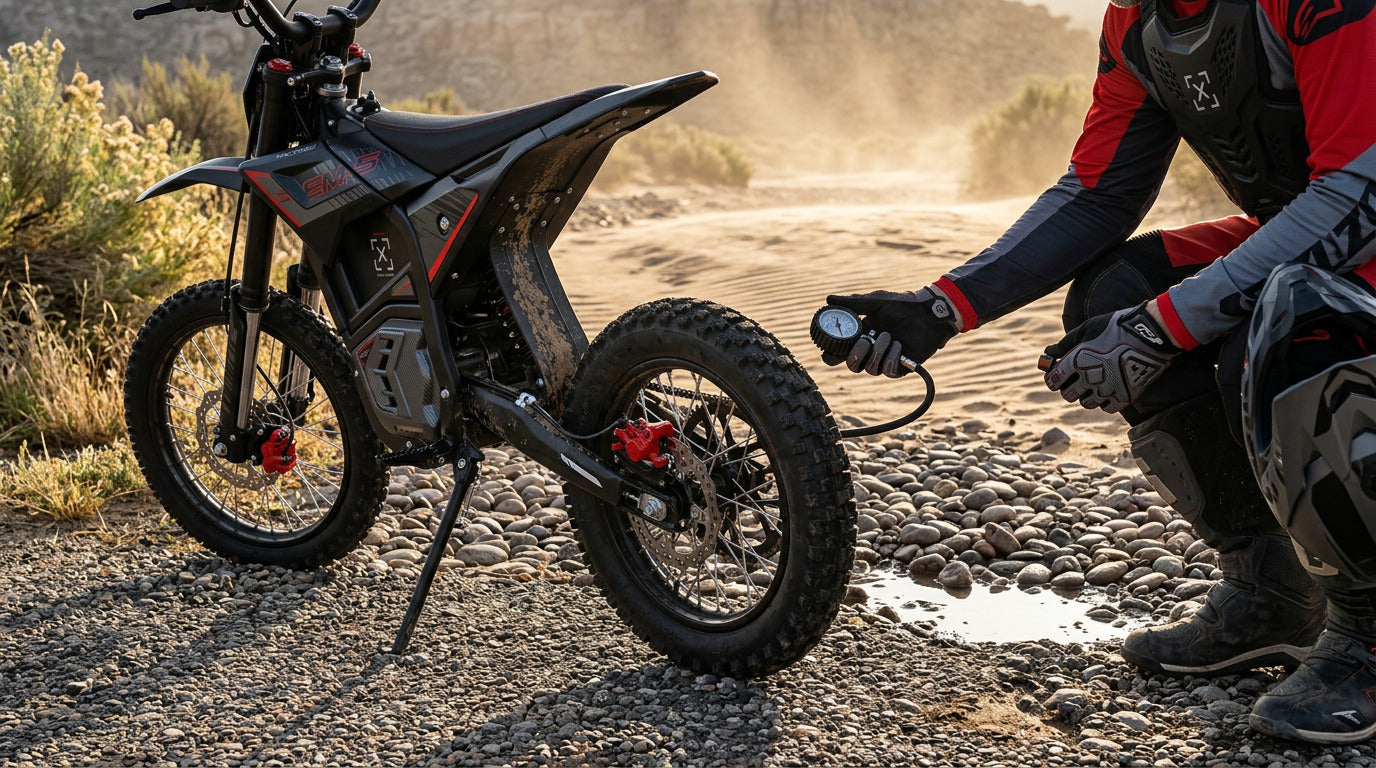
Electric Dirt Bike Tire Pressure by Terrain: PSI Starting Points
Electric dirt bike tire pressure should start with the exact tire and motorcycle limits, then change with terrain, rider load, tire construction and impact risk. Softer ground usually favors a lowe...
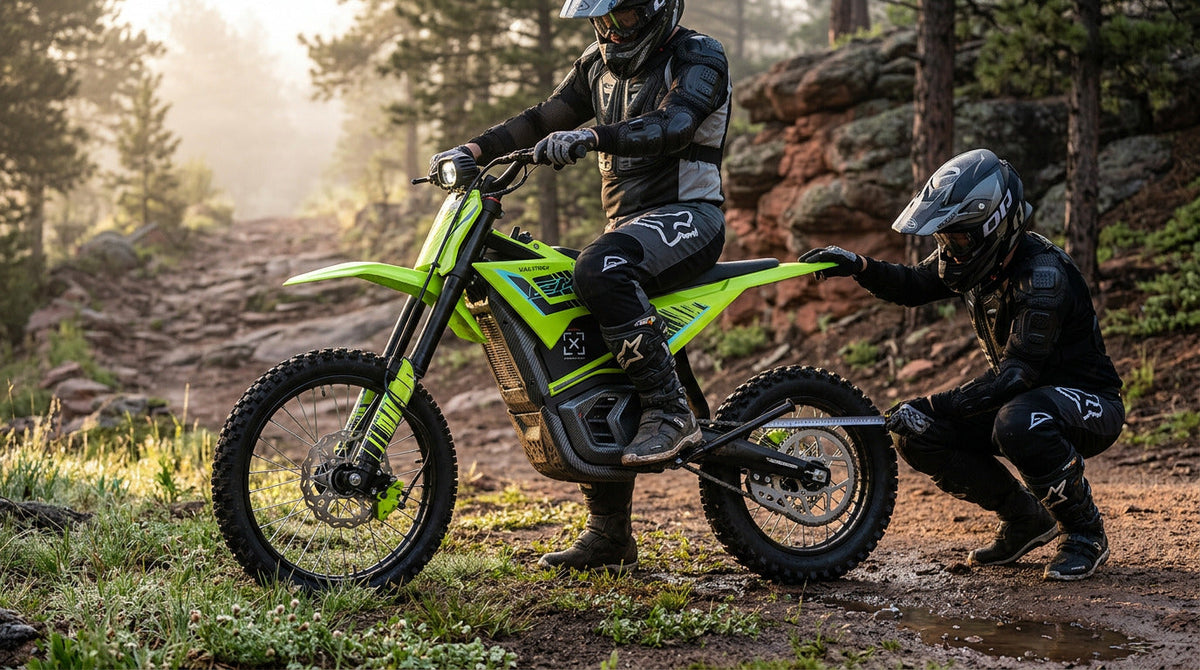
Electric Dirt Bike Suspension Sag Setup: A Rider-Weight Method
Electric dirt bike suspension sag setup starts by measuring the rear suspension fully extended, then measuring it again with the bike alone and with you in full riding gear. Use those readings to e...
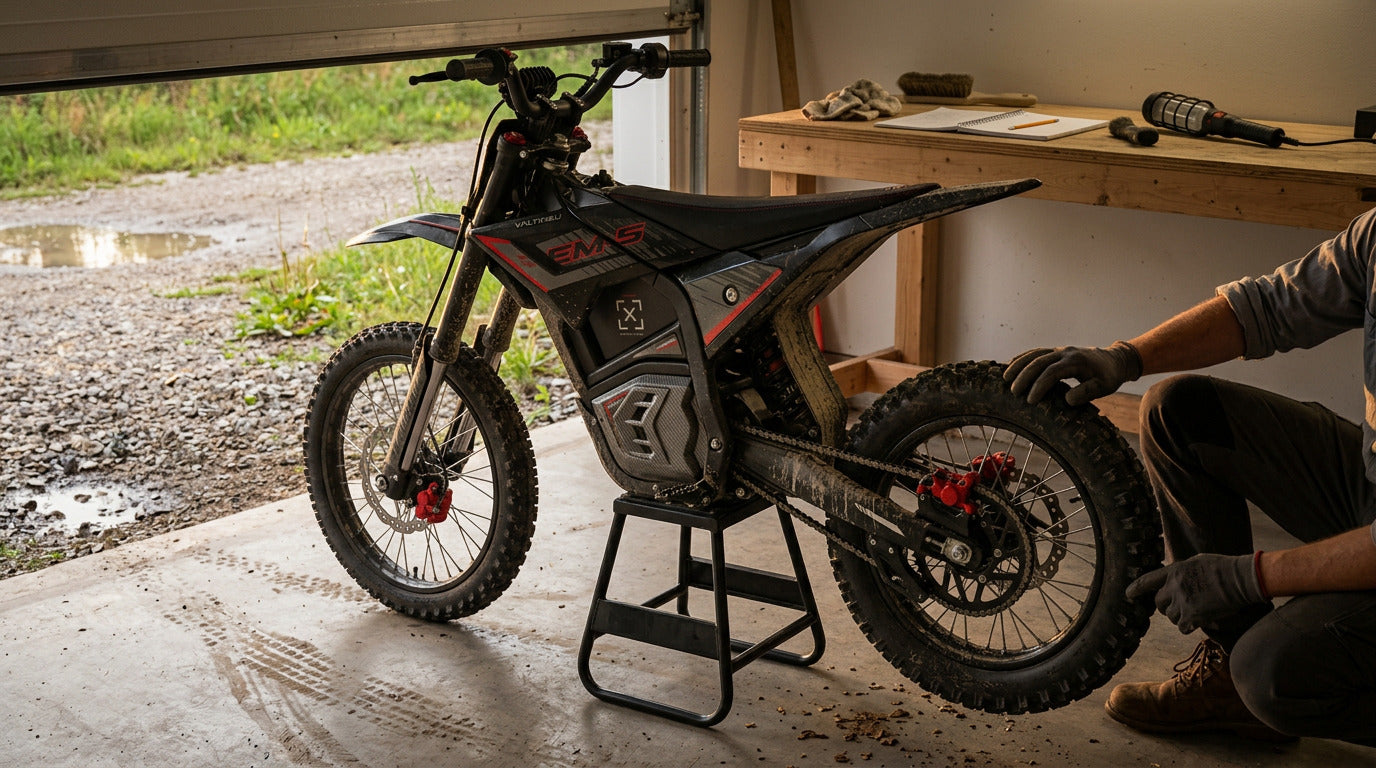
Your First 100 Miles on an Electric Dirt Bike: Break-In and Service Checklist
The first 100 miles on an electric dirt bike are an inspection period rather than a gas-engine-style mechanical break-in. Check the motorcycle at 0, 25, 50 and 100 miles for hardware settling, chai...
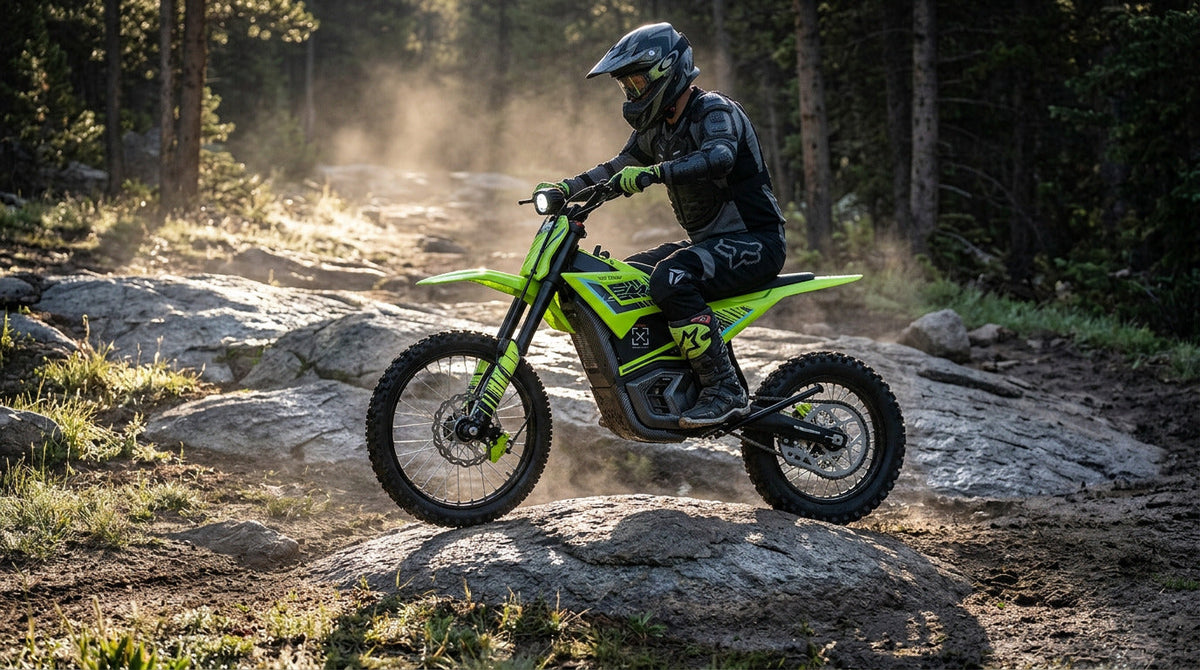
Electric Dirt Bike Ground Clearance vs Suspension Travel: What Each Number Means
Electric dirt bike ground clearance is the vertical space between the ground and the motorcycle’s lowest relevant chassis point, while suspension travel is how far the wheel and suspension can move...