

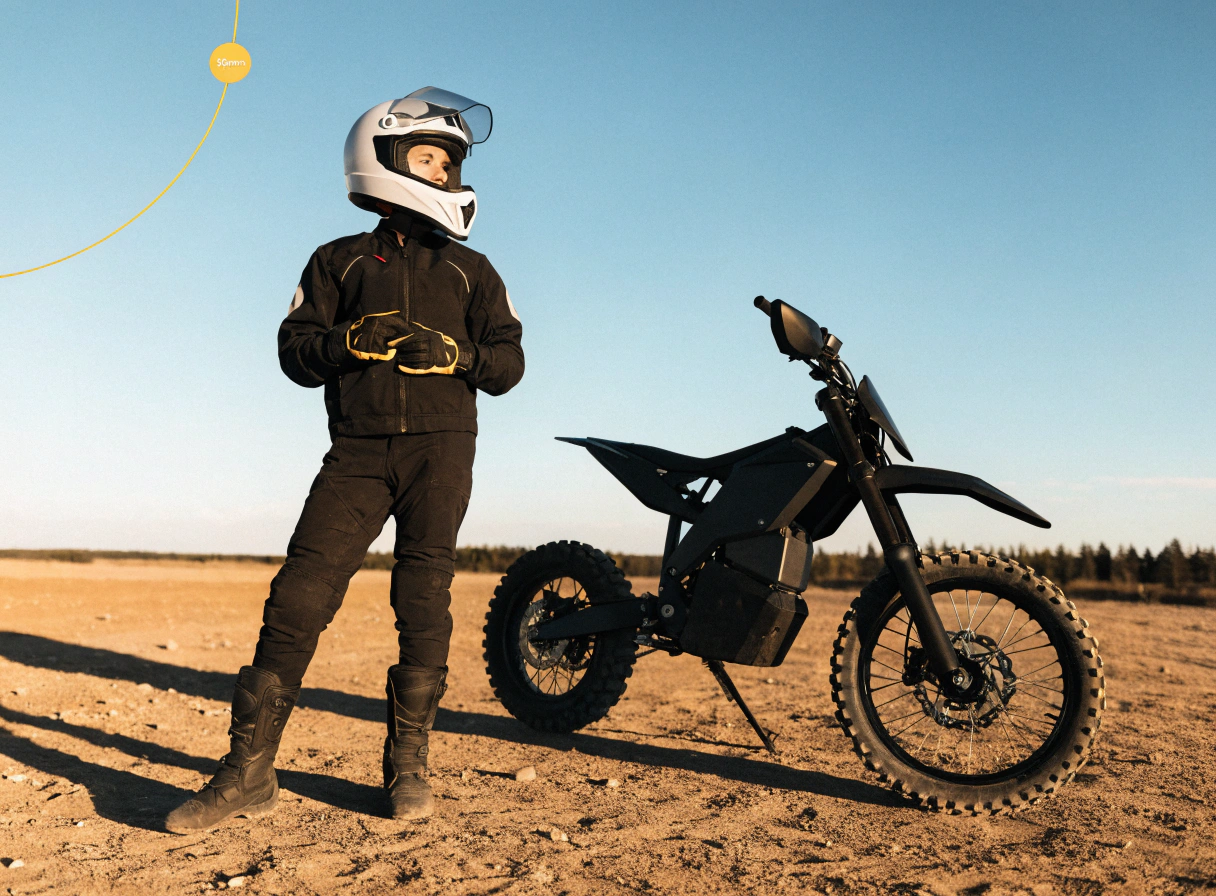
Best Electric Dirt Bike for Teens: Safe, Fast & Age-Appropriate Picks
Your teen wants the fast one. Obviously. Every kid does. But fast isn’t the bike that keeps them in one piece on a Saturday — fit is, and that’s the part almost everybody skips on the way to the checkout button.
Here’s what a teen actually needs underneath them. Something stable. Brakes that bite. Enough power for dirt without turning into a handful the first time the trail kicks up. The right Valtinsu adult electric off-road motorcycles make that part easier, because you can cap the speed early and hand back more of it as your kid earns it. A smooth throttle, a seat height they can reach, brakes that don’t fade — those beat a big motor number every time. The spec sheet is the last thing I’d look at, not the first.
So the real filter is short. Age. Height. Weight. Where they’ll ride. Local rules. Gear. Nail those six and the speed question mostly answers itself.
|
Quick answer: The best electric dirt bike for a teen is the one that fits the rider — not the fastest one. Match seat height and weight first, pick a bike with adjustable speed modes so power can stay capped, and confirm where it’s legal to ride before you buy. Most teen electric dirt bikes are off-road use only.
|
What Makes the Best Electric Dirt Bike for Teens?

Fit first. Speed later. The best electric dirt bike for teens isn’t the quickest one on the page — it’s the one matched to your kid’s body, their skill, and the dirt they’ll actually ride.
What you want: controlled power, handling that doesn’t surprise anyone, brakes that hold up, and limits you can set yourself. Multiple speed settings do a lot of heavy lifting here. Start low. Open it up only once they’ve earned it. A slower bike that fits well beats a fast one that feels two sizes too tall — every single time, no exceptions.
Safety First, Speed Second
Speed’s the fun part. Control is the part that keeps it fun. A kid who can’t stop, turn, or balance the thing isn’t ready for more power — doesn’t matter how hard they lobby for it.
So look at brakes, tires, suspension, seat height, and speed modes. Then look at top speed. In that order.
And the numbers back up the caution. The U.S. Consumer Product Safety Commission reports that emergency-room injuries tied to e-bikes and similar micromobility products keep climbing. That’s the whole case for helmets, certified batteries, and a parent who stays close — baked into the buying decision, not bolted on after the bike shows up.
Why Age and Riding Experience Matter
Age is a starting point. Not the answer. A 13-year-old with real trail hours can handle a small electric dirt bike better than a 15-year-old who’s never touched a throttle in their life.
So judge the kid in front of you. Maturity, balance, reaction time, and — honestly — whether they follow rules at all. Will they slow down when you say slow down? Stop when the trail feels wrong? A beginner needs low speed, open space, and you within shouting distance. A skilled teen can take on more torque and steeper hills. But only after the basics run on autopilot.
Electric Dirt Bike vs Gas Dirt Bike for Teen Beginners
Electric usually wins for a first-timer. No clutch. No shifting. No fuel to mix, no engine to warm up. The kid just learns balance, braking, and throttle — three things instead of seven.
Gas teaches real mechanical chops, sure, and some teens love the noise and the smell of it. But it brings heat, vibration, and a maintenance list. Electric runs quiet, which makes backyard or private-land practice a lot less of a neighbor problem. One catch worth saying out loud: quiet doesn’t mean street legal. That one trips up more families than anything else on this page.
Best Electric Dirt Bike Picks by Teen Age

Age groups narrow things down. They shouldn’t be the whole call, though — height, weight, skill, and riding area weigh in just as hard. Use age as the first cut, then check the rest. Honestly, comparing the full electric dirt bike lineup by seat height and ride modes, instead of by top speed, is the single move that actually fits the bike to the kid.
Best Electric Dirt Bike for 13-Year-Old Beginners
Start manageable. Not full-power. You want a lower seat, a lighter frame, a smooth throttle, and clear speed modes you control. First rides belong on flat dirt, grass, or a private open lot — skip the steep stuff, the deep mud, the narrow trails. Wait until they can start, stop, turn, and brake without that flash of panic in their eyes.
The fit test couldn’t be simpler. Can’t touch the ground with confidence? Can’t hold it upright? Too big. Move on.

|
Valtinsu EM-5 — Adult Electric Off-Road Motorcycle (13+)
48V geared motor | 3,840W peak | 190 N·m torque | 37 mph | IPX6 | three ride modes (25 / 40 / 60 km/h) | age 13+
The only Valtinsu model rated under 18. The geared motor puts torque low in the rev range — where a new rider needs it on a climb — and the rear air suspension lets you dial sag for a 100-lb teen. Beginner mode is the one most owners use for the first month. For trail riding on private land and designated off-road areas — not public roads.
From $1,259 USD | Free U.S. shipping | View the EM-5 →
|
Best Electric Dirt Bike for 14-Year-Old Riders
A 14-year-old might be ready for more speed. Might. Only if the basics are locked, though — braking with control, standing over bumps, easing off before the turn. Once that’s real, you can shop stronger suspension, better brakes, a frame with a little room to grow into.
Keep the adjustable modes. At this age confidence sprints out ahead of skill, fast. So don’t hand over the top setting on day one. Lowest mode first. Bump it up after a few clean rides, not a few clean minutes.
Best Electric Dirt Bike for 15-Year-Old Teens
Fifteen often fits a bigger bike — especially a tall kid, or one who already rides off-road. This is where you start comparing real trail models: more suspension travel, longer ride time, the works.
But the question was never “how fast does it go.” It’s “can my teen stop it, turn it, and keep it together when the trail changes under them.” Thirty miles an hour on dirt feels quick. Trust me. Check maturity, check helmet habits, check how many hours they’ve actually put in — then green-light more speed.
Best Electric Dirt Bike for Older or Experienced Teens
Older, experienced riders start wanting the good stuff — more torque, bigger wheels, real climbing power. That’s where higher-performance bikes earn a spot. With one hard rule clipped to the side of it.
Take the EM-5 Pro. 60V system, 4,800W peak, 240 N·m of torque, hydraulic suspension, hydraulic disc brakes front and rear. It’s rated 18+ adults only. So for anyone under 18, it’s off the table — full stop — and the EM-5 (13+) is the bike built for that age instead. A skilled teen who’s actually of age should still step up in stages. More torque rewards a good throttle hand. It punishes a sloppy one just as fast.
Electric Dirt Bike Size Guide for Teenagers

A teen bike has to fit two ways — seated, and standing on the pegs. Dirt riding is movement, not a recliner. Seat height, bar reach, the weight of the bike, the rider weight limit: all of it changes how the thing feels under a nervous beginner. Too tall and every stop turns into a small crisis. Too heavy and your kid is wiped out by lunch.
|
Fit Check
|
What to Look For
|
Red Flag
|
|
Seat height
|
Can touch ground with control to stop and balance
|
Tiptoes, tense, can’t hold it upright
|
|
Rider weight limit
|
Bike rated above rider weight with margin
|
Rider near the max load number
|
|
Bike weight
|
Teen can turn, push, and pick it up after a fall
|
Frame feels hard to move at low speed
|
|
Standing room
|
Comfortable on the pegs, knees not cramped
|
Cramped knees, hunched stance
|
Seat Height and Foot Reach
Seat height is check number one. Both feet don’t have to sit flat — but your kid shouldn’t be stretched up on tiptoe, either. If every stop looks dicey, the bike’s too tall. For reference, the EM-5’s 72 cm seat suits a lot of 13-to-15-year-olds; the EM-5 Pro’s 80 cm seat is sized around an adult.
Rider Weight Limit
Every electric dirt bike comes with a rider weight limit. Leave yourself margin under it. A bike running near its max load feels sluggish, eats battery faster, and leans harder on the brakes and suspension — worst of all on a climb. Heavier riders also need more stopping room and stronger brakes to find it.
Bike Weight and Handling
Bike weight shows its face the moment a teen turns slow, loads it, or picks it up after a tip-over. Heavy frame, harder low-speed handling. Simple as that. Beginners should steer clear of anything that’s a wrestling match to push or hold up. And think about the truck — if one adult has to lift it into a bed, weight stops being a spec and starts being a daily chore.
When to Size Up
Size up when the bike’s too small — not just too slow. Cramped knees. A hunched stance on the pegs. Suspension that can’t keep up with the terrain. Don’t bump up a size just because your kid wants more speed; that’s the wrong reason. The smart path runs fit, then suspension, then range, then power. That order. Not the reverse.
Motor Power, Speed, and Riding Modes

Motor power drives the acceleration, the hill climbing, how hard the bike pulls when the dirt gets loose. It’s not the whole story, though. A well-tuned low-power bike can feel safer than a high-power one with a twitchy throttle. Ride modes are the bridge between the two — they let you dial power to the kid’s actual skill, not their ambition.
Beginner-Friendly Power Range
Beginner power should feel smooth. Never jumpy. The bike shouldn’t lunge the second the throttle moves. For a new rider, slow-speed laps beat speed runs all day long. Test the lowest mode first — and if even that already feels like too much, the bike’s wrong for a first one. Walk away.
Intermediate Teen Power Range
Intermediate riders can take more pull, assuming the habits are solid. Braking before the turn. Standing on the rough stuff. No stabbing the throttle. More power helps on soft soil and rolling hills — and it’ll spin the rear loose the moment they get greedy. This is the stage where suspension and brakes start mattering more than the motor itself.
High-Power Bikes for Skilled Teens
High-power electric dirt bikes feel closer to a small motorcycle than a youth toy. Save them for riders who respect speed — the ones with hours of braking drills, turns, and controlled climbs behind them, who gear up without being nagged about it. Plenty of older teens are still better off on a calm, well-fitted bike. No shame in that.
Why Adjustable Speed Modes Matter
Adjustable modes let the bike grow with the kid. Start low, climb up once they’ve proven control. They’re handy on a shared family bike, too — younger rider stays capped, older one unlocks more when you say so. But a mode isn’t a chaperone. It’s a tool that works next to clear rules and a safe place to ride. Not instead of them.
|
On the “Can a Sur-Ron go 70 mph” question: some heavily modified machines chase huge numbers, but that’s the wrong yardstick for a teen bike. On loose dirt, even 25–35 mph feels fast and stopping distance changes. Pick a bike with real speed control, not a top-speed brag.
|
Key Safety Features Parents Should Check
 Check the safety features before the price, the speed, the paint. The parts that keep a rider upright on loose ground are the boring ones — brakes, tires, suspension, battery protection, gear. A headlight and a horn help you get seen. They do nothing to make an off-road bike road legal, so don’t let them fool you.
On the helmet point, the American Academy of Pediatrics notes that helmets reduce the risk of head injuries in cycling and other recreational riding. For dirt, go full-face and DOT-approved. Crashes out there find the face and jaw.
Disc Brakes
Disc brakes stop better than rim-style brakes, and hydraulic discs feel stronger and smoother once you’re on dirt. Check both ends before every ride — the lever wants to feel firm, not spongy. And a great brake only helps if the kid knows how to squeeze it without locking the wheel. So braking practice is part of the package, not an optional extra.
Suspension for Dirt Trails
Suspension keeps the tires kissing the ground. More contact, more grip, more control over bumps and roots. A teen on flat grass doesn’t need race travel — a teen on real trails absolutely does. Too soft bottoms out hard. Too stiff beats them up. It should match their size and their speed, somewhere in the middle.
Battery Safety and Charging Protection
These run high-capacity lithium packs, so look for a battery management system, the correct charger, and instructions that actually make sense. Never use a damaged charger. Never charge near heat, water, or anything that catches fire. Store the bike dry, and pull the plug once it’s topped off.
The CPSC says it plainly — choose micromobility products and batteries certified to recognized safety standards. Reads dry. Matters a lot. A UL-certified pack is worth paying up for.
Helmet, Boots, Gloves, and Pads
Full gear. Every ride. Dirt’s softer than asphalt, sure, but it still breaks bones. The basics:
-
DOT-approved full-face helmet
-
Goggles or helmet eye protection
-
Gloves with palm grip
-
Over-the-ankle riding boots
-
Knee and elbow guards
-
Long pants and a long-sleeve jersey or jacket
Gear isn’t the optional part. The rule fits on a sticker: no helmet, no ride.
Are Electric Dirt Bikes Street Legal for Teens?
[ IMAGE 8: Type A | 4:3 ]
Mostly, no. Teen electric dirt bikes are built for the dirt — not the street. Motors, throttles, and speeds that sit outside e-bike rules drop them into a whole different legal box.
Don’t read “electric” as “street legal.” A dirt bike with no road equipment, no registration, no insurance, and no license behind the bars belongs off public streets. And the rules shift by state, by county, by trail system — so a five-minute check up front saves a world of grief later.
|
Where
|
Legal to Ride?
|
What’s Needed
|
|
Private land (with permission)
|
Yes
|
Owner’s OK; gear still applies
|
|
Designated OHV parks
|
Yes
|
OHV sticker or trail permit; varies by park
|
|
Closed courses / motocross tracks
|
Usually
|
Check the track’s electric-bike policy
|
|
Neighborhood streets & sidewalks
|
No
|
Not registered or built for road use
|
|
Bike lanes
|
No
|
Dirt bikes aren’t e-bikes under state law
|
Why Most Electric Dirt Bikes Are Off-Road Only
Most get built for dirt, grass, private land, closed courses, approved off-road areas. Often with no turn signals, no mirrors, no brake lights, no DOT tires, no plate, no registration. That’s a different animal than an e-bike in a bike lane. A high-power throttle bike gets treated more like an off-road motorcycle — because that’s basically what it is. Valtinsu says it straight: the EM-5 is designed for off-road and private-land use only. Not public-road transport.
When Registration or Insurance May Apply
Registration or insurance can come into play if the bike hits public roads, or if your area classifies it as a motor vehicle. Some states want an OHV permit just for public trails, too. Private property with permission is one universe; a street, sidewalk, or state trail is another entirely. Teen riders may also bump into age or supervision rules — so call the DMV, and call the land manager.
Where Teens Can Usually Ride
Private land with permission, closed practice areas, approved OHV parks — those are the usual green lights. California tightened the screws in 2026: under the state’s new eMoto law, off-highway electric motorcycles have to be registered as off-highway vehicles and can’t be made street legal. Sidewalks, neighborhood streets, bike lanes? Skip them unless local law spells out otherwise. And call the park or track before you load up — five minutes on the phone beats a wasted hour in the truck.
Why Local Laws Must Be Checked First
The rules aren’t the same from one place to the next. A bike that’s welcome on one trail gets banned on the one over the ridge. States split e-bikes, electric motorcycles, mopeds, and off-highway vehicles into separate buckets — and the label on a product page doesn’t get to decide which bucket you land in. So check your state DMV and the local land manager. When it’s murky, default to private land or an approved off-road area. Every time.
Can Teen Electric Dirt Bikes Handle Steep Hills?

Some can. Depends on torque, rider weight, tires, battery charge, and skill — all of it at once. A hill that looks like nothing from the bottom feels like a wall halfway up. Start with mild slopes. Your kid should be able to stop, restart, and turn around safely before they go near anything steep. Hills aren’t just a power question, either. Traction, balance, a calm throttle hand — those carry as much weight as the motor.
Why Torque Helps on Climbs
Torque is the pull that gets the bike up the hill. More of it makes a climb easier, since the motor heaves at low speed — the EM-5’s 190 N·m lands low in the rev range, courtesy of its geared motor. Doesn’t mean every teen needs the most torque on the lot. Too much, grabbed too hard, spins the rear or lifts the front off the dirt. For beginners, smooth torque beats sudden torque, hands down.
How Hills Affect Battery Range
Climbs drink battery faster than flat ground — the motor’s fighting gravity the whole way. A ride that lasts forever on the flat shrinks on hills, and rider weight, tire pressure, soil type, and speed mode all nudge the number around. So start every ride at a full charge, keep the early routes short, and always leave enough juice to get back to the truck.
Tires, Suspension, and Ground Clearance
Tires decide grip versus slip — knobby dirt tires walk all over smooth ones on loose soil. Suspension pins the wheels to uneven ground, and clearance is what saves you over rocks, roots, and ruts. A teen on a climb needs all three pulling together. Raw power won’t save a bike that can’t hold traction. It just spins.
When a Hill Is Too Advanced
A hill’s too much when the rider can’t see the top, can’t control speed, or can’t stop safely. Loose rock, deep ruts, wet dirt, sharp turns — each one cranks the difficulty up a notch. Steer clear of climbs near roads, fences, water, or drop-offs. A blown climb needs somewhere safe to stop and turn. Walk it first if you’re unsure. And when in doubt, take the smaller slope and build up to the big one.
Electric Dirt Bike vs E-Bike vs Electric Motorcycle

Parents mix these three up all the time. They all run on batteries and motors, fair enough — but they’re not the same machine. And that difference changes safety, age rules, and where your kid can legally ride. Grab the wrong category and you’ve bought yourself a legal headache before the first ride.
|
Type
|
Built For
|
Pedals?
|
Typical Use
|
|
Regular e-bike
|
Commuting, bike paths
|
Yes
|
Class 1/2/3, bike lanes (age rules vary)
|
|
Electric dirt bike
|
Off-road, dirt, private land
|
No
|
Trails, OHV parks — off-road use only
|
|
Electric motorcycle
|
Road or high-speed off-road
|
No
|
Often needs license, registration, insurance
|
Electric Dirt Bike vs Regular E-Bike
A regular e-bike has pedals and lives on commutes and casual paths — Class 1, 2, or 3, depending on assist and speed. An electric dirt bike usually ditches the pedals for a stronger frame, off-road tires, and more power, all of it pointed at dirt and private land. Don’t treat a teen dirt bike like a bicycle. It wants dirt-bike habits, not bike-lane ones.
Electric Dirt Bike vs Electric Motorcycle
Crank up the power and speed and an electric dirt bike starts crossing into electric-motorcycle country. Some models are flat-out off-road motorcycles, even when they’re sold a click away from e-bike listings. An electric motorcycle can demand a license, registration, insurance, and street equipment on public roads — and your teen may not be old enough to ride one on the street, period. So read the product page and the local law side by side. No pedals, high wattage, knobby off-road tires? Safe bet it’s not a normal e-bike.
Which One Is Best for First-Time Teen Riders?
For a first-timer, a controlled electric dirt bike usually beats a high-power electric motorcycle — you get off-road practice without dragging in the road-use risk. A regular e-bike might suit a kid who only needs to get across the neighborhood, but check the local age rules first; doctors have flagged that young riders crash at higher speeds than they would on a plain bike. For dirt practice, you want good brakes, low speed settings, and a size your teen can actually manage. The best first bike builds skill slowly. That’s the whole job.
Buying Checklist Before Choosing a Teen Electric Dirt Bike

A short checklist heads off a bad buy. Run through fit, control, safety parts, terrain, and local rules before you pay — not just the top-speed number stamped across the product photo.
-
Rider age, height, weight, and skill match the bike
-
Seat height allows safe, confident stops
-
Bike weight feels manageable to push and lift
-
Speed modes can cap power for early rides
-
Brakes feel strong and predictable, front and rear
-
Battery and charger have clear safety details and certification
-
Riding area is legal and safe (private land or OHV park)
-
Full gear is in the budget, not an afterthought
Match the Bike to Age and Experience
Start with age, then check experience — they’re not the same thing. A fresh 15-year-old might need a calmer bike than an experienced 13-year-old. Ask what they’ve ridden. Mountain bike, BMX, a little gas bike, an e-bike — all of it builds balance. Don’t let confidence stand in for proof, though. They show you safe control before they move up. Not the other way around.
Check Seat Height and Weight Limit
These two are the cleanest filters you’ve got. Either one’s wrong, skip the bike. A good fit lets the rider stop without that wobble of fear and stand on the pegs without cramping up, with weight-limit room left over. Look at curb weight too — a bike can clear the rider weight limit on paper and still be a beast to handle in the dirt.
Choose Adjustable Speed Controls
Adjustable controls make a teen bike easier to live with, and they hand you a safe starting point. Three settings let the bike grow: low for practice, middle for building skill, high parked for trained riders in safe spots. Set the rules before the first ride. No switching modes without a yes from you.
Confirm Riding Location
Lock down where you’ll ride before you buy. A great bike is a useless bike with nowhere legal to point it. Private land with permission is the easiest start; OHV parks, closed courses, and approved trails work too. Stay off public roads unless the bike’s fully road-legal. Street-legal status isn’t something to cross your fingers over.
Budget for Safety Gear and Maintenance
The bike isn’t the whole bill. Budget for helmet, gloves, boots, pads, spare parts, basic upkeep. Electric skips most of the engine work gas demands — but tires, brakes, chain, bolts, and battery health still want a regular look. And buy the gear before the first ride. Not the week after the bike lands on the porch.
Conclusion
The best electric dirt bike for teens is the one that fits the rider, keeps speed in check, and matches the dirt they’ll actually ride. A good pick feels stable, stops well, leaves room to grow into. So focus on age, height, weight, experience, brakes, speed modes, battery safety, local rules. Top speed comes last. Always last.
For a lot of families, the EM-5 (13+) is a sensible place to compare size, ride modes, and trail-ready features — it’s the one Valtinsu model built for under-18 riders. Older teens who are of age, with solid throttle and braking habits, can step up to the 18+ EM-5 Pro. But before you ever scroll to the spec sheet, ask the one question that decides everything: what can your teen actually control?
|
Age rule — no exceptions: EM-5 = 13+ | EM-5 Pro = 18+ adults only. Shopping for a rider under 18? The EM-5 is the model built for that age. Riders under 16 need adult supervision at all times.
|
FAQs
What is the best electric dirt bike for a 15 year old?
Whichever one fits their height and weight and lets you cap the speed. Tall enough for a bigger frame doesn’t mean ready for high speed — those are two different things. Check seat height, bike weight, brakes, and range, then keep them in the lowest mode for a few sessions before you unlock more.
Can a 14 year old have an electric dirt bike?
Yes, if the bike fits their body and skill, an adult’s supervising, and local rules allow it. Go for clear speed limits, strong brakes, a manageable seat height. The Valtinsu EM-5 is rated 13+, so it covers this age — the EM-5 Pro is 18+ only and isn’t on the table for a 14-year-old.
What ebike should a 13 year old ride?
For dirt, a beginner-friendly electric dirt bike with low speed settings, strong disc brakes, and a seat height they can manage — the EM-5 (13+) is built for exactly that. For neighborhood commuting, a regular Class 1 or 2 e-bike may suit better, but check local age rules first. Skip the high-power throttle bikes on a first ride.
What dirt bike should a 15 year old get?
Match it to height, weight, strength, and skill — in that order. A beginner wants a lower-speed electric model with simple controls; an experienced rider can take stronger torque and better suspension. Pick based on the hardest safe terrain they’ll ride, not the fastest speed they’re begging for.
What size dirt bike for a 14 year old?
The one they can stop, reach, and stand over without strain. Seat height is the first check — stretched onto tiptoe, or can’t hold it upright? Too big. Weight matters too, since a heavy bike fights you at low speed. Have them sit on it in riding boots before you decide anything.
Can a Sur-Ron go 70 mph?
Some heavily modified builds chase numbers like that, but it’s the wrong yardstick for a teen bike entirely. On loose dirt, even 25–35 mph feels fast and stopping distance shifts on you. A teen needs braking skill, space, full gear, and real speed control — not a top-speed brag.
Should I let my 14 year old get an ebike?
It comes down to maturity, riding area, and local law — not age by itself. Ask where they’ll ride, how fast the bike goes, and whether they actually follow the rules. A dirt bike suits private land and approved off-road areas; a regular e-bike may suit legal road or path use. Set written rules for speed, location, gear, and charging first.
Why are doctors raising concerns about kids riding e-bikes?
Speed they can’t always control. The American Academy of Pediatrics warns young riders face higher risk on powered devices, and the CPSC reports rising ER injuries tied to micromobility products. It’s not a “don’t ride” message — it’s match the bike to the rider, keep them off fast public roads, and require a helmet every single time.
|
Sensitive-topic note: This guide touches on rider-injury data. If safety worries are weighing on you, a local powersports shop or your pediatrician can give personalized advice for your teen.
|
Sources
-
U.S. Consumer Product Safety Commission, “Micromobility Information Center.”
-
American Academy of Pediatrics, “Helmet Use in Preventing Head Injuries.”
-
California State Parks OHV, “Off-Highway Electric Motorcycles: Classification & Registration.”
-
California DMV, “Register an Off-Highway Vehicle (OHV).”
-
Valtinsu, “EM-5 Pro Advanced Dirt Bike (Black).”
-
Valtinsu, “Electric Dirt Bike Collection.”


Looking for something else?
Electric Dirt Bike Setup for Hardpack Trails
LEARN MORE
Electric Dirt Bike Mud Riding: Setup, Technique and Cleanup
LEARN MORE
Can You Ride an Electric Dirt Bike on Forest Service Roads?
LEARN MORE
Electric Dirt Bikes at OHV Parks: Rules and Checklist
LEARN MORELooking for something else?
Hot-Weather Electric Dirt Bike Guide: Battery, Rider and Range
LEARN MORE
How to Ride an Electric Dirt Bike Over Wet Roots
LEARN MORE
Electric Dirt Bike Ruts and Washouts: Line Choice and Recovery
LEARN MOREYou may also like
Moto eléctrica todoterreno para adultos EM-5 con luz
€1.299,00
€1.599,00
VALTINSU EM-5 Pro Off-Road Black Electric Dirt Bike
€1.699,00
€1.899,00
VALTINSU EM-5 Pro Green Electric Dirt Bike
€1.699,00
€1.899,00
Further reading
Electric Dirt Bike Tire Pressure by Terrain: PSI Starting Points
Electric dirt bike tire pressure should start with the exact tire and motorcycle limits, then change with terrain, rider load, tire construction and impact risk. Softer ground usually favors a lowe...
Electric Dirt Bike Suspension Sag Setup: A Rider-Weight Method
Electric dirt bike suspension sag setup starts by measuring the rear suspension fully extended, then measuring it again with the bike alone and with you in full riding gear. Use those readings to e...
Your First 100 Miles on an Electric Dirt Bike: Break-In and Service Checklist
The first 100 miles on an electric dirt bike are an inspection period rather than a gas-engine-style mechanical break-in. Check the motorcycle at 0, 25, 50 and 100 miles for hardware settling, chai...
Electric Dirt Bike Ground Clearance vs Suspension Travel: What Each Number Means
Electric dirt bike ground clearance is the vertical space between the ground and the motorcycle’s lowest relevant chassis point, while suspension travel is how far the wheel and suspension can move...